Salads
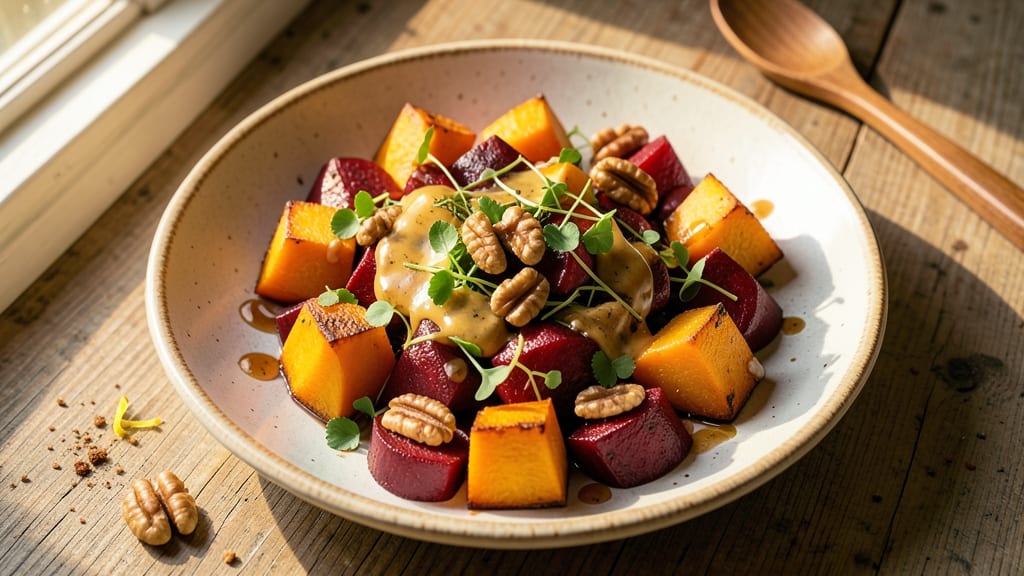
This butternut and beetroot salad recipe transforms seasonal vegetables into a vibrant, nutrient-packed dish that balances earthy sweetness with nutty crunch. The key lies in roasting the vegetables until caramelized—this process deepens their natural sugars and creates a satisfying texture contrast.
I developed this recipe during autumn harvest season when both ingredients are at their peak, and it's become a staple in my meal rotation for its versatility and bold flavors.
What sets this salad apart is the perfect harmony of textures and flavors: tender roasted butternut squash, earthy roasted beets, crispy toasted walnuts, and a bright citrus vinaigrette that ties everything together. The preparation is straightforward but yields restaurant-quality results—no fancy techniques required.
This dish works equally well as a main course with added protein or as a hearty side dish that steals the show at any gathering.
The roasting process is where the magic happens—both vegetables develop rich, caramelized edges while maintaining their natural sweetness. The walnuts add a satisfying crunch that contrasts beautifully with the soft roasted vegetables.
Once assembled, the salad's vibrant colors make it as visually appealing as it is delicious, perfect for both weeknight dinners and special occasions.
This recipe is naturally vegan and packed with nutrients, making it an excellent choice for anyone looking to incorporate more plant-based meals into their diet. It pairs wonderfully with grains like quinoa or farro, or you can add chickpeas for extra protein.
The dressing can be adjusted to suit your taste preferences, ensuring this salad remains a versatile addition to your meal planning.
Ingredients for butternut and beetroot salad
Seasonal vegetables and pantry staples—this salad brings autumn flavors to life with minimal effort.
| Ingredient | Amount | Notes |
|---|---|---|
| Butternut Squash 🍠 | 1 ½ lb | Cubed, skin removed |
| Beetroot 🟣 | 1 lb | Medium-sized, peeled |
| Extra-Virgin Olive Oil 🫒 | ½ cup | For roasting vegetables |
| Maple Syrup 🍯 | 1 tbsp | For glaze (optional) |
| Walnuts 🥜 | ½ cup | Raw, toasted |
| Lemon Juice 🍋 | ¼ cup | Freshly squeezed |
| Apple Cider Vinegar 🍶 | 2 tbsp | For tangy dressing |
| Dijon Mustard 🌶️ | 1 tsp | For dressing depth |
| Sea Salt 🧂 | 1 tsp | Diamond Crystal preferred |
| Black Pepper 🌶️ | ½ tsp | Freshly ground |
| Fresh Arugula 🌿 | 4 cups | For bedding greens |
| Fresh Thyme Leaves 🌿 | 1 tbsp | Chopped, for garnish |
The butternut squash and beetroot are the stars here, so pick them at peak season—that means firm, vibrant squash with no soft spots and beets with smooth skins. Trader Joe's often has great organic options, but local farmers markets are unbeatable for freshness. For the squash, cut it into even cubes (about 1-inch) so they roast uniformly. The beets? Roast them whole with their skins on first—they peel easily after roasting. Pro tip: if you're short on time, pre-cut squash from the grocery store's fresh-cut section works perfectly (just rinse before roasting).
No fresh thyme? Dried works at half the amount, but honestly, the flavor difference is worth it. The walnuts should be toasted until they're fragrant—toast them in a dry pan over medium heat for 3-4 minutes, shaking the pan constantly. For the dressing, if you don't have Dijon mustard, yellow mustard in a pinch (though it'll be slightly less sophisticated). The maple syrup glaze is optional but adds a beautiful caramelized finish—just brush it on the roasted veggies after they come out of the oven. And if you're serving this as a main course, add chickpeas or white beans for extra protein.
Roasted veggies keep well in the fridge for 4-5 days if stored in airtight containers—just reheat before assembling the salad. The dressing will last 5 days too, but it's best made fresh. For meal prep, I like to roast everything ahead and store it separately, then toss with dressing when ready to serve. The arugula stays crispest if you add it just before serving—wash and dry thoroughly to avoid a soggy salad. This dish reheats beautifully too, making it perfect for lunches—just warm the veggies and dressing separately.
Why You'll Love This Recipe
- One-Pan Magic: I swear by this recipe because it’s actually one-pan friendly—roast the squash and beets together, toss in the walnuts at the end, and boom. Less dishes, more time for the good stuff (like eating).
- Sweet-Savory Balance: That maple syrup glaze? It’s the secret weapon—caramelized edges on the squash, sticky-sweet beets, then the crunch of toasted walnuts. It’s like dessert had a flavorful makeover.
- Meal Prep MVP: Between us, this keeps perfectly for 4 days in the fridge. Toss it in a jar for lunches, or serve it cold at picnics—no reheating required. (Yes, even on a Tuesday night.)
- Budget-Friendly Luxury: Roasted squash and beets are cheaper than takeout, but feel like a fancy spread. Walnuts add richness without breaking the bank, and olive oil? The good stuff makes it taste like you spent hours. (Spoiler: You didn’t.)
Step-by-step instructions for butternut and beetroot salad
Here's how to transform humble roots into a vibrant, flavor-packed salad with perfect caramelized textures.
Roast the Vegetables to Sweet Perfection
Preheat your oven to 400°F and line two baking sheets with parchment paper. Toss the cubed 1.5 lb butternut squash and peeled 1 lb beetroot with 0.5 cup extra-virgin olive oil, 1 tsp sea salt, and 0.5 tsp black pepper until evenly coated. Spread them in a single layer—they need room to caramelize, not steam.
Roast for 25-30 minutes, stirring once halfway through, until the edges are deeply golden and the squash yields slightly when pierced with a knife. The beets should be tender but still hold their shape. Here's the thing—don't overcrowd the pan or they'll turn out soggy instead of crispy. If they're not quite done, bump the heat to 425°F for the last 5 minutes to get that perfect caramelization.
Toast the Walnuts for Maximum Crunch
While the vegetables roast, spread the 0.5 cup walnuts on a separate baking sheet. Toast them at 350°F for 8-10 minutes, shaking the pan every 2 minutes to prevent burning. You're looking for a rich, nutty aroma and a deep golden color—they should smell irresistibly toasty when done.
Let them cool for 5 minutes before transferring to a cutting board and roughly chopping them with a chef's knife. The walnuts should be warm but not hot when you add them to the salad—this ensures they maintain their crunch instead of becoming mushy. I like to keep a small bowl nearby to catch any stray bits that might fall through the cracks.
Assemble the Dressing for Tangy Balance
In a small bowl, whisk together the 0.25 cup lemon juice, 2 tbsp apple cider vinegar, 1 tbsp maple syrup, 1 tsp Dijon mustard, 1 tsp sea salt, and 0.5 tsp black pepper. Start with just the lemon juice and vinegar, then gradually add the remaining ingredients while whisking continuously. This gradual approach prevents the dressing from becoming too thick or separating.
Taste as you go—you want a bright, tangy dressing that balances the sweetness of the roasted vegetables. If it's too sharp, add a touch more maple syrup. If it's too sweet, add a splash of lemon juice. The dressing should coat the back of a spoon but still allow you to see through it slightly. This is the moment that matters: the dressing needs to complement, not overpower, the earthy flavors of the salad.
Build the Salad Layer by Layer
Spread the 4 cups fresh arugula evenly on a large platter or individual plates. The arugula should be just enough to cover the bottom—you want it to peek through the other ingredients, not be buried underneath. Arrange the roasted butternut squash and beetroot in an overlapping pattern, creating visual interest while keeping the portions balanced.
Scatter the toasted walnuts evenly over the vegetables, then drizzle the dressing generously but not excessively—you want the flavors to mingle without the salad becoming soggy. Here's the trick: let the salad sit for 5 minutes before serving. This gives the dressing time to absorb into the vegetables and arugula, ensuring every bite is cohesive and flavorful.
Garnish and Serve with Confidence
Just before serving, sprinkle the 1 tbsp chopped fresh thyme leaves over the top. The thyme adds a subtle herbal note that ties everything together, and its bright green color contrasts beautifully with the deep hues of the roasted vegetables. Taste one final time—you should get a harmonious blend of sweet, earthy, tangy, and nutty flavors in every bite.
Serve immediately while the vegetables are still warm and the dressing is vibrant. This salad holds up well for 2-3 hours in the refrigerator if needed, but it's best enjoyed fresh. Pair it with grilled chicken or a slice of crusty bread to soak up any remaining dressing. The contrast of warm, caramelized roots with cool, peppery arugula makes this salad a standout dish that's as beautiful as it is delicious.
Pro Tips For Making Butternut And Beetroot Salad
- ROAST SQUASH UNTIL TENDER: The squash should collapse like a well-loved couch—not rock-hard or mushy, but just giving way when pierced with a fork. I used to pull it out too soon, but 35-40 minutes at 200°C (400°F) with a drizzle of olive oil and a pinch of salt does the trick. Flip it halfway if you’re impatient like me, but don’t overcrowd the tray.
- PEEL BEETS COLD: Raw beetroot stains like a toddler’s fingerprints—impossible to scrub off. Boil or roast them first, then cool completely before peeling. I learned this the hard way after ruining a white cutting board. A quick rinse under cold water after peeling also helps, but trust me, the cooling step is non-negotiable.
- TOAST WALNUTS LOW: Walnuts burn faster than you’d think, especially in a hot pan. Keep the heat at medium-low and watch them like a hawk—just 3-4 minutes until fragrant and golden. I once charred a batch because I walked away for "one minute," and the smoke alarm agreed it was a bad idea.
- BALANCE SWEET WITH ACID: Maple syrup is rich, and beetroot can get cloying. A splash of apple cider vinegar or lemon juice—just 1 teaspoon—cuts through the sweetness and makes the flavors sing. I skip this step half the time, but the salad tastes noticeably brighter when I don’t. Worth the effort.
Make-ahead tips for butternut and beetroot salad
Roast Ahead Strategy
Roast the butternut squash and beetroot up to 3 days in advance—they actually develop deeper flavors when stored properly. After roasting, let them cool completely, then transfer to airtight containers with parchment paper between layers to prevent sticking.
Store in the fridge at 40°F or below. When ready to assemble, reheat in a 350°F oven for 10-15 minutes until warmed through. The texture remains perfect, and the caramelized edges stay intact. 🍠
Dressing Prep
Make the dressing 1 day ahead—it keeps beautifully in a sealed jar in the fridge. The flavors meld overnight, becoming more balanced and complex. Give it a quick whisk before using to re-emulsify any separation.
For extra convenience, store the dressing ingredients separately in small containers and mix only when needed. This works especially well for meal prep Sundays. 🍋
Walnuts Storage
Toast and chop the walnuts fresh for maximum crunch, but if you're prepping ahead, store them separately in an airtight container at room temperature. They'll stay crisp for 3 days—just give them a quick toast in a dry pan for 1-2 minutes before adding to the salad.
For even longer storage, toast and freeze them in a sealed bag for up to 1 month. Thaw in the fridge overnight before using. 🥜
Assembling for Meal Prep
Keep the arugula and thyme separate until the last minute to maintain crispness. Store the greens in a sealed container with a paper towel to absorb moisture. When ready to serve, toss the roasted vegetables with dressing, then top with fresh arugula and thyme.
This keeps the salad vibrant and fresh-tasting even when prepped in advance. For portion control, divide the roasted veggies and dressing into meal prep containers—just add greens when serving. ✨
Reheating Tips
If reheating the entire salad, warm the roasted vegetables and dressing separately. Place the veggies in a skillet over medium-low heat for 5 minutes, then toss with the dressing. Add the arugula just before serving to keep it crisp.
For individual servings, microwave the veggies and dressing together for 1-2 minutes, then stir in fresh greens. The key is to avoid overcooking the arugula—it wilts quickly when heated. 🔥
Freezing Options
While not ideal for texture, you can freeze the roasted vegetables for up to 2 months if needed. Use freezer-safe bags, removing as much air as possible to prevent freezer burn. Thaw overnight in the fridge before reheating.
The dressing should be made fresh when using frozen veggies, as it won't freeze well. This method works best for batch cooking when you know you'll need leftovers later in the season. ❄️
Nutrition facts
Frequently asked questions
Can I substitute sweet potatoes for butternut squash?
Yes! Sweet potatoes work beautifully in this salad—they offer a similar earthy sweetness and caramelize wonderfully when roasted. Use the same roasting method, but expect slightly faster cooking time (about 20-25 minutes at 400°F). The texture will be slightly denser, which adds a nice contrast to the tender beets.
How do I make this salad vegan?
This recipe is already naturally vegan! All ingredients are plant-based, but if you want to add protein, try chickpeas or white beans (about 1 cup cooked). For extra richness, top with crumbled vegan feta or avocado slices. The lemon vinaigrette is also completely plant-based.
Can I use raw beets instead of roasted?
Raw beets will change the texture dramatically—they'll be much firmer and less sweet. For best results, always roast them to develop their natural sugars and tenderize the flesh. If you're short on time, try steaming or microwaving (pierce first) for 10-12 minutes, but roasting gives the best flavor.
What's the best way to store leftovers?
Store the roasted vegetables and dressing separately in airtight containers for up to 5 days. Keep the arugula and thyme fresh until serving. When ready to eat, simply toss the veggies with dressing and top with fresh greens. For longer storage, freeze the roasted veggies (without dressing) for up to 2 months—just reheat before serving.
Can I make this salad ahead of time?
Roast the vegetables and make the dressing 1-2 days ahead, then assemble just before serving. The flavors actually improve overnight. For meal prep, store components separately and combine when ready to eat. The key is keeping the arugula fresh until the last minute to maintain crispness.