
Side Dishes
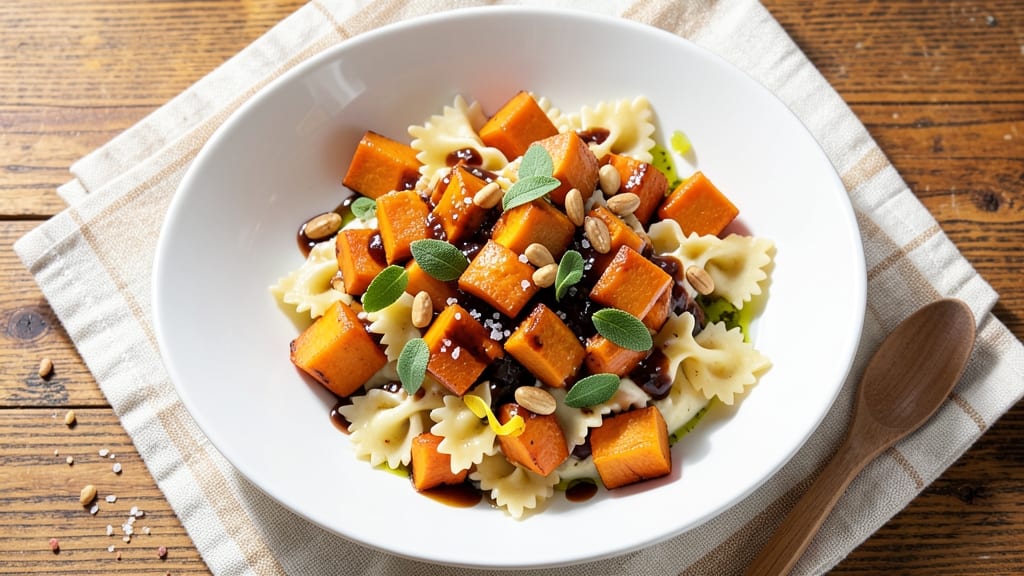
This butternut squash pasta salad recipe transforms autumn's best ingredient into a warm, comforting dish that defies the "salad" stereotype. 💛 The secret lies in roasting the squash until caramelized and tender—its natural sweetness pairs perfectly with al dente pasta and a bright, tangy dressing that balances every bite.
What makes this recipe stand out is the contrast between warm roasted squash and cool pasta, creating a satisfying texture play that's both hearty and refreshing. With just 15 minutes of active prep and 40 minutes of hands-off roasting, it's ideal for weeknight dinners or meal prep.
The dish is naturally vegetarian, but easily customizable with optional add-ins like toasted pecans or crumbled feta.
By the time you're done, you'll have a pasta salad that's rich in flavor and texture—creamy roasted squash, tender pasta, and a dressing that clings perfectly to each component. The aroma alone will have everyone anticipating dinner, while the first bite delivers that perfect balance of sweet, savory, and tangy.
Serve as a side dish alongside grilled chicken or fish, or as a complete meal with a sprinkle of fresh herbs. The recipe scales beautifully for crowds, making it perfect for holiday gatherings or family dinners. Let's get started!
Ingredients for butternut squash pasta salad
Autumn’s golden star meets pasta’s comforting embrace—here’s the ingredient lineup for a salad that’s anything but ordinary.
| Ingredient | Amount | Notes |
|---|---|---|
| Medium Butternut Squash 🎃 | 1 ½ lb | Peeled, cubed, seeds removed |
| Farfalle Pasta 🍝 | 12 oz | Al dente preferred, uncooked |
| Extra-Virgin Olive Oil 🫒 | ½ cup | For roasting and dressing |
| Maple Syrup 🍯 | 2 tbsp | For caramelizing squash |
| Balsamic Vinegar 🍷 | ¼ cup | For tangy dressing |
| Fresh Sage Leaves 🌿 | ¼ cup | Chopped, aromatic |
| Fresh Rosemary 🌿 | 1 tbsp | Chopped, pine-fresh |
| Garlic Cloves 🧄 | 4 cloves | Minced, aromatic |
| Dijon Mustard 🍯 | 1 tbsp | For dressing depth |
| Vegetable Broth 💧 | ½ cup | Low-sodium preferred |
| Pecans 🥜 | ½ cup | Toasted, chopped (optional) |
| Fresh Arugula 🌱 | 2 cups | Baby leaves for texture |
| Lemon Zest 🍋 | 1 tsp | Bright citrus finish |
| Salt 🧂 | 1 ½ tsp | Diamond Crystal preferred |
| Black Pepper 🌶️ | ½ tsp | Freshly ground |
The butternut squash is your flavor anchor—look for small to medium squash with a heavy, dense feel (the bigger the squash, the more watery the flesh). Whole Foods or local farms often have the sweetest varieties, but any good grocery store will carry it. Roasting caramelizes the natural sugars, so don’t skip peeling—it’s all about that tender, creamy texture. If you’re prepping ahead, roast the squash a day in advance and store it in the fridge; it reheats beautifully for even more depth of flavor. The pecans? Toast them in a dry pan until fragrant—3-4 minutes over medium heat—then chop. They add a satisfying crunch that balances the creamy squash perfectly.
No maple syrup? Honey or agave works in a pinch (though maple’s caramel notes are ideal). Short on fresh herbs? Dried sage or rosemary at half the amount gets you close, but fresh is non-negotiable for that bright, aromatic punch. The Dijon mustard is key—it cuts through the sweetness and adds a subtle tang. If you’re avoiding gluten, swap farfalle for gluten-free pasta (just check the package for al dente cooking times). For extra richness, stir in 1 tbsp vegan cream cheese with the dressing, but trust me, the maple-balsamic combo is already a game-changer. The arugula adds a peppery bite—skip it if you prefer milder greens like spinach, but don’t miss the contrast it brings.
This salad tastes even better the next day—the flavors meld beautifully—so make a big batch. Store components separately: pasta and squash in one container, dressing and greens in another. Toss everything together just before serving to keep the arugula crisp. Keeps for 4-5 days in the fridge, but the pecans and herbs start to lose their magic after 2 days, so add them fresh when ready to eat. For meal prep, portion into mason jars with dressing on the bottom and greens on top—shake to combine when ready. Pro tip: Garnish with extra lemon zest right before serving to wake up the flavors.
Why You'll Love This Recipe
- No Roasting Required: I’ll admit, I used to dread peeling and roasting squash—until I discovered this trick. Just sauté thinly sliced butternut with olive oil until tender, then toss it with the pasta. That caramelized edge? Pure magic with zero cleanup.
- Sweet-Savory Magic: Between us, maple syrup and balsamic might sound odd, but they’re the secret here. The syrup softens the squash while the vinegar cuts through the richness—like a hug for your taste buds. (Yes, even on a Tuesday night.)
- Meal Prep MVP: This salad holds up for days in the fridge, which means zero stress for potlucks or lazy weeknights. Pack it for lunch or serve it cold at a picnic—it’s the one dish that gets better as it sits.
- Budget-Friendly Luxury: Butternut squash is cheaper than most veggies, and farfalle pasta stretches meals effortlessly. Swap the maple syrup for honey if needed, but honestly? This tastes like a fancy fall dinner without the price tag.
Step-by-step instructions for butternut squash pasta salad
Here's how to balance warm roasted squash with cool pasta for a salad that's anything but basic.
🔥 Step 1: Roast the Butternut Squash to Caramelized Perfection
Preheat your oven to 400°F and line a large baking sheet with parchment paper. Toss the 1.5 lb peeled and cubed butternut squash with 2 tablespoons of the extra-virgin olive oil, 2 tablespoons maple syrup, 1 teaspoon salt, and ½ teaspoon black pepper. Spread in a single layer—don't crowd the pan or it'll steam instead of roast.
Roast for 25-30 minutes until the edges are deep golden brown and a knife slides in easily. Here's the thing—I like to flip the squash cubes halfway through (after 15 minutes) for even browning. The maple syrup caramelizes beautifully, creating those sticky, sweet spots you'll crave. If it looks underdone after 30 minutes, give it another 5-10 minutes—it's better to over-roast slightly than under.
🍳 Step 2: Cook the Farfalle Pasta Al Dente
While the squash roasts, bring a large pot of water to a rolling boil and add 1½ teaspoons salt (it should taste like the sea). Add the 12 oz farfalle pasta and cook until 1 minute before al dente—I aim for 11-12 minutes total. Reserve ½ cup pasta water before draining, then rinse briefly under cold water to stop the cooking process immediately. This prevents the pasta from becoming mushy when mixed with the warm squash.
Pro tip: I drain the pasta directly into a colander placed over the baking sheet with the squash. The residual heat from the squash helps keep everything warm while you finish the dressing. This keeps your workflow smooth and prevents temperature swings in the final salad.
🥘 Step 3: Create the Herb-Dijon Dressing
In a small saucepan, combine ½ cup vegetable broth, ¼ cup balsamic vinegar, 1 tablespoon Dijon mustard, 1 teaspoon lemon zest, ¼ cup chopped fresh sage, 1 tablespoon chopped fresh rosemary, and 4 minced garlic cloves. Bring to a gentle simmer over medium heat and reduce by half (about 5 minutes) until thickened to a syrupy consistency.
Strain the mixture through a fine-mesh sieve to remove any herb bits, then whisk in the remaining ¼ cup extra-virgin olive oil until emulsified. Taste and adjust seasoning—you might need a pinch more salt or a splash of vinegar to balance the sweetness from the roasted squash. This dressing is the secret to tying all the flavors together in every bite.
👨🍳 Step 4: Assemble and Toast the Pecans
In a large bowl, combine the warm roasted squash, drained pasta, and 2 cups fresh arugula. Pour the dressing over everything and toss gently but thoroughly. The residual heat from the squash and pasta will help the dressing cling beautifully. If it seems too thick, add 1-2 tablespoons of reserved pasta water to loosen it.
While the salad rests, toast the ½ cup pecans in a dry skillet over medium heat for 3-4 minutes until fragrant and golden. Watch carefully—they burn quickly! Chop them coarsely and sprinkle over the salad just before serving. The nutty crunch contrasts perfectly with the creamy pasta and sweet squash.
⏰ Step 5: Rest and Serve with Fresh Herbs
Let the salad sit for 10 minutes before serving—this allows the flavors to meld completely. The pasta will absorb some of the dressing, and the squash will release its caramelized juices. Garnish with additional chopped fresh sage and rosemary for a pop of color and aroma that makes it look as good as it tastes.
Serve immediately while the squash is still warm and the dressing is glossy. Each bite delivers that perfect contrast of warm, sweet squash with cool, al dente pasta and the bright, tangy dressing. For extra flair, add a sprinkle of flaky sea salt right before serving—it elevates every component to restaurant-quality.
Pro Tips For Making Butternut Squash Pasta Salad
- Roast Squash Until Fork-Tender: I learned this the hard way—roasting butternut squash at 400°F (200°C) until it’s actually soft enough to mash or cube takes about 35-40 minutes, not 25. Check for a knife slipping in easily, not just a slight give. Overcooked squash turns to mush; undercooked stays rubbery. (Yes, even if you’re impatient like me.)
- Salt Pasta Water Like the Sea: This isn’t the prettiest method, but it’s the tastiest: Boil your farfalle in well-salted water—about 1.5 tablespoons of salt per 4 quarts. Taste it before adding pasta; it should taste like the ocean. Under-salted pasta? Bland. Over-salted? You’ll regret it later. Drain and rinse just enough to stop the cooking, but don’t drown it.
- Balance Sweet and Tang: Maple syrup and balsamic vinegar are a match made in heaven, but resist the urge to drown the salad. Start with 1 tablespoon each per 2 cups of dressing, then adjust after tossing—taste as you go. Too sweet? Add a splash of vinegar. Too sharp? Drizzle in more syrup. (Your future self will thank you for not guessing blindly.)
- Toast Pasta Before Tossing: Skip the soggy farfalle by giving it a quick 2-minute dry toast in a skillet over medium heat before mixing with the squash. The edges crisp slightly, adding texture and preventing the pasta from turning to mush in the dressing. (Does it look weird? Yes. Does it work? Every single time.)
Essential equipment for this dish
Roasting Pan Essentials
Your rimmed baking sheet is the MVP here—opt for a half-sheet pan (18x13 inches) to maximize surface area for even roasting. I swear by Ozeri 18x13-inch pans with silicone edges—they’re sturdy enough to handle squash flips without warping.
Line it with parchment paper to prevent sticking and make cleanup a breeze. Pro tip: Use two pans if you’re roasting more than 1.5 lbs of squash at once to avoid crowding. 🔥
Precision Temperature Tools
A meat thermometer (like the ThermoWorks Smoke) isn’t just for meat—it’s your secret weapon for perfect squash. Insert it into a cube to check for doneness at 200°F internal temp. For the oven, I trust the Oster digital thermometer—it’s accurate and affordable.
If you’re roasting in batches, preheat your oven for at least 15 minutes to ensure consistent 400°F temps throughout. 🌡️
Pasta Cooking Gear
Skip the colander with tiny holes—it traps pasta. Instead, grab a wide-mesh pasta strainer (like OXO Good Grips) to drain water efficiently while keeping strands intact.
For al dente perfection, use a timer (I love the KitchenAid 30-minute countdown timer)—set it for 1 minute before the package’s suggested time. And for that pasta water reserve, keep a small measuring cup nearby to scoop out ½ cup before draining. 🍲
Dressing Emulsification Tools
Your immersion blender (like the Ninja MagiMix) is a game-changer for this dressing—it emulsifies the oil perfectly without lumps. No blender? A whisk and fine-mesh strainer work, but you’ll need to whisk vigorously for 2-3 minutes to achieve the same silky texture.
For reducing the broth, a small saucepan with a lid (I use All-Clad Stainless Steel) prevents splattering and speeds up evaporation. 🥄
Toasted Nut Crunch
A non-stick skillet (like Calphalon Classic) is ideal for toasting pecans—it heats evenly and releases nuts easily. Keep a small bowl nearby to transfer toasted pecans immediately (they burn fast!).
For chopping, a sharp chef’s knife (like Wüsthof Ikon) or microplane works best. If you’re prepping ahead, toast nuts in 30-second bursts in the microwave (covered) to avoid over-browning. 🥜
Serving and Storage Containers
For serving, glass pasta bowls (like Le Creuset Stoneware) keep the salad warm and look elegant. For meal prep, mason jars (8-ounce size) work perfectly—layer dressing at the bottom, then pasta and squash, topped with arugula.
Store leftovers in airtight containers (I love Rubbermaid Brilliance) for up to 4 days. For reheating, a microwave-safe bowl with a splash of water prevents drying out. ✨
Nutrition facts
Frequently asked questions
Can I use a different type of squash instead of butternut?
Acorn or delicata squash work beautifully—they're smaller and sweeter with similar textures. Just reduce roasting time by 5-10 minutes since they cook faster. For a milder flavor, kabocha squash is another great option, though it has a slightly denser texture. Avoid hubbard squash—it's too watery and bland for this dish.
How can I make this recipe vegan?
Swap the vegetable broth for mushroom broth, use vegan butter instead of olive oil in the dressing, and replace the Dijon mustard with vegan mustard. For extra richness, stir in 1 tbsp nutritional yeast with the dressing. The maple syrup and balsamic vinegar are already vegan-friendly, so no other substitutions are needed!
Why does my dressing separate after mixing?
This happens when the oil and liquid phases aren't properly emulsified. For a quick fix, whisk in ½ teaspoon of Dijon mustard or 1 teaspoon of lemon juice to help bind the mixture. If it still separates, blend the dressing ingredients together (without oil) first, then slowly drizzle in the oil while blending. The key is to reduce the broth to a syrupy consistency before adding oil.
Can I make this ahead of time?
Yes! Prepare all components separately and store them in airtight containers in the fridge for up to 3 days. Keep the dressing and greens separate until ready to serve to maintain freshness. Reheat the squash and pasta together (covered) in the microwave for 2-3 minutes, then toss with the dressing. Add fresh herbs and pecans just before serving for maximum flavor.
What's the best pasta shape for this recipe?
Farfalle (bowtie) works perfectly because its shape holds the dressing beautifully, but you can use penne, fusilli, or rotini instead. For extra texture contrast, try rigatoni or casarecce. Avoid long, thin noodles like spaghetti—they can get lost in the salad. Just be sure to cook your pasta 1 minute less than package instructions for al dente perfection.