
Side Dishes
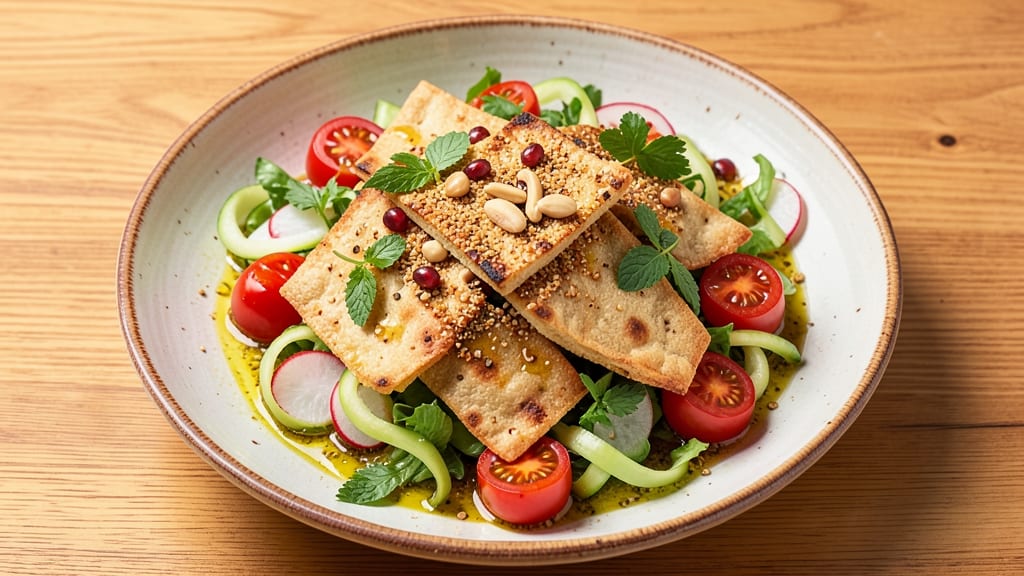
This authentic Lebanese fattoush salad recipe delivers the perfect balance of crispy pita chips, fresh vegetables, and a tangy sumac-lemon dressing that transports you straight to Beirut. The secret lies in toasting the pita until it's golden and shatteringly crisp—no soggy bites here.
I've perfected this dish over years of testing, ensuring every element comes together for that signature Lebanese crunch and zesty brightness.
The foundation of a great fattoush is the dressing: a vibrant mix of sumac, lemon juice, and olive oil that adds a bright, citrusy tang. Fresh herbs like mint and parsley brighten the dish, while radishes, cucumbers, and tomatoes provide crisp texture and refreshing crunch.
The optional additions of labneh or hard-boiled eggs add richness, but the traditional version shines on its own.
What you'll end up with is a salad that's as beautiful as it is delicious—vibrant layers of color, crispy pita chips that hold their shape, and a dressing that clings to every bite.
It's the kind of dish that feels special but comes together in under 30 minutes, making it perfect for weeknight dinners or festive gatherings.
This recipe stays true to its Lebanese roots while being approachable for home cooks. The instructions are clear, and the ingredients are easy to find, so you can enjoy the real deal without the fuss. Let's get started!
Ingredients for authentic lebanese fattoush salad
Crispy pita chips, fresh veggies, and zesty dressing—this is your Lebanese fattoush shortcut.
| Ingredient | Amount | Notes |
|---|---|---|
| Pita Bread 🍞 | 2 whole | Thin, round, store-bought preferred |
| Sumac 🌶️ | 2 tbsp | Finely ground for tangy zing |
| Fresh Lemon Juice 🍋 | ¼ cup | Freshly squeezed, no pulp |
| Extra-Virgin Olive Oil 🫒 | ½ cup | High quality, fruity |
| Fresh Mint Leaves 🌿 | ½ cup | Packed, stems removed |
| Fresh Parsley 🌿 | ¼ cup | Flat-leaf preferred |
| Cucumber 🥒 | 2 cups | Seedless, diced small |
| Tomatoes 🍅 | 2 cups | Heirloom, diced small |
| Red Onion 🧅 | 1 whole | Thinly sliced, white part only |
| Radishes 🥕 | 1 cup | Thinly sliced, French preferred |
| Salt 🧂 | 1 ½ tsp | Kosher or sea salt |
| Ground Black Pepper 🌶️ | ½ tsp | Freshly ground preferred |
| Garlic Cloves 🧄 | 2 cloves | Minced fine |
The pita is non-negotiable. Grab thin, round pita from the Middle Eastern aisle at Whole Foods or Trader Joe's—they toast best. If you can't find it, lavash bread works too. Look for pita with a slight sheen; that's the freshest. For the sumac, Penzeys or Middle Eastern markets have the best quality—it should be vibrant red, not dull. The mint and parsley? Buy fresh bunches and strip the leaves yourself; pre-chopped herbs lose flavor fast. Radishes? French or daikon add that perfect crunch—skip the regular red ones.
No sumac? Substitute lemon zest plus extra lemon juice, but it won't be the same. Fresh herbs wilt fast—if you're prepping ahead, wrap them in damp paper towels and store in a sealed container. The tomatoes can be swapped for cherry tomatoes halved if that's what's ripe. For extra richness, add 1/4 cup labneh or vegan yogurt to the dressing. The garlic can be roasted for a milder flavor—wrap whole cloves in foil, bake at 400°F for 10 minutes, then mince. Trust me, it changes everything.
Toast the pita chips immediately before serving—they lose crispiness fast. Store leftover dressing in a jar with olive oil on top to preserve freshness for 3 days. The veggies keep well for 2 days in the fridge if stored separately. For a crowd, double the dressing and prep all veggies ahead—just assemble when ready to serve. The pita chips? Eat within 10 minutes or they'll soften. Worth the extra effort, though.
Why You'll Love This Recipe
- Crisp in Minutes: I swear by the pita—just toast it until golden, then break it into shards while still warm. No fancy tools, no stress, and that crunch? Pure satisfaction every time.
- Sumac Magic: Honestly, that tangy, citrusy kick from sumac is what makes this salad sing. A quick shake over warm pita transforms it from good to ridiculously good—no extra effort, just instant zing.
- Picnic Ready: Between us, this is my go-to for potlucks, office lunches, or lazy Sundays. Pack it in a jar (pita on top, dressing on the side) and it stays fresh for days—no sad wilted greens here.
- Budget Brightener: Fresh herbs and toasted bread sound fancy, but this costs me pennies per serving. The olive oil and lemon juice stretch far, and pita’s cheap—yet it feels like a restaurant-worthy dish. (Yes, even on a Tuesday night.)
Step-by-step instructions for authentic Lebanese fattoush salad
Here's how to assemble this vibrant salad with crispy pita chips and bold Middle Eastern flavors.
Prepare the Crispy Pita Chips
Preheat your oven to 375°F and line a baking sheet with parchment paper. Cut each of the 2 whole pita breads into 8 wedges (you'll have 16 total). Brush both sides of each wedge lightly with 0.25 cup of the extra-virgin olive oil—just enough to coat without soaking through.
Arrange the wedges in a single layer on the baking sheet, leaving ½-inch between each piece. Bake for 8-10 minutes until the edges turn golden brown and crispy, while the centers remain slightly soft. Watch them carefully—they go from perfect to burnt quickly. Remove from oven and set aside.
Mix the Tangy Sumac Dressing
In a small bowl, whisk together the 2 tbsp sumac, 0.25 cup fresh lemon juice, remaining 0.25 cup extra-virgin olive oil, 1.5 tsp salt, and 0.5 tsp ground black pepper. The sumac will create a vibrant red hue and a bright, citrusy tang that's essential to authentic fattoush.
Add the 2 minced garlic cloves and let the mixture sit for 5 minutes while you prepare the vegetables. This allows the garlic to infuse the dressing without overpowering it. Taste and adjust seasoning—you want it balanced between tangy, salty, and slightly garlicky.
Chop and Combine the Fresh Vegetables
In a large mixing bowl, combine the 2 cups diced cucumber, 2 cups diced heirloom tomatoes, 1 cup thinly sliced radishes, and white part of 1 whole red onion (thinly sliced). Add 0.5 cup chopped fresh mint leaves and 0.25 cup chopped fresh parsley, tossing gently to distribute the herbs evenly.
Season the vegetables with a pinch of salt and let them sit for 5 minutes while you finish the chips. This allows the flavors to begin melding. The vegetables should look vibrant and colorful—this is where the salad gets its signature freshness and crunch.
Assemble the Fattoush
Just before serving, pour the sumac dressing over the vegetable mixture and toss gently to coat. Add the crispy pita chips and toss again, being careful not to crush them. The contrast between the cool, fresh vegetables and the warm, crispy pita is what makes fattoush so special.
Let the salad sit for 10 minutes before serving to allow the flavors to fully meld. The pita chips should maintain their crispness while the vegetables soak up just enough dressing to be flavorful. Serve immediately while the chips are still crispy—this salad doesn't keep well once assembled.
Pro Tips For Making Authentic Lebanese Fattoush Salad
- CHAR THE PITA RIGHT: I learned this the hard way—don’t just toast the pita until it’s golden. Char it over high heat until you see blackened spots (yes, even if it looks burnt). Those crispy, smoky edges are what give fattoush its signature crunch and depth. Tear it immediately after—it’ll still hold shape but won’t turn soggy.
- USE DRY SUMAC: That pre-mixed sumac in a jar? Skip it. Fresh or thoroughly dried sumac clings to the bread like a sticky, tangy hug instead of dissolving into the dressing. Toast it lightly in a dry pan for 30 seconds first—this intensifies its flavor and prevents clumping. (Pro move: Sift it over the salad right before serving so it stays vibrant.)
- DRESS THE SALAD LAST: Adding lemon juice and olive oil too early turns your crispy pita into a sad, limp mess. Keep the dressing ingredients separate until you’re ready to toss—just a quick drizzle and a sprinkle of mint right before serving. This also lets you adjust the tanginess to your taste instead of drowning the salad in liquid.
- SALT THE PITA BEFORE TOASTING: This isn’t optional. Sprinkle the pita with a pinch of salt before charring—it crisps faster and prevents the bread from tasting bland under the sumac’s punch. I used to skip this, and the texture always felt off. Trust me, the salt makes the difference between "good" and "wow."
Wine and beer pairings for this recipe
Lebanese White Wine
For a true taste of Lebanon, reach for a crisp Chardonnay or Ojoura from the Bekaa Valley. The Ojoura—a local white wine—pairs beautifully with fattoush’s bright sumac and lemon dressing, enhancing the salad’s citrusy notes without overpowering the herbs.
Look for Château Musar Ojoura or Domaine des Tourelles for authentic Lebanese flavors. 🍷
Crisp Beer Pairings
A light, effervescent Belgian witbier like Stella Artois or Hoegaarden complements the salad’s freshness. The citrusy notes in these beers mirror the sumac and lemon, while their carbonation cuts through the richness of the pita chips.
For a local twist, try Al-Moutmir from Lebanon—it’s a crisp lager that balances the salad’s tangy dressing perfectly.
Red Wine for Bold Palates
If you prefer red, opt for a light-bodied Lebanese red like Cinsault or Cabernet Sauvignon from Château Musar. These wines have enough acidity to stand up to the sumac’s tang while their fruitiness harmonizes with the tomatoes and cucumbers. Avoid heavy, tannic reds—they’ll clash with the salad’s brightness.
Non-Alcoholic Options
For a refreshing non-alcoholic match, try sparkling pomegranate juice or ayran (a yogurt-based drink). The tartness of pomegranate juice echoes the sumac, while ayran’s creamy texture balances the salad’s crispy pita. Serve chilled for the best experience. 💧
Pro Tip: Temperature Matters
Serve your wine or beer slightly chilled—45-50°F for whites and 50-55°F for reds. The cool temperature enhances the salad’s freshness, making each bite feel even more vibrant. I like to chill my wine for 30 minutes in the fridge before serving—it’s a game-changer for summertime meals.
Nutrition facts
Frequently asked questions
Can I make fattoush without sumac?
Yes, but the flavor won't be authentic. For a substitute, mix 1 tbsp lemon zest with an extra 1 tbsp lemon juice and ½ tsp paprika to mimic sumac's tangy, slightly spicy profile. The dressing will lack that signature red hue, but the citrus punch will still work.
How do I keep the pita chips crispy?
Toast the pita wedges fresh before serving—they lose crispness fast. For extra crunch, brush with olive oil and bake at 375°F for 8-10 minutes until golden. Store any leftovers in an airtight container for 10 minutes max before eating.
Is fattoush gluten-free?
Traditional fattoush contains pita bread, which has gluten. For a gluten-free version, use gluten-free pita or flatbread and ensure your sumac is certified gluten-free. The rest of the ingredients are naturally gluten-free, so the salad can still be delicious!
Can I prep fattoush ahead of time?
but assemble it last. Chop all veggies and store separately in the fridge for 2 days. Mix the dressing and keep it in a jar with olive oil on top for 3 days. Toast the pita fresh—it's the only component that doesn't hold up well when made ahead.
What's the best way to store leftovers?
Store the dressing separately in a sealed container with olive oil on top to preserve freshness. Keep chopped veggies in airtight containers for 2 days. If you must store leftovers, separate the pita chips (eat within 10 minutes of reheating) and toss the veggies with fresh dressing when ready to serve.