
Side Dishes
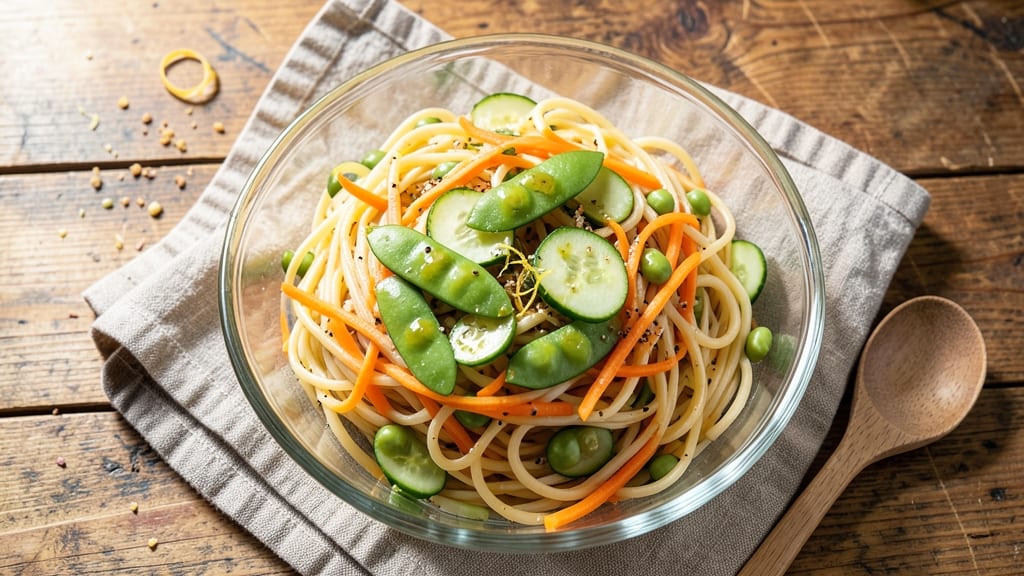
This Asian spaghetti salad recipe transforms a classic side into a vibrant, flavor-packed dish that balances crisp noodles with bold sesame-ginger dressing. The secret lies in chilled noodles tossed with fresh vegetables and a dressing that marries Asian umami with Western freshness—perfect for potlucks or meal prep. I developed this after craving something lighter than heavy Asian dishes but still packed with authentic flavors.
The foundation is cold spaghetti (cooked al dente and chilled) mixed with shredded carrots, cucumber, and edamame for texture and color.
The dressing—sesame oil, rice vinegar, ginger, and a touch of honey—creates a bright, tangy coating that clings to every strand. Ready in 30 minutes, this salad keeps well for days, making it ideal for busy weeks.
What sets this apart is the flavor balance: the dressing’s ginger and sesame cut through the noodles’ starchiness, while the vegetables add crunch. Top with toasted sesame seeds and sliced green onions for extra depth. It’s the kind of dish that feels special but comes together effortlessly—no takeout required.
Serve alongside grilled chicken or shrimp for a complete meal, or enjoy it solo as a refreshing, protein-packed lunch. The dressing can be made ahead, so all you’ll need at the last minute is to toss and serve. Here’s how to make it perfectly every time.
Ingredients for asian spaghetti salad
Pantry staples meet fresh produce for this vibrant Asian-inspired salad—simple but full of flavor.
| Ingredient | Amount | Notes |
|---|---|---|
| Spaghetti 🍝 | 8 oz | Dry, cooked al dente |
| Carrots 🥕 | 2 medium | Shredded, about 1 cup |
| English Cucumber 🥒 | 1 whole | Seedless, thinly sliced |
| Shelled Edamame 🌱 | 1 cup | Frozen, thawed and trimmed |
| Sesame Oil 🫒 | 2 tbsp | Toasted, for flavor |
| Rice Vinegar 💧 | 3 tbsp | Seasoned preferred |
| Fresh Ginger 🧄 | 1 tbsp | Grated, finely |
| Honey 🍯 | 1 tbsp | Light, for balance |
| Soy Sauce 🥄 | 2 tbsp | Low-sodium preferred |
| Toasted Sesame Seeds 🌰 | 1 tbsp | For garnish |
| Green Onions 🧅 | 2 whole | Sliced, white and green |
| Salt 🧂 | ½ tsp | Kosher or sea salt |
| Black Pepper 🌶️ | ¼ tsp | Freshly ground |
| Olive Oil 🫒 | 1 tbsp | For tossing |
The carrots should be bright orange and crisp—organic from the grocery store produce section works best. If you're using pre-shredded, rinse it well to remove excess starch. The cucumber? English cucumbers have fewer seeds, but regular ones work if you remove them. Edamame can be frozen—just thaw and trim the ends. I always grab mine from Trader Joe's because they're pre-shelled, which saves time. For the spaghetti, De Cecco or any high-quality brand makes a difference—it holds up better when chilled.
No sesame oil? Toasted sesame oil from an Asian market is ideal, but regular sesame oil or even a tiny bit of peanut oil in a pinch will work. The ginger should be fresh—dried just doesn’t cut it here. If you can’t find fresh, grate some ginger powder and add a pinch of lemon juice to mimic the brightness. Soy sauce? Kikkoman is reliable, but any low-sodium brand works. The honey can be swapped for maple syrup if you're avoiding it, though it’ll taste slightly different. For the dressing, taste as you go—you might need a touch more vinegar or honey depending on your taste.
This salad tastes even better the next day—make the dressing ahead and store it separately for up to 5 days. The noodles and veggies keep well in the fridge for 3 days if stored in an airtight container. I like to portion mine into meal prep containers so I can grab it straight from the fridge. The sesame seeds and green onions can be added fresh right before serving—they add that restaurant-quality finish. If you're meal prepping, store the dressing separately and toss it in just before eating to keep everything crisp.
Why You'll Love This Recipe
- No-Cook Crunch Prep: The cucumber and carrots stay crisp—just slice, toss, and let the dressing work its magic. Honestly, I’ve made salads where veggies turn sad by lunchtime, but this one holds up like a champ.
- Umami Bomb Combo: Sesame oil and edamame? That’s the flavor duo that makes this ridiculously good. The nutty depth from the oil cuts through the spaghetti’s chew, while the edamame adds a protein punch that keeps you coming back.
- Lunchbox Legend: Between us, this is my go-to for picnics, office lunches, or even a quick dinner. Pack it in jars or a container—it stays fresh for days, and the flavors only get better as the sesame oil infuses overnight.
- Budget Meal Magic: Spaghetti, carrots, and cucumbers are cheap staples, but the edamame and sesame oil turn them into something special. I’ll be real: this salad costs half what takeout does, yet everyone thinks I slaved over it.
Step-by-step instructions for Asian spaghetti salad
This refreshing salad comes together in minutes with bright flavors and satisfying textures.
Cook the Spaghetti to Al Dente Perfection
Bring a large pot of water to a rolling boil and salt it generously—it should taste like the sea. Add the 8 oz spaghetti and cook for 1 minute less than the package instructions suggest. This ensures the noodles stay al dente when chilled. Drain immediately and rinse under cold water to stop the cooking process and remove excess starch. Spread the noodles on a baking sheet and let them cool completely for 15 minutes before assembling the salad.
I always rinse the pasta—it prevents a gummy texture and helps the dressing cling better. If you skip this step, the noodles will absorb too much dressing and become soggy. Let them cool completely so they don't get mushy when combined with the cold vegetables later.
Prepare the Vegetable Components
Using a box grater or mandoline, shred the 2 medium carrots into fine, even strips—about 1 cup total. Transfer them to a large mixing bowl. Thinly slice the 1 whole English cucumber into ¼-inch thick rounds and add to the bowl. Trim any ends from the 1 cup shelled edamame and add them whole for a satisfying bite. Finally, slice the 2 whole green onions into ¼-inch pieces and set aside for garnish later.
The key here is uniformity—evenly sized vegetables ensure balanced texture in every bite. I like to use a mandoline for precise cucumber slices, but a sharp knife works too. Don't skip trimming the edamame; those little stems can be tough and ruin the texture contrast.
Make the Sesame-Ginger Dressing
In a small bowl, whisk together the 2 tbsp sesame oil, 3 tbsp rice vinegar, 1 tbsp finely grated fresh ginger, 1 tbsp honey, and 2 tbsp soy sauce until fully combined. Add 0.5 tsp salt and 0.25 tsp black pepper and whisk again. The dressing should be smooth with a vibrant, aromatic scent—you're aiming for a perfect balance of sweet, tangy, and umami flavors.
Taste the dressing before using it—it should be bright and slightly tangy. If it needs more depth, add another ½ teaspoon of soy sauce. If it's too strong, thin it with 1 teaspoon of water. The dressing is the heart of this salad, so don't rush this step.
Assemble and Toss the Salad
Add the cooled spaghetti to the mixing bowl with the prepared vegetables. Drizzle in the 1 tbsp olive oil and pour the dressing over everything. Using two large spoons or your hands, gently toss until all the noodles and vegetables are evenly coated. The salad should look vibrant with glossy noodles and bright vegetables—this is your visual cue that it's ready.
Let the salad sit for 5 minutes before serving. This resting time allows the flavors to meld together. If the dressing seems too thick after tossing, add 1-2 tablespoons of cold water to loosen it. The perfect texture should be lightly coated without being soggy.
Garnish and Serve Immediately
Transfer the salad to a serving platter and sprinkle with the 1 tbsp toasted sesame seeds and reserved sliced green onions. The seeds add a delightful crunch and nutty flavor, while the green onions provide a fresh finish. Serve immediately while the salad is still crisp and vibrant—this dish tastes best when enjoyed fresh.
For an extra touch, I like to serve this salad with a side of warm dumplings or grilled chicken. The contrast of warm and cold makes each bite even more satisfying. The flavors will continue to develop as it sits, so don't wait too long to eat—this salad is at its peak right after assembly.
Pro Tips For Making Asian Spaghetti Salad
- COOK SPAGHETTI AL DENTE: Asian spaghetti salad needs that slight bite—undercooked noodles turn mushy fast. Boil your pasta in salted water until it’s just shy of tender (about 1 minute less than package instructions), then shock it in ice water immediately. This stops cooking, keeps texture crisp, and prevents the salad from turning into a soggy mess later.
- JULIENNE CARROTS FAST: Skip the peeler—use a mandoline set to 2mm for even, restaurant-style shreds in seconds. If you don’t have one, stack carrots and slice them thinly while holding them steady with a damp towel (yes, it works). Uneven shreds = uneven texture in your salad.
- DRESS IT AFTER CUCUMBER: Toss the cucumber in the dressing last—it absorbs liquid like a sponge. I learned this the hard way when my first batch turned watery. Add it to the bowl just before serving, or drizzle the dressing lightly over the top instead.
- TOAST SESAME SEEDS FIRST: Dry-toast your sesame seeds in a small pan over medium-low heat for 30 seconds before adding oil—this deepens their nutty flavor. Add ½ teaspoon sesame oil to the pan while they toast, then drizzle the mixture over the salad. The aroma alone makes it taste more restaurant-worthy.
Creative variations of this asian spaghetti salad
Spicy Thai-Inspired Twist
Add 1 tbsp chili garlic sauce (like Sriracha) and ½ tsp red pepper flakes to the dressing for a fiery kick. Toss in ½ cup thinly sliced Thai basil and ¼ cup crushed peanuts for texture.
Finish with a drizzle of lime juice to brighten the heat. This version pairs perfectly with grilled shrimp or tofu. 🌶️
Japanese-Inspired Soba Noodle Swap
Replace spaghetti with 8 oz buckwheat soba noodles for an authentic Japanese touch. Use mirin instead of honey in the dressing and add 1 tsp grated daikon radish to the veggie mix. Top with toasted nori strips and extra sesame seeds. The earthy soba noodles balance the dressing beautifully. 🍜
Sweet and Tangy Korean Fusion
Swap the honey for 1 tbsp gochujang (Korean chili paste) and add 1 tsp toasted sesame oil to the dressing. Include ½ cup julienned cucumber and ¼ cup kimchi for tangy crunch.
Garnish with sesame seeds and a sprinkle of toasted sesame seeds. This version is bold and complex, perfect for Korean BBQ nights. 🇰🇷
Vegetarian Protein Boost
Add 1 cup marinated tofu or ½ cup chickpeas to the salad for extra protein. Toss the tofu in 1 tbsp soy sauce and 1 tsp sesame oil before adding it to the mix.
For chickpeas, lightly toast them with ½ tsp smoked paprika for depth. Both options add heartiness without overpowering the fresh flavors. 🌱
Summer Citrus Refresh
Brighten the salad with ½ cup diced mango or ¼ cup mandarin orange segments. Add 1 tsp grated lime zest to the dressing and a splash of fresh lime juice.
The citrus cuts through the richness of the sesame dressing, making it ideal for summer picnics. Pair with grilled chicken or shrimp skewers for a complete meal. 🍍
Meal-Prep Friendly Upgrade
Make this salad even more convenient by prepping the dressing and veggies separately. Store the dressing in a small container and the veggies in a separate airtight container. When ready to eat, toss everything together with the cooled noodles.
This keeps the salad crisp for up to 4 days in the fridge. Perfect for busy weeks! ⏰
Nutrition facts
Frequently asked questions
Can I use regular spaghetti or should I get whole wheat?
Regular spaghetti works perfectly for this recipe—it holds its shape well when chilled and absorbs the dressing beautifully. If you prefer whole wheat, use it, but note the texture may be slightly denser. For best results, cook both types al dente and rinse thoroughly under cold water to prevent mushiness.
How do I make this salad spicier?
Add ½ teaspoon of red pepper flakes or 1 teaspoon of chili garlic sauce to the dressing for immediate heat. For extra depth, include 1 tablespoon of minced jalapeño in the veggie mix. Always taste as you go—start with less and adjust to preference.
Can I prepare this salad ahead of time?
Store the dressing separately in an airtight container for up to 5 days and keep the cooled noodles and veggies in another container for 3 days. Toss everything together just before serving to maintain crispness. This makes it perfect for meal prep!
What if I don't have sesame oil?
Use 1 teaspoon of peanut oil or toasted sesame oil substitute in a pinch. For extra flavor, add ½ teaspoon of garlic powder to the dressing. The dish will still taste delicious—just slightly less nutty.
Can I add protein to this salad?
Yes! Grilled chicken, shrimp, or marinated tofu work wonderfully. Cook your protein separately, let it cool, and toss it in just before serving. For extra flavor, marinate the protein in 1 tablespoon soy sauce and 1 teaspoon sesame oil before adding.