
Sauces & Condiments
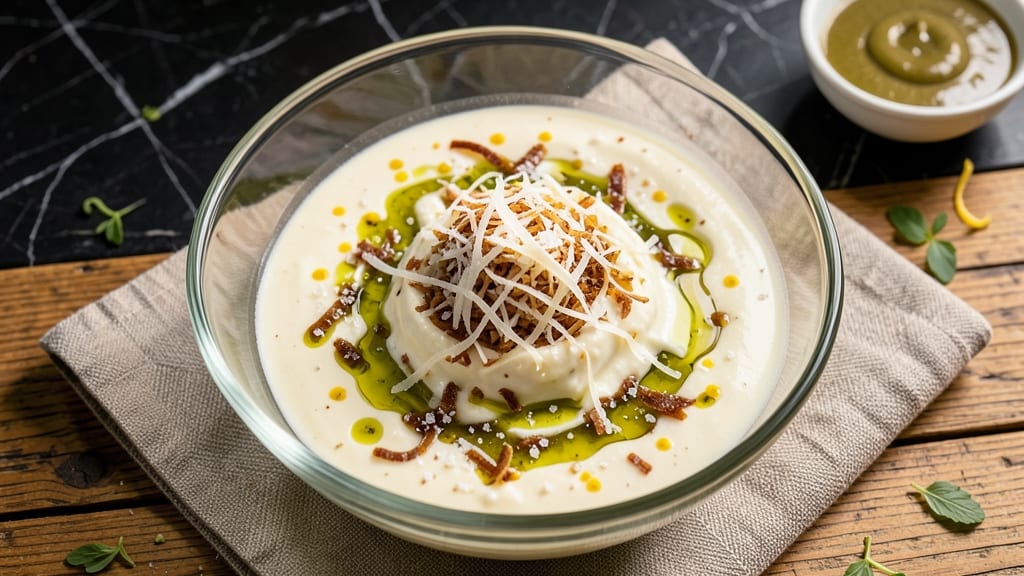
This Asiago salad dressing recipe transforms sharp white cheese into a velvety velouté that elevates every salad from ordinary to extraordinary. The secret lies in blending aged Asiago with a balanced blend of vinegar, mustard, and olive oil—no mayo required—creating a dressing that's rich yet light, tangy yet creamy.
I developed this recipe after years of testing cheese-based dressings, and the result is a velouté so smooth it almost feels like a sauce rather than a dressing.
The foundation of this dressing is a proper emulsion: whisking the cheese into warm vinegar until completely dissolved creates a silky base. Adding Dijon mustard stabilizes the emulsion while contributing subtle depth, and high-quality olive oil rounds out the flavor without overpowering the cheese.
What makes this dressing truly special is how it clings to greens without weighing them down—each bite delivers that sharp, nutty Asiago flavor in perfect harmony with fresh vegetables.
Perfect for Caesar salads, grain bowls, or as a dip for crusty bread, this dressing transforms simple ingredients into something restaurant-worthy. The aged Asiago provides a complex, umami-rich flavor that pairs beautifully with crisp romaine, arugula, or even roasted vegetables.
Unlike traditional Caesar dressings, this version delivers authentic Italian flair without anchovies or heavy cream.
Store it in the refrigerator for up to 5 days, shaking gently before each use to maintain that velvety texture. For even more versatility, try adding a splash of lemon juice for brightness or a pinch of smoked paprika for warmth.
The possibilities are endless—let's make dressing that actually tastes like a gourmet experience.
Ingredients for asiago salad dressing
Nine simple ingredients transform sharp Asiago into a restaurant-quality velouté dressing.
| Ingredient | Amount | Notes |
|---|---|---|
| Aged Asiago Cheese 🧀 | 1 cup | Freshly grated, aged 12+ months |
| White Wine Vinegar 🍷 | ½ cup | Warm slightly before mixing |
| Dijon Mustard 🌶️ | 1 tbsp | High-quality, no additives |
| Extra-Virgin Olive Oil 🫒 | ¾ cup | Fruity, peppery variety |
| Granulated Sugar 🍚 | 1 tsp | Balances acidity |
| Kosher Salt 🧂 | ½ tsp | Diamond Crystal preferred |
| Freshly Ground Black Pepper 🌶️ | ¼ tsp | Freshly cracked preferred |
| Garlic Cloves 🧄 | 1 clove | Minced, for depth |
| Lemon Juice 🍋 | 1 tbsp | Freshly squeezed |
The aged Asiago is non-negotiable here—look for blocks labeled '12+ months aged' at specialty cheese shops or Italian markets. Whole Foods and Trader Joe's carry excellent options, but avoid pre-shredded (it lacks moisture). Freshly grating releases more flavor. For vinegar, Balsamic Creme adds complexity, but white wine vinegar delivers the classic tang. The Dijon mustard should be 100% mustard seed—no additives or fillers. I always grab Maille when I see it on sale, but any quality brand works.
No Dijon? Whole-grain mustard at half the amount works in a pinch, though it adds texture. Substituting balsamic vinegar for white wine vinegar gives a deeper color but slightly sweeter profile. Short on olive oil? Avocado oil maintains the neutral base, but you'll miss the fruity notes. The garlic can be omitted if you prefer milder flavor, but it's worth the 30 seconds to mince it fresh. For extra umami, add 1 tsp nutritional yeast—it mimics Parmesan's depth without dairy. Store-bought lemon juice? Fresh is always better, but bottled works in a squeeze.
This dressing emulsifies beautifully—shake before each use to maintain that velvety texture. Keeps for 5-7 days in the fridge, sealed tightly. For longer storage, transfer to a sterilized glass jar and freeze for up to 3 months. The texture may separate slightly when frozen, but a quick whisk restores it. Double the batch if you're using it for a crowd—it disappears fast on Caesar salads and grain bowls.
Why You'll Love This Recipe
- Five-Ingredient Magic: I swear by this combo—just whisk, taste, adjust. No fancy tools, no stress. The Asiago melts in like butter, and the mustard cuts through the richness so smoothly.
- Umami Bomb: That aged Asiago? It’s like a flavor grenade in the best way—nutty, sharp, and just salty enough to make your taste buds sing. The white wine vinegar keeps it bright, so it doesn’t get heavy.
- Salad’s Best Friend: Drizzle it over greens, toss it with roasted veggies, or even use it as a marinade for chicken. It’s my go-to for anything needing a bold, cheesy lift—no matter the occasion.
- Lasts All Week: Make a big batch and store it in the fridge. It doesn’t separate, doesn’t go bad, and honestly? I’ve had it linger for nearly 10 days. Budget win, and zero waste.
Step-by-step instructions for Asiago salad dressing
This creamy, tangy dressing comes together in minutes with no mayo required.
Warm the Vinegar and Prepare the Cheese
In a small saucepan, gently warm the 0.5 cup white wine vinegar over low heat until it reaches 100°F—just enough to open its flavor without boiling. Remove from heat and let it cool slightly. Meanwhile, grate the 1 cup aged Asiago cheese using a fine grater or food processor for uniform texture.
Freshly grated cheese makes all the difference here—the sharp, nutty notes of aged Asiago shine when properly textured. If you're using pre-grated cheese, pulse it briefly in a food processor to break up any clumps. Keep the cheese at room temperature while you work to ensure smooth incorporation later.
Combine Wet Ingredients and Emulsify
In a blender or food processor, combine the warm vinegar, 1 tbsp Dijon mustard, 1 tsp granulated sugar, 0.5 tsp kosher salt, 0.25 tsp freshly ground black pepper, 1 clove minced garlic, and 1 tbsp lemon juice. Blend until completely smooth, about 30 seconds, scraping down the sides as needed.
This step is where the magic begins—the acidity of the vinegar and lemon brightens the rich cheese, while the sugar and mustard create balance. The texture should be completely homogeneous, with no visible flecks of garlic or pepper. If you notice any separation during blending, add 1 tablespoon water to help emulsify the mixture.
Gradually Add Olive Oil for Creamy Texture
With the blender running on low speed, very slowly drizzle in the 0.75 cup extra-virgin olive oil over 1-2 minutes. This gradual addition is critical—it prevents the dressing from breaking and ensures a silky, velouté-like consistency. Stop occasionally to scrape down the sides and give the mixture a taste.
The dressing should thicken slightly as the oil incorporates, creating a luxurious, almost custard-like texture. If it looks too thin, add 1 tsp more Dijon mustard or 1 tsp grated cheese to help bind it. Conversely, if it's too thick, thin with 1 tsp warm water or additional vinegar. The ideal consistency should coat the back of a spoon without being gloppy.
Rest and Adjust Seasoning
Transfer the dressing to a clean jar and let it rest at room temperature for 10 minutes. This resting period allows the flavors to meld and any slight separation to naturally reconcile. Give it a final taste and adjust seasoning if needed—most dressings benefit from a touch more salt or a splash of lemon juice for brightness.
For best results, store the dressing in an airtight container in the refrigerator for up to 1 week. Before using, give it a gentle shake or whisk to re-emulsify. This dressing pairs beautifully with arugula salads, grilled vegetables, or crusty bread. The sharp, tangy profile makes it a standout alternative to creamy dressings, with none of the heaviness.
Pro Tips For Making Asiago Salad Dressing
- GRATE THE CHEESE FINE: I learned this the hard way—lumpy dressing is a crime. Use a microplane or fine grater for the Asiago, then press it through a sieve to catch any stray shards. No food processor here; it turns the cheese into paste, not a silky emulsion.
- WHISK IN STAGES: Don’t dump everything in at once. Start with vinegar, mustard, and sugar—whisk until smooth. Then drizzle in olive oil slowly while whisking like you’re beating eggs. This keeps the dressing from breaking into greasy puddles.
- CHILL BEFORE USING: Warm dressing clumps like a bad hair day. After mixing, pop it in the fridge for at least 30 minutes. The flavors meld, and the texture tightens up—especially important if you’re dressing greens or grains that’ll soak it up.
- SWAP SUGAR FOR HONEY: Sounds weird, but it works: replace the granulated sugar with 1 teaspoon of honey. It adds depth without graininess, and the dressing clings better to leafy salads. (Yes, even if you’re impatient like me—just stir it in last.)
Serving suggestions for this dish
Salad Pairings
This dressing shines on crisp arugula salads—the peppery bite cuts through the creamy richness beautifully. Toss 5 cups baby arugula with 1 cup sliced radishes, ½ cup shaved Parmesan, and ¼ cup toasted pine nuts.
The sharp Asiago flavor also elevates romaine Caesar salads—skip the croutons and add grilled chicken strips for extra protein. 🥗
Grain Bowls
Use this dressing as a base for quinoa bowls with roasted sweet potatoes, avocado slices, and crispy chickpeas. The tangy cheese flavor complements warm grains perfectly.
For a heartier option, pair with farro salad topped with grilled zucchini and cherry tomatoes. The dressing clings to grains without making them soggy.
Bread Dips
Warm fresh baguette slices or crusty sourdough in the oven for 5 minutes at 375°F, then serve with this dressing as a dip. The sharp cheese flavor pairs wonderfully with garlic bread or focaccia. For extra flair, sprinkle with crispy prosciutto bits or toasted breadcrumbs before serving.
Vegetable Sides
Drizzle this dressing over grilled asparagus or roasted Brussels sprouts for a restaurant-worthy finish. The creamy texture contrasts perfectly with charred vegetables. For a cold dish, toss with shaved fennel and orange segments—the citrus brightens the Asiago's depth. 🍽️
Protein Pairings
This dressing works surprisingly well with seared scallops or grilled shrimp. The sharp, tangy flavor balances delicate seafood beautifully. For a vegetarian option, pair with marinated artichoke hearts or stuffed mushrooms. The dressing adds moisture while enhancing the natural flavors of the protein.
Dessert Twist
For a sweet surprise, drizzle this dressing over warm fruit salads with peaches, berries, and honey. The sharp cheese flavor cuts through the sweetness. You can also use it as a glaze for grilled pineapple—the tangy-sweet combo is unexpected but delicious. 🍓
Nutrition facts
Frequently asked questions
Can I make this dressing without a blender?
Yes, though it requires more elbow grease! Start by whisking the warm vinegar, mustard, sugar, salt, and pepper in a bowl until smooth. Gradually add the grated Asiago while whisking vigorously, then slowly drizzle in the olive oil while whisking constantly. For best results, use a hand mixer on low speed to help create that velvety texture. The emulsion will be slightly less refined but still delicious.
How can I make this dressing dairy-free?
Replace the Asiago with 1 cup nutritional yeast (for umami depth) plus ½ cup vegan cream cheese or cashew cream. Use white wine vinegar and follow the same blending technique. For extra richness, add 1 tbsp lemon juice and 1 tsp apple cider vinegar to enhance the tang. The texture will be slightly lighter but still creamy.
Why did my dressing separate?
Separation usually happens when oil is added too quickly or the mixture isn't properly emulsified. To fix it, whisk vigorously or blend again for 30 seconds to re-combine. For prevention, ensure your vinegar is warm (not hot) and add oil very slowly while blending. A splash of cold water or extra mustard can also help stabilize it.
Can I use this dressing on hot dishes?
This dressing holds up beautifully on warm dishes like grilled vegetables or seared scallops. The heat won't curdle it like dairy-based dressings might. For extra shine, drizzle it over dishes just before serving. It also makes a fantastic dip for warm garlic bread or crusty focaccia.
What's the best way to store leftovers?
Transfer to an airtight container and refrigerate for up to 5 days. For longer storage, freeze in a sterilized glass jar for 3 months. Thaw overnight in the fridge and whisk to restore texture. Always shake or whisk before using—this dressing loves movement to maintain its velvety consistency!