
Salads
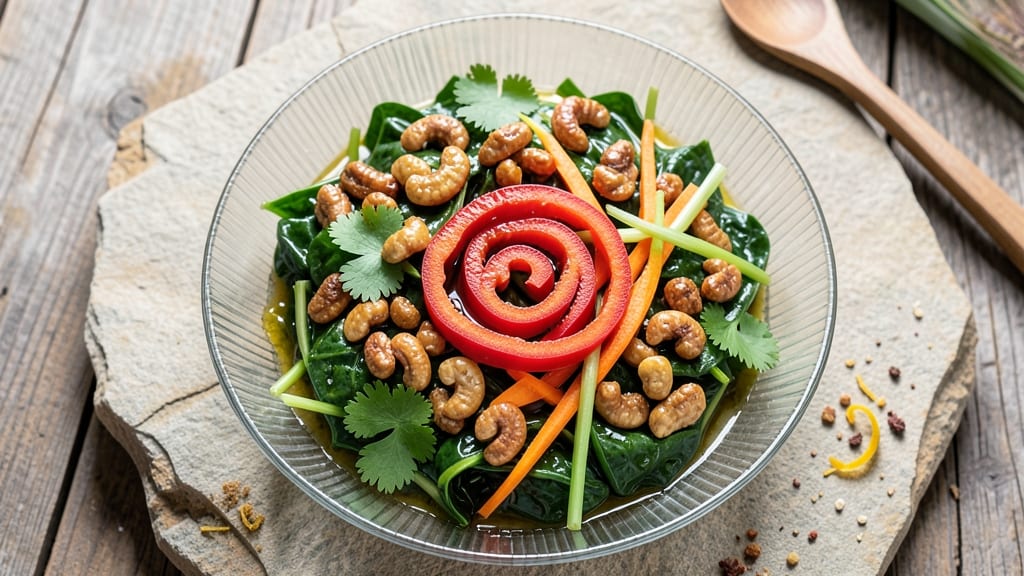
This Asian cashew salad recipe transforms simple ingredients into a crunchy, nutty dish bursting with tangy tamarind dressing that balances sweet and savory flavors perfectly. The secret lies in toasted cashews—crispy and rich—that provide satisfying texture while fresh vegetables add vibrant contrast.
I developed this recipe after craving a salad that felt indulgent yet light, and it never fails to impress at gatherings.
The foundation is a bright tamarind dressing that cuts through the richness of the cashews with its zesty, slightly sweet profile. Toasting the cashews in the oven enhances their natural oils, creating a deeper flavor that stands up to the dressing.
This salad is vegetarian-friendly but easily elevated with grilled shrimp or tofu for added protein.
What makes this dish truly special is how the components come together: crisp cashews, tender greens, and crunchy vegetables all coated in that irresistible dressing.
The result is a salad that’s visually stunning, packed with texture, and adaptable to any meal—whether served as a light lunch or a refreshing side dish.
Perfect for meal prep, this salad keeps well for up to three days, making it an ideal option for busy weeks. The flavors only deepen as the dressing melds with the ingredients, proving that simple ingredients can deliver restaurant-quality results at home.
Ingredients for asian cashew salad
Crisp, toasted cashews and vibrant vegetables meet a tangy tamarind dressing for this vibrant vegetarian salad.
| Ingredient | Amount | Notes |
|---|---|---|
| Raw Cashews 🥜 | 1 ½ cups | Unsalted, whole or halves |
| Red Bell Pepper 🌶️ | 1 medium | Seeded and thinly sliced |
| Green Onions 🧅 | 3 whole | Thinly sliced, white and green parts |
| Carrot 🥕 | 1 medium | Julienned or matchstick cut |
| Fresh Cilantro 🌿 | ½ cup | Chopped stems and leaves |
| Baby Spinach 🌱 | 4 cups | Baby leaves preferred |
| Tamarind Paste 🍯 | ¼ cup | Unsweetened, quality brand |
| Rice Vinegar 🍶 | ¼ cup | Seasoned preferred |
| Sesame Oil 🫒 | 1 tbsp | Toasted sesame preferred |
| Soy Sauce 🍜 | 2 tbsp | Low-sodium preferred |
| Sesame Seeds 🌾 | 1 tbsp | Toasted for garnish |
| Honey 🍯 | 1 tbsp | For tamarind dressing |
| Garlic Cloves 🧄 | 2 cloves | Minced for dressing |
| Ginger Root 🌿 | 1 tsp | Freshly grated |
| Vegetable Oil 🫒 | 1 tbsp | For toasting cashews |
The raw cashews are the star here—toasting them in the oven until golden transforms their flavor from bland to rich and nutty. Trader Joe's and Whole Foods carry excellent unsalted varieties, but any quality brand works. For the vegetables, freshness matters most—look for crisp bell peppers, firm carrots, and bright green spinach. Baby spinach holds up better to dressing than mature leaves, which can get soggy. The tamarind paste should be thick and slightly sticky—avoid powdered versions, which lack depth. If you can't find tamarind paste, substitute lime juice with a pinch of sugar for brightness, though the authentic flavor is worth seeking out.
No tamarind paste? A mix of lime juice (2 tbsp) and brown sugar (1 tsp) mimics the tangy-sweet balance, though it won’t replicate tamarind’s complex depth. Swap the red bell pepper for jicama if you prefer a milder crunch, or add shredded cabbage for extra texture. The sesame oil should be toasted—regular sesame oil lacks that nutty aroma. For the dressing, low-sodium soy sauce prevents salt overload, but regular soy works if you reduce other salty elements. If you’re avoiding honey, maple syrup works in a 1:1 ratio, though it adds a distinct caramel note. The ginger and garlic should be fresh—dried spices won’t cut through the dressing’s richness.
Toasted cashews keep for up to 2 weeks in an airtight container at room temperature, though they’ll lose crispness over time. The dressing separates naturally—just whisk before using. Store it in a sealed jar in the fridge for up to 1 week, or freeze for 3 months. For meal prep, assemble the salad last to preserve crunch—keep dressing and cashews separate until serving. The greens will wilt faster, so add them just before eating. This salad tastes even better the next day as flavors meld, making it perfect for lunch prep or potlucks where you can toss it together fresh.
Why You'll Love This Recipe
- No-Chop Nightmare: I swear, the bell pepper and carrots are prepped in three minutes flat—just slice them thick, no julienne skills required. The cashews? Toss them in dry, and they soften right in the dressing. (Yes, even when I’m scrolling TikTok instead of cooking.)
- Crunchy-Creamy Magic: That buttery cashew creaminess meets the bright, sharp crunch of raw bell pepper and cilantro like it was meant to. Honestly, the green onions add this little zing that makes it taste fresh, not just tossed-together.
- Lunchbox Legend: Between us, this salad holds up perfectly for three days—no soggy lettuce here. Pack it in jars or containers, and it’s my go-to for work lunches or kids’ school lunches (they’ll eat it, I promise).
- Budget Bright Spot: Cashews are pricey, sure, but a little goes a long way, and the rest of the ingredients? Cheap as dirt. I make this twice a month, and it’s always the dish that saves me from takeout when the wallet’s tight.
Step-by-step instructions for Asian cashew salad
A perfect balance of crunchy texture and vibrant flavors awaits with this method.
Toast the Cashews for Maximum Crunch
Preheat your oven to 350°F. Spread the 1.5 cups raw cashews evenly on a baking sheet lined with parchment paper. Toast for 8-10 minutes, stirring once halfway through, until they turn a rich golden brown and release an inviting nutty aroma. This step is crucial—raw cashews have a slightly bitter taste, and toasting enhances their natural sweetness while creating that satisfying crunch.
Watch closely as they toast—cashews burn quickly once they reach that golden stage. Remove them immediately when they're fragrant and evenly colored, then let them cool completely on the baking sheet before using. This cooling step prevents them from releasing excess oil into your salad, which could make it soggy.
Prepare the Tamarind Dressing
In a small bowl, whisk together the 0.25 cup tamarind paste, 0.25 cup rice vinegar, 1 tbsp honey, 2 tbsp soy sauce, and 1 tbsp sesame oil until smooth. The tamarind paste will be thick, so use a fork or small whisk to break up any lumps. Add the 2 cloves minced garlic and 1 tsp freshly grated ginger root, mixing well to combine.
This dressing is the heart of your salad, delivering that signature tangy-sweet balance. Taste and adjust the seasoning—if it needs more depth, add a pinch of salt. Let the dressing sit for 5 minutes at room temperature to allow the flavors to meld before using. The ginger and garlic will mellow slightly, creating a more harmonious taste profile.
Prep and Assemble the Vegetable Components
While the dressing rests, slice the 1 medium red bell pepper into thin strips, removing seeds and membranes first. Cut the 1 medium carrot into julienne strips using a mandoline or sharp knife for even, matchstick cuts. Thinly slice the 3 whole green onions, separating the white and green parts. Chop the 0.5 cup fresh cilantro, including stems, for maximum flavor.
Place the 4 cups baby spinach in a large mixing bowl. This delicate base will hold all your components together. Arrange the sliced vegetables on top in an even layer—bell pepper, carrot, and green onions. Sprinkle the chopped cilantro evenly over the top. The spinach's mild flavor will let the vibrant vegetables and dressing shine, while its tender texture provides the perfect contrast to the crunchy cashews.
Combine and Toss with Dressing
Add the toasted cashews to the bowl with the vegetables. Pour the tamarind dressing over everything and gently toss with clean hands or a large spoon. Work quickly but carefully to distribute the dressing evenly without crushing the spinach or breaking the cashews. You want each bite to deliver that perfect balance of crunch, sweetness, and tang.
Taste as you go—this is your opportunity to adjust the seasoning. If the salad needs more brightness, add a splash of rice vinegar. For extra depth, a drizzle of sesame oil or a pinch of salt can elevate the flavors. The ideal dressing-to-vegetable ratio should coat everything lightly without making it soggy.
Garnish and Serve Immediately
Transfer the salad to serving plates, dividing evenly among 4 servings. Sprinkle each portion with 1 tbsp toasted sesame seeds for added texture and visual appeal. The seeds will toast slightly as they warm, releasing their nutty aroma and providing that final crunch element.
Serve immediately while the cashews are still crisp and the spinach maintains its perfect texture. This salad is best enjoyed fresh, with the dressing clinging to each ingredient and the contrast between the crunchy cashews and tender spinach at its peak. Pair with grilled proteins or use as a light lunch on its own for a satisfying, nutrient-packed meal.
Pro Tips For Making Asian Cashew Salad
- TOAST THE CASHEWS: Skip the bland nuts—dry-toast them in a 350°F (175°C) oven for 5-7 minutes until golden and fragrant. I used to just soak them, but toasting adds depth that cuts through the sweetness of the dressing and makes the salad taste like it was made by someone who actually cares.
- JULIENNE THE CARROT: Thin, even strips (about 1/8-inch thick) hold up better in the dressing and look pro without overpowering. I learned this after seeing my first batch turn to mush—now I use a mandoline or sharp knife, and the salad stays crisp for hours.
- STOP CHOPPING CILANTRO: Tear it by hand instead of dicing—it keeps more of its bright flavor and texture. I was skeptical until I tried it; the leaves stay fresher longer, and the salad doesn’t taste like it’s been sitting out for days.
- DRESSING FIRST, NOT LAST: Toss the raw veggies (bell pepper, carrot, green onions) with the dressing before adding the cashews. This ensures everything gets coated evenly, and the nuts absorb just enough moisture to soften slightly without turning soggy—no more dry, clumpy bits.
Essential equipment for this dish
Oven Essentials
Your oven is the star for toasting those cashews—preheat it to 350°F for even browning. I use a glass baking dish with parchment paper for easy cleanup and even heat distribution. A wire cooling rack helps cashews cool faster, keeping them crisp for longer.
For extra precision, a digital oven thermometer ensures accurate temperature control—cashews burn quickly once they hit that golden stage! 🔥
Mixing Tools
A small mixing bowl (8-10 oz) is perfect for whisking the tamarind dressing—its size allows easy stirring without spills. I prefer a silicone whisk for breaking up thick tamarind paste, but a fork works too.
For tossing the salad, use a large wooden spoon or clean hands—wooden tools add a natural, rustic touch while preventing spinach from bruising. A fine-mesh strainer helps drain excess liquid if your spinach is particularly wet. ✨
Knife & Cutting
Invest in a sharp chef’s knife (8-inch) for slicing bell peppers and carrots—dull knives crush vegetables, making them soggy. A mandoline (with a julienne blade) speeds up carrot prep for uniform matchsticks.
For green onions, a serrated knife gives clean cuts without tearing. Keep a cutting board (preferably bamboo or plastic to prevent slipping) handy—it’s gentler on knives than glass or stone. 💡
Storage Containers
For meal prep, store components separately in airtight glass containers—I use quart-sized Pyrex for the dressing and smaller containers for cashews and veggies. The dressing separates naturally, so a small jar with a tight lid keeps it fresh for up to 1 week.
For cashews, a resealable plastic bag with the air squeezed out preserves crispness for 2 weeks at room temperature. Label everything with dates to track freshness! ❄️
Garnish & Finishing
Toasted sesame seeds need a small skillet or dry toaster oven to warm and release their aroma. A microplane is ideal for fresh ginger, while a garlic press ensures even mincing.
For plating, a slotted spoon helps arrange spinach neatly without crushing it. A fine-mist spray bottle with water keeps greens crisp if prepping ahead—just mist lightly before tossing with dressing. 🌟
Nutrition facts
Frequently asked questions
Can I make this salad without tamarind paste?
Yes! For a similar tangy-sweet flavor, mix 2 tablespoons lime juice with 1 teaspoon brown sugar or 1 teaspoon honey. If you prefer a deeper umami note, add 1 teaspoon fish sauce (for non-vegetarian versions) or 1 teaspoon soy sauce to the dressing. The texture will be slightly different, but the balance will still work beautifully.
How do I keep the cashews extra crispy for longer?
Toast the cashews at 325°F instead of 350°F for 10-12 minutes to prevent over-browning. Store them in an airtight container at room temperature for up to 2 weeks. For even longer storage, freeze them in a single layer on parchment paper before transferring to a bag—they’ll stay crisp for 3 months. Reheat in a dry skillet for 1-2 minutes before adding to salads.
What are the best vegetables to swap for spinach?
Try butter lettuce for a lighter base, shredded cabbage (red or green) for extra crunch, or arugula for a peppery kick. For heartier salads, use kale (massage with oil first) or mizuna. Avoid iceberg lettuce—it’s too watery and won’t hold dressing well. The key is choosing greens with good texture and minimal bitterness.
Can I make this salad gluten-free?
Ensure your soy sauce is tamari (gluten-free) and check your tamarind paste for additives. All other ingredients are naturally gluten-free. For extra safety, use a certified gluten-free sesame oil and toast sesame seeds in a clean pan to avoid cross-contamination. This salad is already nut-based, so it’s a great gluten-free option when paired with rice or gluten-free crackers.
Why did my dressing separate? How do I fix it?
The dressing naturally separates due to the tamarind paste’s thickness. Simply whisk vigorously before using—this emulsifies the ingredients. For a smoother texture, add 1 teaspoon honey or 1 teaspoon cornstarch mixed with 1 tablespoon water to the dressing and whisk again. Store-bought tamarind paste with additives may separate more, so opt for pure, block-style tamarind for better results.