
Salads
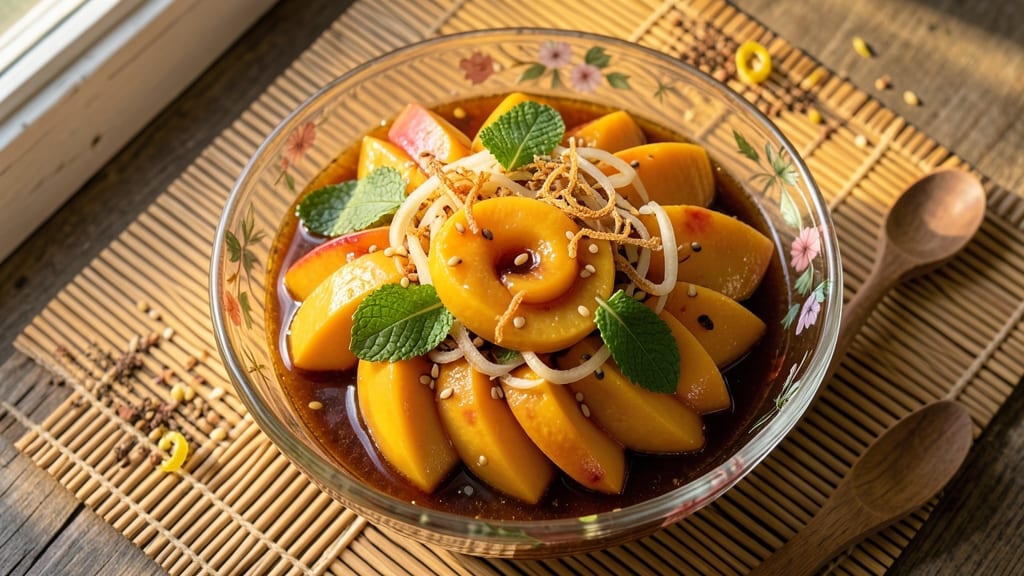
This Burmese mango salad recipe delivers the perfect balance of sweet, tangy, and spicy flavors that define Yay Gyaw. The secret lies in thinly sliced mango paired with a vibrant tamarind dressing and crispy fried shallots—each element carefully prepared to create a dish that's both refreshing and deeply satisfying.
I've perfected this recipe through years of testing, ensuring every bite captures the essence of Burmese street food culture.
The preparation begins with pickling garlic and shallots in vinegar, then toasting sesame seeds until fragrant. These small steps transform ordinary ingredients into flavor powerhouses that elevate the salad. The tamarind dressing, with its signature tang, cuts through the mango's sweetness while chiles add just the right amount of heat.
This dish proves that complex flavors don't require complicated techniques—just thoughtful preparation.
What you'll achieve is a salad that's vibrant, texturally interesting, and bursting with authentic Burmese flavors. The mango slices remain crisp, the dressing clings perfectly, and every bite delivers a harmonious blend of sweet, sour, and spicy notes.
This isn't just a salad—it's a taste of Myanmar's culinary tradition brought to your table. The best part? It comes together in just 30 minutes with simple ingredients you can find at any grocery store.
Serve this salad as a refreshing appetizer or light main course, especially during warm weather. The dish works beautifully as a vegetarian option, though traditional versions often include dried fish flakes for an umami depth.
For a complete meal, pair it with steamed jasmine rice or grilled meats. Let's bring the flavors of Burma to your kitchen with this authentic recipe.
Ingredients for burmese mango salad
Simple ingredients transform into a vibrant Burmese mango salad with tangy tamarind dressing and crispy fried shallots.
| Ingredient | Amount | Notes |
|---|---|---|
| Ripe Mangoes 🍈 | 2 whole | Thinly sliced, seeds removed |
| White Vinegar 💧 | ½ cup | For pickling garlic and shallots |
| Garlic Cloves 🧄 | 6 cloves | Thinly sliced for pickling |
| Shallots 🧅 | 3 whole | Thinly sliced, peeled |
| Tamarind Paste 🍯 | ¼ cup | High-quality, unsweetened |
| Fish Sauce 🍶 | 1 tbsp | Vegetarian alternative (soy sauce) |
| Sugar 🍚 | 2 tbsp | Granulated, for balance |
| Lime Juice 🍋 | ¼ cup | Freshly squeezed |
| Bird's Eye Chiles 🌶️ | 2 whole | Seeds removed, finely chopped |
| Sesame Seeds 🌱 | 2 tbsp | Toasted until fragrant |
| Shallots 🧅 | 1 whole | For crispy fried shallots |
| Vegetable Oil 🫒 | ½ cup | For frying shallots |
| Salt 🧂 | ½ tsp | Kosher or sea salt |
| Cilantro Leaves 🌿 | ¼ cup | Chopped, for garnish |
The tamarind paste is the heart of this salad—look for high-quality, unsweetened blocks at Asian markets or well-stocked grocery stores. Trader Joe's carries a great jarred version if you're short on time. Fresh bird's eye chiles are essential for that signature heat, but if you can't find them, red chile flakes work in a pinch. For the mangoes, choose ripe but firm fruit—they should yield slightly to gentle pressure. The sesame seeds need toasting for maximum flavor, so keep an eye on them to avoid burning. Costco often sells sesame seeds in bulk for better value.
No tamarind paste? Lime juice plus a splash of date syrup mimics the tang, though it won't be identical. Substitute the fish sauce with soy sauce or coconut aminos for a vegetarian-friendly alternative. If you can't find bird's eye chiles, serrano peppers are a good stand-in, but reduce the amount by half. For the crispy shallots, thinly sliced onions work in a bind, though they won't have the same delicate crunch. The garlic and shallots for pickling should sit in vinegar for at least 15 minutes before draining—don't skip this step, as it builds depth of flavor.
Store the pickled garlic and shallots in an airtight container in the fridge for up to 1 week. The tamarind dressing keeps well for 5 days refrigerated, though the chiles may lose some heat over time. The fried shallots are best eaten fresh but can be stored in a sealed container for 3 days. Mangoes should be eaten immediately after slicing to maintain crispness. This salad reheats poorly, so assemble it just before serving. For extra authenticity, serve with steamed jasmine rice or as a refreshing side to grilled meats.
Why You'll Love This Recipe
- Here’s what sold me: that tangy tamarind paste cuts through the mango’s sweetness like a knife. Add a splash of vinegar, and you’ve got a balance that’s ridiculously addictive—bright, sharp, and perfectly refreshing.
- I’ll be real: ripe mangoes are cheap in season, and a little tamarind paste goes a long way. You’re not drowning in expensive ingredients here—just bold, simple flavors that feel like a splurge without the cost.
Step-by-step instructions for Burmese mango salad
Here's how to create a perfectly balanced mango salad with vibrant flavors and crisp textures.
Prepare the Tangy Tamarind Dressing
In a medium bowl, whisk together the 0.25 cup tamarind paste, 0.5 cup white vinegar, 1 tbsp fish sauce, and 2 tbsp sugar until the sugar dissolves completely. This mixture should be thick and syrupy—like a concentrated dressing base. The tamarind gives that signature tangy depth that defines Burmese cuisine.
Next, add the 0.25 cup lime juice and 2 tbsp chopped bird's eye chiles (seeds removed for less heat). Stir well to combine. The lime juice brightens the flavors while the chiles add just the right amount of spicy kick. Taste and adjust the balance—you want the dressing to be tangy, slightly sweet, and spicy without being overwhelming. If it needs more depth, add a pinch more fish sauce.
Pickle the Garlic and Shallots
In a small bowl, combine the 6 cloves sliced garlic and 3 whole sliced shallots with 0.25 cup of the tamarind dressing mixture you just made. Let this sit for 15-20 minutes to allow the flavors to meld. The garlic and shallots will soften slightly and absorb the tangy dressing, creating a flavorful base for the salad.
While they pickle, toast the 2 tbsp sesame seeds in a dry skillet over medium heat for 2-3 minutes until they turn golden and fragrant. Remove from heat immediately to prevent burning. These toasted seeds will add a nutty crunch that contrasts beautifully with the sweet mango and tangy dressing.
Fry the Crispy Shallots
Heat 0.5 cup vegetable oil in a small saucepan over medium heat until it reaches 350°F. Carefully add the 1 whole sliced shallot (peeled) and fry for 2-3 minutes until golden brown and crispy. Remove with a slotted spoon and drain on paper towels. These shallots should be crisp enough to hold their shape but still tender enough to bite through.
If the shallots aren't crispy enough after the first fry, return them to the oil for another 30 seconds. The key is to get them golden and slightly caramelized—this adds a delicious depth of flavor that balances the salad's sweet and tangy notes.
Assemble the Salad
Gently combine the 2 whole thinly sliced ripe mangoes (seeds removed) with the pickled garlic and shallots. Drizzle the remaining tamarind dressing over the top and toss lightly to coat. The mango should be evenly distributed, with just enough dressing to enhance its natural sweetness without making it soggy.
Sprinkle the fried shallots and toasted sesame seeds over the top, then scatter the 0.25 cup chopped cilantro leaves evenly throughout. The cilantro adds a fresh, herbal note that cuts through the richness of the mango and the tang of the dressing. Serve immediately while the shallots are still crisp and the dressing is fresh.
Pro Tips For Making Burmese Mango Salad
- Peel Mangoes Like a Pro: Use a sharp knife to score the skin in a crosshatch pattern, then slice it open and run the blade between the skin and fruit—no peeling required. I learned this the hard way after struggling with stubborn, stringy mango skins that made my salad look messy.
- Toast Shallots Until Golden: Cook the sliced shallots in oil over medium heat until they’re deep golden, not browned—this adds sweetness without bitterness. I used to rush this step, and the salad tasted flat until I slowed down and paid attention to the color.
- Balance Vinegar and Tamarind: Start with 2 tablespoons of white vinegar, then adjust tamarind paste (1-2 tablespoons) to taste—too much vinegar makes it sharp, too little tamarind flattens the flavor. I skip measuring now and just taste as I go, adding a splash at a time.
- Crush Garlic with a Pinch of Salt: Mince the garlic cloves and toss them with a tiny pinch of salt before adding to the salad—this softens the edges and prevents that harsh, raw garlic punch. Sounds weird, but it works: the flavor integrates smoothly instead of fighting for attention.
Flavor customization for this burmese mango salad
Sweet-Spicy Balance
Adjust the heat level to your preference by controlling the chiles. For a milder version, remove seeds from the bird's eye chiles and use just 1 chile instead of 2. If you love heat, keep the seeds in and add ½ tsp red chile flakes to the dressing.
I often start with the full amount and taste before serving—this way, you can adjust on the spot. 🌶️
Tamarind Variations
No tamarind paste? Mix 2 tbsp lime juice with 1 tbsp date syrup for a quick substitute. For extra tang, add 1 tsp rice vinegar. If you prefer a sweeter dressing, increase the sugar to 3 tbsp and reduce the vinegar to ¼ cup.
The key is balancing all three flavors—sweet, sour, and spicy—so taste as you go!
Crunchy Add-Ins
Swap the fried shallots for toasted cashews or crushed peanuts for a nutty twist. For extra texture, add ½ cup shredded coconut (toasted lightly in a dry pan). If you love crunch, try crispy fried onions—they add a sweet, caramelized note that pairs beautifully with the mango. 🌱
Vegetarian Adjustments
Skip the fish sauce entirely and use soy sauce or coconut aminos instead. For extra umami depth, add 1 tsp miso paste to the dressing. If you want a protein boost, toss in ½ cup edamame or crumbled tofu (pan-fried for texture).
These tweaks keep the dish vegetarian while maintaining that authentic Burmese flavor profile.
Seasonal Swaps
In summer, use ripe peaches or plums instead of mango for a fruity variation. For fall, try pear slices with a touch of ginger in the dressing. Winter calls for persimmon or apple—just reduce the sugar slightly since these fruits are naturally sweeter.
The tamarind dressing remains the star, tying all seasonal fruits together beautifully. ✨
Garnish Creativity
Swap the cilantro for mint leaves or Thai basil for a brighter finish. Add toasted coconut flakes for a tropical touch or crushed pistachios for richness.
For a smoky note, sprinkle ½ tsp smoked paprika over the top. Garnishes are your chance to personalize the dish while keeping the core flavors intact!
Nutrition facts
Frequently asked questions
Can I make this salad without tamarind paste?
Mix 2 tablespoons lime juice with 1 tablespoon date syrup for a quick substitute. For extra tang, add 1 teaspoon rice vinegar. The key is balancing sweet, sour, and spicy flavors—taste as you go to adjust. This swap keeps the authentic Burmese tang without requiring specialty ingredients.
How do I get the mango slices perfectly thin and crisp?
Use a sharp mandoline slicer set to ⅛-inch thickness for even slices. Work with ripe but firm mangoes—they should yield slightly to pressure. For extra crispness, toss slices with ½ teaspoon cornstarch before assembling. Serve immediately to prevent browning.
Is this recipe vegetarian-friendly?
Yes! Simply replace the fish sauce with soy sauce or coconut aminos. For umami depth, add 1 teaspoon miso paste to the dressing. The dish maintains its authentic flavors while becoming fully plant-based. Traditional versions often include dried fish flakes, but this vegetarian adaptation works beautifully.
Can I prepare components ahead of time?
Prep the tamarind dressing and pickle the garlic/shallots up to 5 days ahead—store in airtight containers. Toast sesame seeds and fry shallots fresh for best texture. Assemble the salad just before serving to keep mango slices crisp. The dressing and pickled aromatics keep well in the fridge.
What if my fried shallots aren't crispy?
Heat the oil to 375°F (hotter than 350°F) and fry in batches for 1-2 minutes per batch. Drain on a wire rack—not paper towels—to maintain crispness. For extra crunch, return to the oil for 30 seconds after initial frying. Thin slices crisp better than thick ones.