Side Dishes
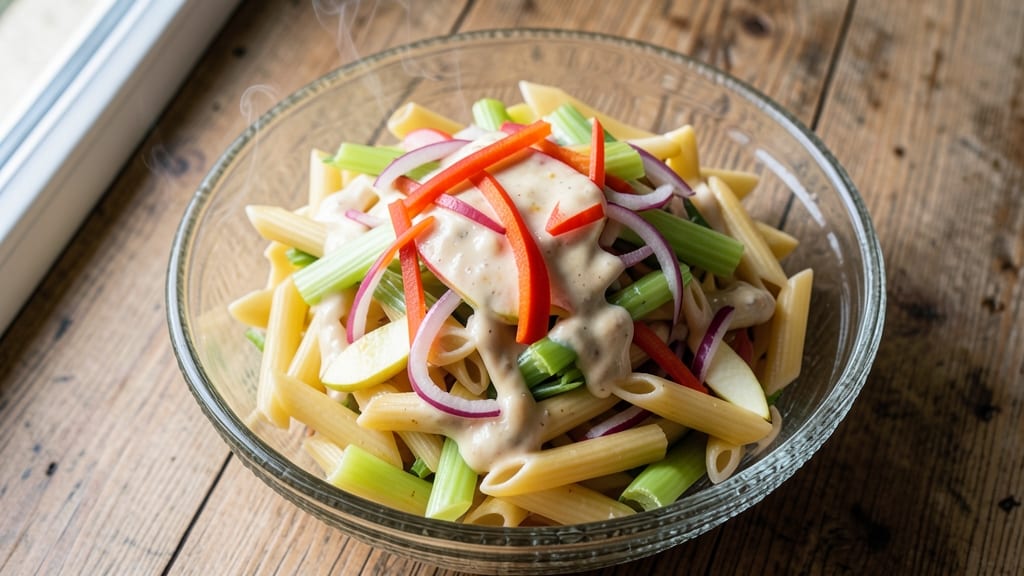
A pasta salad recipe with apple cider vinegar transforms a simple side into a vibrant, tangy masterpiece that steals the show at any gathering.
The secret lies in that bright, crisp vinegar—its sharp acidity cuts through rich ingredients while enhancing natural sweetness, creating a balance that’s both refreshing and deeply satisfying.
This isn’t your average limp pasta salad; it’s a crisp, crunchy, flavor-packed dish where every bite delivers a perfect harmony of textures and tastes.
The magic starts with al dente pasta—cooked just enough to hold its shape—and crisp celery that stays crunchy even after mixing.
Apple cider vinegar isn’t just a dressing here; it’s the backbone of the flavor, brightening creamy elements like mayo or yogurt while making apples and nuts taste even more vibrant. The result?
A salad that’s light enough for summer but hearty enough to stand alone, with a tang that lingers just right.
This recipe delivers restaurant-quality results with minimal effort—no wilting veggies, no soggy pasta, just layers of flavor that come together effortlessly.
The apple cider vinegar works its magic in two ways: as a marinade for proteins (if you add them) and as the star of the dressing, tying everything together with its signature bright tang.
It’s the kind of dish that tastes even better the next day, making it perfect for meal prep or potlucks.
Serve it as a side to grilled meats, a light main for warm days, or even as a filling for wraps. The possibilities are endless, but the foundation—crisp, tangy, and perfectly balanced—is what makes this pasta salad unforgettable.
Let’s get started on a recipe that’s as easy as it is impressive.
Ingredients for pasta salad recipe with apple cider vinegar
Bright vinegar, crisp veggies, and al dente pasta create this showstopping summer salad.
| Ingredient | Amount | Notes |
|---|---|---|
| Short Pasta (e.g., penne or fusilli) 🍝 | 12 oz | Al dente, cooked to hold shape |
| Celery Stalks 🧅 | 3 whole | Thinly sliced, crisp variety |
| Red Bell Pepper 🍅 | 1 medium | Diced small, vibrant color |
| Granny Smith Apples 🍎 | 1 medium | Diced small, crisp texture |
| Red Onion 🧅 | ½ medium | Thinly sliced, white/red variety |
| Mayonnaise 🥛 | ½ cup | High-quality, full-fat preferred |
| Apple Cider Vinegar 🍏 | ¼ cup | Brut, not sweetened variety |
| Dijon Mustard 🌶️ | 1 tbsp | For depth of flavor |
| Honey 🍯 | 1 tbsp | Light, for subtle sweetness |
| Salt 🧂 | ½ tsp | Diamond Crystal preferred |
| Black Pepper 🌶️ | ¼ tsp | Freshly ground for best flavor |
| Walnuts 🥜 | ½ cup | Toasted, chopped coarsely |
| Fresh Dill 🌿 | ¼ cup | Chopped, for bright freshness |
| Fresh Parsley 🌿 | ¼ cup | Chopped, for garnish |
The apple cider vinegar is non-negotiable here—Muir Glen or Bragg are my go-tos, but any brut, unsweetened variety works. For the celery, crisp stalks are key; avoid any that feel rubbery or wilted. The Granny Smith apples should be firm, not mealy—Trader Joe's often carries perfect ones. Pasta matters too: barley or fusilli hold dressing best, but penne is classic. Toast your walnuts in a dry pan for 3-4 minutes—they’ll add that perfect crunch without overpowering.
No apple cider vinegar? White wine vinegar or lemon juice works in a pinch, but add 1/4 tsp sugar to mimic the balance. Short on fresh dill? Dried dill at 1/3 the amount gets you close, though fresh is ideal. The honey can be swapped for maple syrup if you prefer. For extra protein, fold in chilled grilled chicken or chickpeas. The red bell pepper can be subbed with yellow or orange—whatever’s on sale at Whole Foods or your local market. Just make sure it’s firm and vibrant.
This salad tastes even better the next day—3-4 days in the fridge, sealed tightly. The celery stays crisp if you wrap it in damp paper towels before storing. For meal prep, double the recipe and portion into glass containers. The dressing keeps separately for up to 1 week if you prefer to dress it fresh. Serve chilled or at room temperature—either way, the tangy crunch will shine.
Why You'll Love This Recipe
- No-Cook Crunch: I swear by the celery and Granny Smith combo—no chopping skills needed. Just slice the celery into bite-sized pieces, dice the bell pepper and apple (or buy pre-cut if you’re lazy), and toss them in. That crisp, tangy crunch from the apple cider vinegar dressing? It’s the star.
- Tangy Twist: The apple cider vinegar does something magical here. It cuts through the richness of the pasta and makes the Granny Smith apples taste like they’re fresh out of a fall orchard. Honestly, I’ve tried other dressings, but this one’s my go-to—bright, sharp, and never overpowering.
- Potluck Hero: This is the dish I bring to summer gatherings when I don’t want to fuss. It holds up for hours in the fridge, stays fresh in a cooler, and even gets better the next day. Plus, the red onion adds a little bite that keeps it interesting—no sad, wilted pasta salad here.
- Budget Brightener: Short pasta is cheap, bell peppers and apples are often on sale, and celery lasts forever. I make this for my kids’ school lunches, my own packed lunches, and leftovers for dinner—no waste, just flavor. And the best part? It’s a meal, not a splurge.
Step-by-step instructions for pasta salad with apple cider vinegar
Here's how to assemble this vibrant, tangy pasta salad with perfect texture and balance.
Cook the Pasta to Al Dente Perfection
Bring a large pot of water to a rolling boil and add 1 teaspoon salt (it should taste like the sea). Add the 12 oz short pasta and cook until 1 minute before the package directions for al dente. You want the pasta to hold its shape but still have a slight bite—this prevents a mushy salad. Drain immediately and rinse under cold water to stop the cooking process and remove excess starch.
I like to shock the pasta in an ice bath for 30 seconds to set the texture. This keeps the pasta firm and prevents it from becoming limp in the dressing. Drain well and set aside—don't skip this step or your salad will turn soggy.
Prepare the Vegetable Medley
While the pasta cooks, thinly slice the 3 whole celery stalks and 0.5 medium red onion into paper-thin rounds. Dice the 1 medium red bell pepper into 1/4-inch pieces and the 1 medium Granny Smith apple into 1/4-inch cubes. The key here is to cut everything uniformly so the vegetables distribute evenly throughout the salad.
Place the sliced vegetables in a large mixing bowl. Toss them gently with 0.5 teaspoon salt and 0.25 teaspoon black pepper to enhance their natural flavors. Let them sit for 5 minutes while you prepare the dressing—this allows the salt to draw out moisture and intensify the flavors.
Make the Tangy Dressing
In a medium bowl, whisk together the 0.5 cup mayonnaise, 0.25 cup apple cider vinegar, 1 tablespoon Dijon mustard, and 1 tablespoon honey. The vinegar adds that signature tang while the honey balances it with subtle sweetness. Whisk vigorously for 30 seconds to emulsify the dressing—it should be smooth and slightly thick.
Taste and adjust the seasoning. You might want to add a pinch more salt or a splash of vinegar if you prefer more tang. The dressing should coat the back of a spoon but still be pourable. Set aside while you toast the walnuts—this prevents them from getting soggy.
Toast and Chop the Walnuts
Heat a dry skillet over medium heat. Add the 0.5 cup walnuts and toast for 3-4 minutes, stirring constantly, until they're fragrant and lightly golden. Watch closely—they burn quickly! Remove from heat and let cool for 2 minutes, then coarsely chop them with a chef's knife.
Chopped walnuts add a satisfying crunch and rich, nutty flavor. If you're short on time, you can use pre-toasted walnuts, but toasting fresh gives the best flavor. The chopped pieces should be about 1/8-inch in size—large enough to provide texture but small enough to distribute evenly.
Combine and Chill for Maximum Flavor
Add the cooked pasta, vegetable medley, and chopped walnuts to the mixing bowl. Pour the dressing over everything and toss gently but thoroughly with a large spoon or your hands. Be careful not to break the pasta—this is why al dente matters. Fold in the 0.25 cup fresh dill and 0.25 cup fresh parsley last for maximum freshness.
Transfer the salad to a serving dish, cover, and refrigerate for at least 1 hour before serving. This chilling time allows all the flavors to meld together beautifully. The apple cider vinegar dressing will brighten even more as it cools, creating that perfect balance of tangy, sweet, and savory flavors. Serve chilled and enjoy the perfect crunch with every bite!
Pro Tips For Making Pasta Salad Recipe With Apple Cider Vinegar
- COOK PASTA AL DENTE THEN CHILL: Undercooked pasta gets mushy in salads—no one wants that. Boil penne or fusilli until it’s just firm to the bite (about 1 minute less than package instructions), then plunge into ice water to stop cooking. Let it cool completely before mixing with dressing; this prevents the vinegar from turning the pasta rubbery later.
- SWEAT ONIONS FIRST: Raw red onion in this salad? It’ll just sit there like a sad, watery afterthought. Thinly slice it and cook in a dry pan over medium heat for 4-5 minutes until translucent and slightly caramelized. The flavor mellows out the sharpness and adds depth—trust me, your taste buds will notice.
- DICE APPLES SMALL AND TOSSED: Granny Smiths oxidize fast, turning your salad brown and bitter. Cut them into ¼-inch cubes, then immediately toss them in cold water with a splash of lemon juice (or even a pinch of salt) while you prep the rest. Drain right before mixing everything—this keeps them crisp and bright.
- DRESS IT LAST, MIX GENTLY: Vinegar-based dressings can break down celery and bell pepper into a sad, soggy mess if added too soon. Toss the pasta, onions, and harder veggies first, then fold in apples and dressing just before serving. A wooden spoon works best—gentle turns prevent crushing everything into a pulp.
Common mistakes when making perfect results
Overcooking Pasta
This is the #1 mistake I see—pasta that’s mushy and sad. Cooking pasta to al dente (1 minute before package instructions) is non-negotiable. When you rinse it in cold water immediately after draining, you stop the cooking process and remove excess starch that would make your salad gummy.
I’ve ruined many a salad by letting pasta sit in hot water too long—trust me, the texture difference is night and day. 🍝
Skipping the Chill Time
Rushing to serve this salad straight from the mixing bowl is a big mistake. The flavors need at least 1 hour in the fridge to develop fully. The apple cider vinegar’s tang will mellow slightly, the celery stays crisp, and the dressing clings better to the pasta.
I’ve learned this lesson the hard way—serving it too soon means bland, watery results. Patience here makes all the difference.
Using Sweetened Vinegar
Sweetened apple cider vinegar throws off the balance completely. The dressing needs that sharp, unadulterated tang to cut through the richness of the mayo and nuts. I always reach for Muir Glen or Bragg unsweetened varieties—they’re worth the investment.
If you accidentally grab the sweetened kind, add an extra ¼ teaspoon of salt to compensate for the extra sweetness.
Overmixing the Salad
Tossing the salad too vigorously breaks the pasta into little pieces and crushes the celery, turning your crunchy salad into a sad, mushy mess. Use a gentle hand when combining ingredients—just enough to distribute the dressing evenly.
I like to use a large spoon or my hands for the final fold, being careful not to overwork the mixture. The goal is a uniform texture, not a puree. ✨
Neglecting the Vegetable Prep
Unevenly cut vegetables distribute poorly and can lead to dry spots in your salad. Take the time to slice the celery and onion paper-thin and dice the bell pepper and apple into uniform ¼-inch pieces.
This ensures every bite has that perfect crunch and freshness. I often use a mandoline for the celery and onion to get those perfect slices—it’s worth the small investment for this recipe.
Forgetting the Salt Draw
Skipping the 5-minute salt draw on your vegetables means they’ll release moisture into the salad, making it watery. The salt helps break down the cell walls, intensifying flavors and drawing out excess liquid.
This is especially important for the celery and onion—they’ll stay crisp and flavorful instead of soggy. Don’t rush this step, even if you’re eager to eat! 🧂
Nutrition facts
Frequently asked questions
Can I use a different type of vinegar instead of apple cider?
The apple cider vinegar's unique flavor is key, but you can substitute white wine vinegar or lemon juice in a pinch. For lemon juice, add 1/4 teaspoon sugar to balance the sharpness. The dressing will still be tangy, though the depth of flavor won't be identical. The vinegar's acidity is what brightens the salad and balances the sweetness from apples and honey.
Why does my pasta salad get watery after mixing?
Overcooked pasta releases excess starch, and unseasoned veggies release moisture when mixed. Always cook pasta al dente and rinse in cold water immediately after draining. For veggies, salt them 5 minutes before mixing to draw out moisture. Store salad in an airtight container with a paper towel on top to absorb any excess liquid.
How long can I store this pasta salad?
This salad tastes best when refrigerated for 1-2 days, but it will keep for up to 4 days in an airtight container. The celery stays crisp if you wrap it in damp paper towels before storing. The dressing can be made ahead and stored separately for up to 1 week—just toss it with the pasta and veggies when ready to serve. The flavors actually improve overnight!
Can I make this salad without mayo?
Swap the mayo for Greek yogurt or vegetable broth for a lighter version. For broth-based dressing, reduce the vinegar to 2 tablespoons and add 1/4 cup broth to the dressing. The texture will be creamier but still tangy. If using yogurt, add 1 tablespoon lemon juice to maintain the bright acidity that complements the apple cider vinegar.
What's the best pasta shape for this recipe?
Short, sturdy pasta shapes like penne, fusilli, or farfalle hold dressing best and won't turn mushy. Avoid long pasta like spaghetti or linguine—it breaks easily and makes the salad look messy. For extra texture, try rotini or cavatappi, which add fun twists while maintaining structure. Always cook pasta slightly underdone to prevent it from becoming limp in the dressing.