
Side Dishes
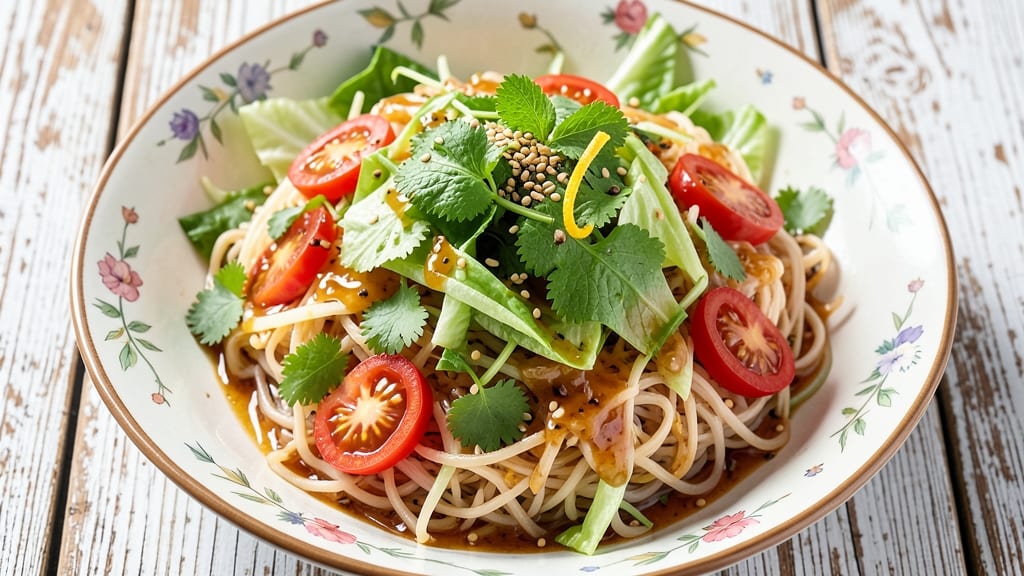
This Burmese noodle salad recipe delivers the perfect balance of tangy, crunchy, and fresh flavors that define traditional Hin—a dish I've perfected after years of exploring Southeast Asian cuisine.
The star is the tamarind dressing, which cuts through the richness of rice noodles, cabbage, and herbs with its signature sweet-sour kick. What makes this recipe special is how it transforms simple ingredients into a restaurant-worthy dish with just 30 minutes of prep and no cooking required.
The foundation of this salad is rice noodles, which soak up the dressing while maintaining their signature chewiness, paired with crisp shredded cabbage, juicy tomatoes, and fresh herbs like mint and cilantro.
The dressing—made with tamarind paste, fish sauce, lime, garlic, and chili—adds layers of complexity that elevate every bite. This dish is both light yet satisfying, making it ideal for a refreshing lunch or a vibrant side.
What you'll end up with is a vibrant, textured salad where each component plays its part: tender noodles, crisp vegetables, and an aromatic dressing that ties everything together.
The tamarind dressing adds a tangy depth that balances the freshness of the herbs and the mildness of the noodles, creating a flavor profile that's both familiar and exciting. This is the kind of dish that feels indulgent yet healthy—perfect for those who love bold, bright flavors.
The best part? This recipe scales effortlessly for gatherings or meal prep, and the dressing can be made ahead for even more convenience. Whether you're serving it as a main dish or a side, the crispness and tanginess will leave everyone asking for seconds.
Let's dive into the ingredients and instructions to bring this Burmese classic to your table.
Ingredients for burmese noodle salad
These vibrant ingredients create a restaurant-worthy Burmese noodle salad with tangy dressing and crisp textures.
| Ingredient | Amount | Notes |
|---|---|---|
| Rice Noodles (Stir-Fry or Vermicelli) 🍜 | 8 oz | Uncooked, medium-width preferred |
| Green Cabbage 🥬 | 4 cups | Shredded, crisp variety |
| Cherry Tomatoes 🍅 | 1 ½ cups | Halved, seedless preferred |
| Fresh Mint Leaves 🌿 | ½ cup | Packed, stems removed |
| Fresh Cilantro Leaves 🌿 | ¼ cup | Packed, stems removed |
| Tamarind Paste 🍯 | ½ cup | Unsweetened, block or jarred |
| Fish Sauce 🍶 | 2 tbsp | Red Boat preferred |
| Fresh Lime Juice 🍋 | ¼ cup | About 2-3 limes |
| Garlic Cloves 🧄 | 4 cloves | Minced, fresh preferred |
| Red Chili Peppers 🌶️ | 2 whole | Thinly sliced, bird's eye or serrano |
| Peanuts 🥜 | ½ cup | Crushed, unsalted preferred |
| Sesame Oil 🫒 | 1 tbsp | Toasted, for finishing |
| Sugar 🍚 | 2 tbsp | White or brown preferred |
| Salt 🧂 | 1 tsp | Fine sea salt preferred |
The rice noodles are the heart of this dish—medium-width stir-fry noodles soak up dressing beautifully without turning mushy. Grab the dry kind from the Asian aisle at Whole Foods or Trader Joe's for the best texture. If you can't find stir-fry noodles, vermicelli noodles work too, but soak them in warm water for 5-7 minutes before using. The cabbage? Green cabbage is ideal—it stays crisp longer than red. Shred it yourself for maximum crunch; pre-shredded gets soggy fast. For the tamarind paste, block form is best—it's easier to control the consistency than jarred versions, which can be runny.
No fish sauce? Soy sauce plus a pinch of sugar mimics the umami depth, though it won't be identical. Red Boat brand is worth the splurge—it's smooth and less fishy than cheaper versions. The chili peppers are non-negotiable for that signature heat, but if you're sensitive, reduce to 1 pepper. For the peanuts, unsalted is key—they should just add crunch, not overpower. The lime juice needs to be fresh; bottled won't cut through the dressing the same way. Garlic and ginger (if you add it) should be minced finely—no chunks in this dish. And that sesame oil? Use toasted for a nutty aroma, not the cheap, flavorless kind.
This salad keeps best for 2 days in the fridge, though the noodles soften slightly after day one. Store the dressing separately—mix it fresh before serving for maximum tang. The peanuts and herbs can be added last-minute to preserve their crunch. Double the dressing if you're meal prepping—it's the star of the show. For extra flair, garnish with lime zest or crushed peanuts right before serving. Reheat gently if needed, but honestly, it's better cold or at room temperature.
Why You'll Love This Recipe
- Uses what you’ve got: a bag of noodles, a head of cabbage, and whatever’s in your fridge. No fancy ingredients, no wasted leftovers (unless you count my kids fighting over the last bite). Budget-friendly? More like budget-smart.
- No Chopping Needed: The cabbage stays whole—just shred the outer leaves, skip the core. Cherry tomatoes get halved in seconds, and those fresh herbs? Toss them in whole if you’re lazy. Between us, I’ve made this with pre-washed greens and still felt like a pro.
- Bright & Tangy: That burst of lime and fish sauce? It’s the kind of flavor that makes you pause mid-bite. The cabbage stays crisp, tomatoes add sweetness, and the mint and cilantro? They turn every mouthful into a little party in your mouth.
- Lunchbox Hero: Pack it cold for work or school—no reheating needed. The noodles hold up for days, and the dressing keeps everything fresh. Honestly, I’ve sent this in jars for three days straight, and it’s still the star of my lunch.
Step-by-step instructions for Burmese noodle salad
Here's how to create a vibrant, tangy salad that balances crisp textures with bold flavors.
Soak the Rice Noodles Until Al Dente
Bring a large pot of water to a gentle boil and add the 8 oz rice noodles. Reduce heat to medium-low and let them simmer for 8-10 minutes—they're done when they're tender but still hold their shape. I like to test one noodle by pressing it with tongs; it should feel firm but yield slightly.
Drain immediately and rinse under cold water to stop the cooking process. This prevents them from becoming mushy. Spread them on a clean kitchen towel and gently pat dry. The noodles should be cool to the touch before mixing them with other ingredients—this ensures they maintain their crisp bite.
Prepare the Tangy Tamarind Dressing
In a medium bowl, combine the 0.5 cup tamarind paste, 2 tbsp fish sauce, 0.25 cup fresh lime juice, 2 tbsp sugar, and 1 tsp salt. Mix vigorously until the sugar dissolves completely and the paste is fully incorporated. The mixture should be smooth and slightly thick—this is your flavor base.
Add the 4 cloves minced garlic and 2 whole thinly sliced red chili peppers to the dressing. Stir well and let it sit for 5 minutes to allow the flavors to meld. The dressing should have a vibrant orange hue and a sharp, sweet-sour aroma. If it's too thick, thin it with 1-2 tablespoons of warm water to reach a pourable consistency.
Assemble the Crunchy Vegetable Mix
In a large mixing bowl, combine the 4 cups shredded green cabbage, 1.5 cups halved cherry tomatoes, 0.5 cup packed fresh mint leaves, and 0.25 cup packed fresh cilantro leaves. Toss gently to distribute the herbs evenly. The cabbage should retain its crisp texture—avoid over-mixing, which can soften the leaves.
Add the drained rice noodles to the bowl and toss again, ensuring everything is well-coated. The noodles should absorb the cabbage's moisture slightly, creating a textural contrast. Set aside while you prepare the final components. The salad should look vibrant and colorful at this stage—this is your visual cue that everything is ready for the next step.
Combine and Finish with Peanuts and Sesame Oil
Pour the tamarind dressing over the noodle and vegetable mixture. Toss everything together thoroughly, ensuring each noodle and vegetable piece is evenly coated. The salad should now have a glossy sheen from the dressing, indicating it's well-mixed.
Sprinkle the 0.5 cup crushed peanuts evenly over the salad and drizzle with 1 tbsp toasted sesame oil. Toss one final time to distribute the peanuts and oil evenly. The peanuts add a satisfying crunch, while the sesame oil enhances the nutty depth of the dish. Serve immediately while the noodles are still crisp and the flavors are at their peak.
Adjust and Serve with Confidence
Taste the salad and adjust seasoning if needed. If it's too tangy, add a pinch more sugar or a splash of lime juice. If it needs more saltiness, add another ½ teaspoon of fish sauce. The balance should be harmonious—sweet from the tamarind and sugar, salty from the fish sauce, and a hint of spicy heat from the chili peppers.
Transfer the salad to a large serving platter and garnish with additional fresh mint and cilantro leaves for a pop of color. Serve immediately while the noodles maintain their crisp texture. This dish is best enjoyed fresh, with the contrast of warm peanuts and cool, tangy dressing creating an unforgettable experience.
Pro Tips For Making Burmese Noodle Salad
- SOAK NOODLES UNTIL SOFT BUT FIRM: I learned this the hard way—over-soaking rice noodles turns them into mush. Use boiling water, let them sit for 5-7 minutes, then drain and rinse with cold water. They should hold shape but still have a slight bite—this keeps the salad from turning soggy when mixed with the dressing.
- CHOP CABBAGE THIN AND SMALL: Thick shreds of cabbage stay crunchy but get limp fast. Instead, slice it paper-thin and cut into ½-inch pieces. This ensures even cooking and a consistent texture that won’t wilt under the dressing. (Yes, even if it looks like you’re making coleslaw.)
- DRESS NOODLES LAST MINUTE: Adding dressing too early makes the noodles absorb it and turn limp. Toss the cabbage, tomatoes, and herbs with half the dressing first, then fold in the drained noodles right before serving. This keeps everything crisp and bright.
- SWAP VERMICELLI FOR STIR-FRY NOODLES: Vermicelli can be too delicate for this salad. Stir-fry noodles hold up better and have a chewier texture that stands up to the cabbage and herbs. If you must use vermicelli, cook them al dente and rinse immediately in ice water to stop the cooking.
Make-ahead tips for this dish
Dressing Prep Ahead
The tamarind dressing is the secret weapon of this salad—make it 24 hours ahead for the flavors to develop fully. Store it in an airtight container in the fridge, and give it a quick stir before using. I like to double the batch (using 1 cup tamarind paste and 4 tbsp fish sauce) so I always have extra for future meals. The dressing keeps well for up to 5 days, making it perfect for meal prep. Just
Noodle Prep Shortcut
Save time by prepping the rice noodles a day ahead. Soak them in cold water (instead of boiling) for 15 minutes, then drain and rinse with cold water again. Store them in a sealed container with a damp paper towel to prevent drying out. When ready to use, simply toss them with the dressing and other ingredients—no reheating needed. This trick keeps them crisp and ready for assembly. 🍜
Herb and Veggie Storage
Store the shredded cabbage, tomatoes, mint, and cilantro separately in resealable plastic bags lined with paper towels to absorb excess moisture. Keep them in the fridge for up to 3 days. The cabbage will stay crispest if you store it in a single layer rather than compacted.
For the herbs, I recommend keeping the stems intact until ready to use—this preserves their freshness longer. 🥬
Complete Salad Assembly
Assemble the salad 1-2 hours before serving to let the flavors meld together. Store all components (noodles, veggies, herbs, and dressing) separately in airtight containers. When ready to serve, toss everything together and add the peanuts and sesame oil just before eating.
This ensures maximum crunch and freshness. For a crowd, divide the salad into individual containers and let everyone customize their own bowl. ✨
Reheating Tips
If you need to reheat, I recommend doing it gently to avoid soggy noodles. Microwave individual portions for 30 seconds, then toss with a splash of fresh lime juice to revive the flavors.
For stovetop reheating, use a non-stick pan on low heat with just 1 tbsp water to prevent sticking. Always add the peanuts and sesame oil fresh—never reheat them, as they lose their crunch. 🔥
Freezer-Friendly Option
While this salad isn't ideal for long-term freezing, you can freeze the dressing and noodles separately for up to 1 month. Thaw the dressing overnight in the fridge, then toss it with the noodles and fresh ingredients when ready to serve.
The texture won't be identical, but it's a great backup for busy days. Just avoid freezing the peanuts or herbs—they won't survive the process. ❄️
Nutrition facts
Frequently asked questions
Can I use other types of noodles instead of rice noodles?
While rice noodles are traditional, you can experiment with egg noodles or udon for a heartier texture. Just soak them longer (10-12 minutes) and rinse well to remove excess starch. Avoid wheat-based noodles—they absorb dressing differently and may become gummy. For a gluten-free option, rice vermicelli works beautifully!
What if I can't find tamarind paste?
No problem! Substitute with 1 tbsp lime juice + 1 tbsp brown sugar to mimic the tangy-sweet balance. For deeper flavor, add ½ tsp soy sauce to replace tamarind's umami. If you have tamarind concentrate, dilute it with water to reach the same consistency as paste.
How spicy should the chili peppers be?
The recipe calls for 2 whole sliced chili peppers (bird's eye or serrano) for mild heat. For extra spice, add 1-2 chopped Thai chilies or increase to 3 peppers. Remove seeds for less heat. If you're sensitive, reduce to 1 pepper or omit entirely—just add ½ tsp cayenne powder instead.
Can I make this salad ahead of time?
Store components separately: dressing (5 days), cooked noodles (3 days), and veggies/herbs (3 days). Mix everything 1 hour before serving to preserve crunch. Keep peanuts and sesame oil separate until the last minute—they lose texture when refrigerated.
What's the best way to serve this salad?
This dish shines as a light lunch, side for grilled meats, or vegetarian main with extra protein. Garnish with lime wedges and extra herbs for freshness. For a restaurant-style presentation, serve in a wide, shallow bowl with a drizzle of sesame oil on top.