
Salads
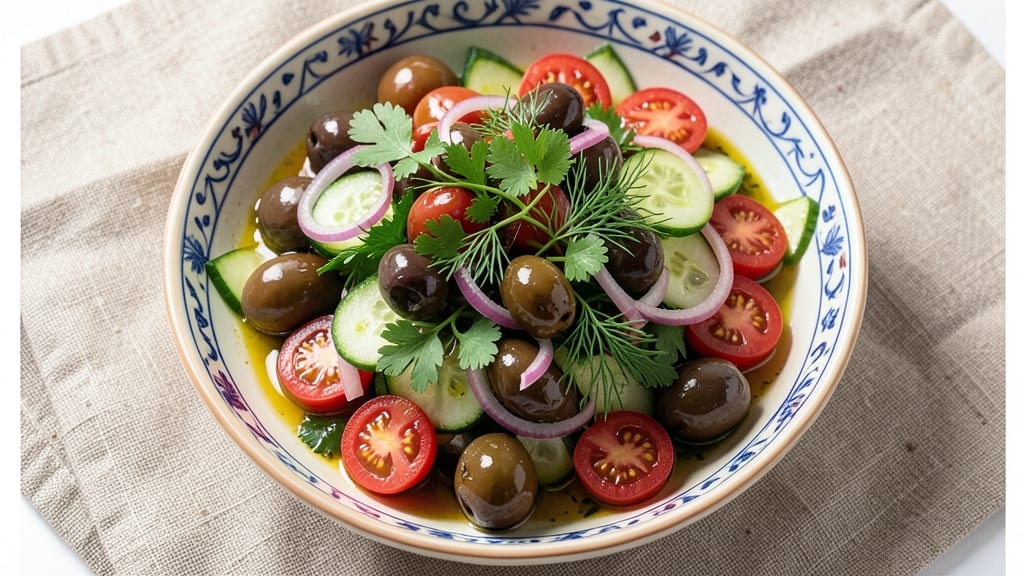
This black olive salad recipe transforms bold, briny olives into a vibrant centerpiece that balances rich flavors with crisp textures. The secret lies in fresh herbs, lemon zest, and a touch of olive oil that brightens every bite—perfect for Mediterranean-inspired meals or bold appetizers.
I developed this after craving a salad that delivered both depth and freshness without overpowering ingredients.
The foundation starts with plump black olives, pitted and tossed with juicy cherry tomatoes, crisp cucumber, and red onion for a satisfying crunch. A zesty lemon dressing ties everything together, while fresh parsley and dill add aromatic freshness.
Optional additions like feta cheese or grilled chicken elevate it to a hearty main dish, but it shines just as well as a simple side.
What you’ll end up with is a salad that’s bursting with Mediterranean flair—salty, tangy, and bright, with each bite offering a perfect balance of textures.
The olives stay plump, the vegetables stay crisp, and the dressing clings to everything, creating a dish that’s as impressive on a dinner table as it is in a lunchbox. It’s the kind of salad that makes you reach for seconds.
This recipe works equally well as a standalone dish or paired with grilled meats and fish. For a vegan version, simply omit the feta, and for extra protein, add chickpeas or white beans. The possibilities are endless, but the core remains the same: bold, briny, and irresistibly fresh.
Ingredients for black olive salad
Fresh herbs, briny olives, and zesty lemon create a Mediterranean-inspired salad bursting with texture and flavor.
| Ingredient | Amount | Notes |
|---|---|---|
| Plump Kalamata Olives 🫒 | 1 ½ cups | Pitted, drained, and halved if large |
| Cherry Tomatoes 🍅 | 1 ½ cups | Halved for even distribution |
| Persian Cucumber 🥒 | 1 whole | Thinly sliced, seeds removed |
| Red Onion 🧅 | ¼ whole | Thinly sliced, soaked in cold water |
| Fresh Parsley 🌿 | ⅓ cup | Chopped, stems removed |
| Fresh Dill 🌿 | ¼ cup | Chopped, leaves only |
| Extra-Virgin Olive Oil 🫒 | ⅓ cup | Light, fruity variety preferred |
| Lemon Zest 🍋 | 1 tbsp | Finely grated, organic preferred |
| Fresh Lemon Juice 🍋 | 2 tbsp | Strained, no pulp |
| Crushed Red Pepper Flakes 🌶️ | ½ tsp | Adjust to taste for heat |
| Diamond Crystal Kosher Salt 🧂 | ½ tsp | Fine grain preferred |
| Crumbled Feta Cheese 🧀 | ½ cup | Optional, omit for vegan |
| Garlic Cloves 🧄 | 2 cloves | Minced, fresh preferred |
The olives are the heart of this salad, so Kalama olives are ideal—their rich, briny flavor stands up to the fresh herbs. Trader Joe's and Whole Foods carry them year-round, but if you can't find them, regular black olives work in a pinch. Look for plump, firm olives with no wrinkles or bruising—those are your telltale signs of quality. The herbs should be vibrant green, not wilted, and the cucumber should be crisp with no soft spots. For an extra touch of sophistication, use organic lemons—their zest has more intense flavor than conventional varieties.
No feta on hand? Vegan feta alternatives or even crumbled halloumi cheese (if vegetarian) add a similar tangy richness. Short on dill? Fresh mint or basil can substitute at half the amount, though they’ll shift the flavor profile slightly. The red onion adds a sharp bite—if you prefer milder flavor, soak the slices in cold water for 10 minutes before adding. For a smokier edge, swap the red pepper flakes for smoked paprika at half the amount. The olive oil should be light and fruity, not robust or peppery, as it’ll balance the salad’s bold flavors without overpowering them.
This salad stays fresh for 3-4 days in the fridge, though the cucumber will soften slightly after day two. To maximize crispness, store the dressing separately and toss just before serving. The olives and herbs keep best in airtight containers with a paper towel pressed against them to absorb excess moisture. For a make-ahead option, prep everything except the cucumber and onion—add them just before serving to maintain their crunch. The dressing can be made a day ahead and stored in a small jar, shaking well before use.
Why You'll Love This Recipe
- No-Chop Nightmare: I swear by this one—just halve the cucumbers, quarter the tomatoes, and toss. The olives and onion do most of the work for you, and honestly? That’s all it takes. The parsley gets the optional chop, but even if you skip it, the briny olives and sweet tomatoes carry the day.
- Briny-Sweet Magic: Between us, the Kalamata olives are the star here—plump, salty, and packed with that Mediterranean punch. Add the crisp bite of Persian cucumber and the sharpness of red onion, and you’ve got a flavor combo that’s ridiculously addictive. No dressing needed, but if you add lemon juice? Even better.
- Lunchbox Legend: This salad keeps for days in the fridge, making it my go-to for packed lunches. The tomatoes stay firm, the olives don’t get soggy, and the parsley keeps it fresh. I’ll be real: my kids beg for it more than their sandwiches now. (Yes, even on a Tuesday night.)
- Pantry Staple Power: You’re already using what’s in your fridge—no fancy ingredients, just bold flavors. A bag of olives, a handful of tomatoes, and a cucumber? That’s it. Budget-friendly, zero waste, and it’ll save you from takeout when you’re too tired to cook. My secret weapon for lazy days.
Step-by-step instructions for black olive salad
This salad balances Mediterranean flavors with fresh herbs and bright citrus. Follow these precise steps for a harmonious blend.
Prepare the Vegetables
Start by draining and patting dry the 1.5 cups plump Kalamata olives—this ensures they absorb the dressing properly. Halve any large olives to create even distribution. In a separate bowl, halve the 1.5 cups cherry tomatoes and remove the seeds from the 1 whole Persian cucumber, then slice it thinly for a delicate texture.
For the 0.25 whole red onion, thinly slice it and immediately soak in cold water for 5 minutes to mellow its sharpness. Drain well before using. This step is crucial—raw onions can overpower the salad's delicate balance. Chop the 0.33 cup fresh parsley and 0.25 cup fresh dill separately, removing stems for maximum freshness.
Create the Dressing
In a small bowl, whisk together the 0.33 cup extra-virgin olive oil, 1 tbsp lemon zest, and 2 tbsp fresh lemon juice until fully emulsified. Add the 2 cloves minced garlic, 0.5 tsp crushed red pepper flakes, and 0.5 tsp Diamond Crystal kosher salt, stirring until the salt dissolves completely. The dressing should have a vibrant yellow hue and a sharp, citrus-forward aroma.
Here's the thing—taste the dressing before combining with the salad. Adjust the salt or red pepper flakes to your preference, but remember that the olives and feta will contribute additional saltiness. The dressing should coat the back of a spoon without being overly thick.
Combine Ingredients
In a large mixing bowl, gently combine the prepared olives, tomatoes, cucumber, and red onion. Sprinkle half of the chopped parsley and dill over the vegetables, reserving the rest for garnish. Pour the dressing over the mixture and toss gently with a wooden spoon—you want to coat the ingredients evenly without bruising them.
Add the 0.5 cup crumbled feta cheese and toss again, being careful not to overmix. The feta should distribute evenly, adding a creamy contrast to the briny olives and fresh vegetables. Let the salad sit for 10 minutes before serving—this allows the flavors to meld and the dressing to fully penetrate the ingredients.
Rest and Serve
Before serving, taste the salad and adjust seasoning if needed. The acidity from the lemon should brighten the olives, while the feta and herbs add layers of complexity. Garnish with the reserved parsley and dill for a pop of color and freshness. This salad holds well for 2-3 hours in the refrigerator, making it perfect for meal prep.
Serve immediately as a side dish or as a light main course with crusty bread. The contrast between the briny olives, creamy feta, and crisp vegetables creates a satisfying balance of textures and flavors. Each bite should deliver a harmonious blend of Mediterranean essence with a refreshing citrus kick.
Pro Tips For Making Black Olive Salad
- Drain. Then Rinse.: Kalamata olives come packed in brine, and that extra salt will overpower your salad if you skip this. Dump them in a colander, rinse under cold water for 10 seconds, then drain well—this cuts the saltiness without turning your olives into mush. (Yes, even if the jar says "ready to eat.")
- Halve the Onion. Then Soak.: Thinly slicing red onion makes it look pretty, but it turns bitter fast. Instead, cut it into ¼-inch chunks, toss with 1 teaspoon salt, and let sit for 10 minutes. The salt draws out moisture, mellows the sharpness, and keeps it crisp. (No, you can’t skip the soak—trust me.)
- Tear Parsley, Don’t Chop.: Roughly tearing parsley instead of mincing it keeps the leaves intact and adds texture. If you’re feeling fancy, use just the flat leaves—skip the stems, which are tougher. (This is where most people waste good parsley without realizing it.)
- Add Cucumber Last.: Persian cucumbers soften fast, especially in oil. Toss everything else together first, then fold in the cucumber right before serving. If you’re prepping ahead, slice it separately and add it cold to the bowl. (This is the non-negotiable step for crunch.)
Dietary considerations for this dish
Vegan Adaptations
Skip the feta entirely for a fully plant-based version—this salad still shines with its briny olives and fresh herbs. Swap in ½ cup marinated artichoke hearts (drained) for extra Mediterranean depth, or add ½ cup chickpeas (tossed with 1 tsp olive oil and ¼ tsp smoked paprika) for protein.
I’ve tested this version with vegan feta alternatives like Follow Your Heart’s brand, which adds a tangy creaminess without dairy. 🌱
Gluten-Free Safety
This recipe is naturally gluten-free as long as you use certified gluten-free olive oil (like Primal Kitchen’s brand) and check feta labels for cross-contamination warnings. The olives, vegetables, and herbs are all gluten-free staples, but always verify packaged ingredients—some olive brands add thickeners or preservatives with gluten.
For extra caution, opt for organic olives with minimal processing. ✨
Low-Sodium Options
Store-bought olives can be shockingly salty, so rinse them under cold water before draining to reduce sodium by up to 30%. Use no-salt-added cherry tomatoes and cucumbers, and cut the dressing’s kosher salt to ¼ tsp.
For feta, choose a low-sodium variety (like Siete brand) or make your own by blending 1 cup silken tofu with 1 tbsp lemon juice, 1 tbsp olive oil, and ½ tsp dried oregano. 🧂
Allergen Awareness
This salad contains no top allergens except optional feta (dairy). If serving guests with latex allergies, note that fresh herbs like parsley and dill may contain cross-reactive proteins—opt for basil or mint instead.
For histamine-sensitive individuals, use freshly grated lemon zest (not bottled) and organic olives to minimize histamine triggers. Always ask guests about specific concerns! 💡
Nut-Free Considerations
Avoid adding nuts or nut-based dressings—this recipe stays naturally nut-free. The olives and herbs provide enough texture without them. If you’re serving alongside nut-heavy dishes (like pesto), keep this salad separate to prevent cross-contamination.
For extra crunch, add toasted pumpkin seeds (½ cup) or crispy roasted chickpeas—both are safe alternatives. 🌰
Protein Boosters
For a pescatarian twist, fold in ½ cup cooked quinoa or ½ cup canned tuna (drained) for extra protein. Vegetarians can add ½ cup grilled halloumi or white beans (rinsed well).
I love tossing in ¼ cup crumbled tempeh (marinated in 1 tbsp soy sauce and 1 tsp maple syrup) for a nutty, meaty texture. These additions keep the salad hearty while maintaining balance. 🍗
Nutrition facts
Frequently asked questions
Can I use regular black olives instead of Kalamata?
Yes, but expect a slightly different flavor profile. Kalamata olives have a richer, fruitier taste with fewer pits, while regular black olives are more uniform and slightly saltier. If substituting, use 1.5 cups regular black olives and rinse them well to reduce saltiness. The texture will be similar, but the depth of flavor may be less complex.
How do I keep the cucumber crisp for longer?
Remove the seeds and slice the cucumber just before serving to preserve its crunch. If prepping ahead, store it separately in an airtight container with a paper towel to absorb moisture. For extra crispness, chill the salad for at least 1 hour before serving—cold temperatures help maintain texture. Avoid cutting into the cucumber more than necessary.
What’s the best way to store leftovers?
Store the salad in an airtight container with the dressing on the side. Keep it refrigerated for up to 3 days, but add fresh cucumber and red onion just before serving to maintain crispness. The olives and herbs will stay fresh, but the vegetables soften over time. For longer storage, freeze the dressing separately and toss with fresh ingredients when ready to eat.
Can I make this salad spicier?
Increase the crushed red pepper flakes to 1-2 teaspoons for a noticeable kick. For a smoky twist, add ½ teaspoon smoked paprika to the dressing. If you love heat, try adding 1 teaspoon of hot sauce or finely chopped jalapeños (seeds removed) for extra intensity. Adjust to taste after the salad has rested.
Is this salad suitable for meal prep?
Yes, but with a few adjustments. Prep the olives, tomatoes, herbs, and dressing separately, then combine everything the day of serving. Store the cucumber and onion separately until ready to eat to prevent sogginess. The salad holds well for 2-3 days in the fridge, making it perfect for lunches. For extra freshness, pack the dressing in a small container and toss it in just before eating.