
Salads
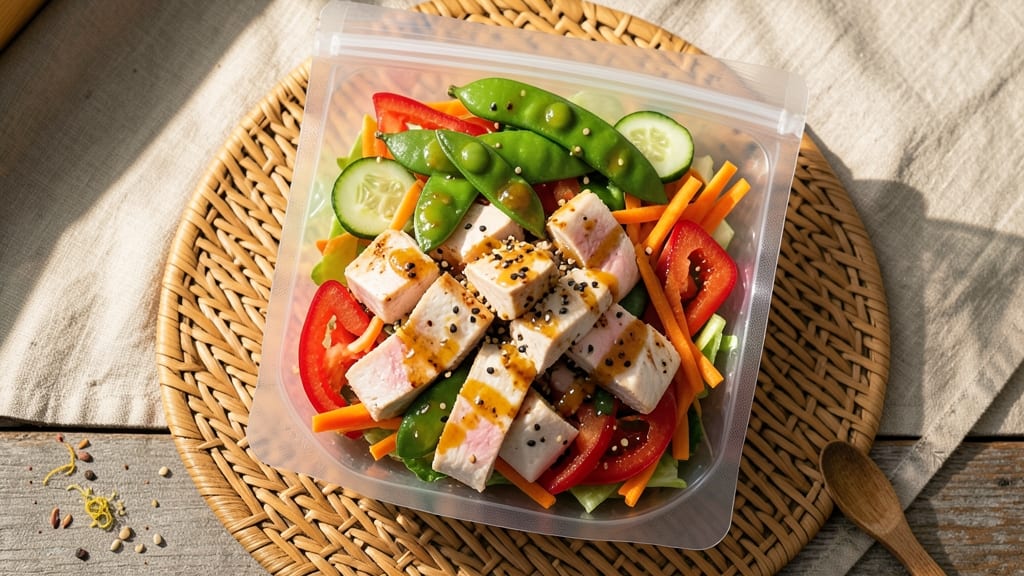
This bamboo chicken salad in a pouch recipe transforms your lunch break with a protein-packed, portable meal that stays fresh and delicious for hours. 💛 The secret lies in balancing tender chicken, crisp vegetables, and a tangy dressing that holds up perfectly in reusable bamboo containers—no soggy salads here.
I designed this recipe after years of packing lunches that arrived at work limp and flavorless, and it finally solves that problem.
What makes this recipe stand out is the foolproof assembly method that keeps ingredients separate until you're ready to eat.
You'll start with perfectly seasoned chicken breast, then layer in crisp bell peppers, shredded carrots, and cucumber—all coated in a creamy sesame-ginger dressing that adds just the right amount of zing. The bamboo pouches maintain freshness while allowing you to customize your salad with optional toppings like edamame or avocado.
The result is a nutrient-dense meal that's as satisfying as it is convenient—ideal for busy professionals, students, or anyone who needs a lunch that travels well. Each pouch contains balanced macronutrients, with lean protein from the chicken, fiber from the vegetables, and healthy fats from the dressing.
Plus, the reusable bamboo containers reduce waste while keeping your salad crisp and vibrant.
This recipe is particularly brilliant for meal prep Sundays, as it stays fresh in the fridge for up to 5 days. Whether you're heading to the office, gym, or a long meeting, you'll arrive with a lunch that's as impressive as it is practical.
Let's get started on creating your perfect portable meal!
Ingredients for bamboo chicken salad in a pouch
These fresh ingredients transform into a portable, protein-packed lunch that stays crisp and delicious.
| Ingredient | Amount | Notes |
|---|---|---|
| Boneless, Skinless Chicken Breast 🍗 | 1 ½ lb | Pounded to even thickness |
| Bell Peppers 🌶️ | 2 whole | Any color, thinly sliced |
| Carrots 🥕 | 3 medium | Shredded or julienned |
| Cucumber 🥒 | 1 whole | Seedless, thinly sliced |
| Sesame-Ginger Dressing 🫒 | ½ cup | Homemade or store-bought |
| Edamame 🌱 | ½ cup | Shelled, optional topping |
| Avocado 🥑 | ½ whole | Sliced, optional topping |
| Lime 🍋 | 1 whole | Juiced for brightness |
| Sesame Seeds 🌰 | 1 tbsp | Toasted for garnish |
| Salt 🧂 | 1 tsp | Kosher or sea salt |
| Black Pepper 🌶️ | ½ tsp | Freshly ground preferred |
| Ginger 🌿 | 1 tbsp | Fresh, grated for dressing |
| Sesame Oil 🫒 | 1 tbsp | For dressing depth |
| Bamboo Pouches 🌿 | 4 whole | Reusable, food-safe |
The chicken is the star here—look for boneless, skinless breasts with minimal fat for clean slices. Pounding them to even thickness ensures consistent cooking. Costco or Trader Joe's usually have great prices for bulk chicken. If you're prepping ahead, marinate the chicken in lime juice, salt, and a pinch of ginger for 30 minutes before cooking—it makes all the difference. For the veggies, freshness is key—pick firm carrots, crisp bell peppers, and cucumbers with no soft spots. Pre-sliced veggies from the store work, but they lack that fresh crunch. If you're short on time, baby carrots and pre-cut bell peppers save steps.
No edamame? Substitute shelled peas or extra cucumber—they hold up well in pouches. Avocado hater? Swap in cherry tomatoes or shredded purple cabbage for extra crunch. The dressing can be store-bought, but homemade is easy: mix 0.5 cup sesame oil, 0.25 cup lime juice, 1 tbsp grated ginger, 1 tbsp soy sauce, and 1 tsp honey. No sesame oil? Olive oil works fine, though it won’t have that nutty depth. For the pouches, reusable bamboo containers from Etsy are my go-to—they’re sturdy and eco-friendly. If you’re using plastic, grab ones with airtight seals to keep everything crisp.
Prep the chicken first—cook it, slice it thin, and let it cool completely before assembling. The veggies should be prepped and stored in separate containers to keep them from wilting. Assemble the pouches right before eating—this keeps everything crisp. If you’re meal prepping, store the chicken and dressing separately in the fridge for up to 4 days. The veggies hold up best when prepped the same day, but baby carrots and bell peppers can last 3-4 days if stored in a sealed container. For longer storage, freeze the cooked chicken for up to 3 months—just thaw and reheat gently before assembling.
Why You'll Love This Recipe
- No-Fuss Assembly: I swear by this—just layer chicken, crunchy veggies, and dressing in bamboo pouches. No bowls, no mess, and zero cleanup. Honestly, it’s the kind of recipe that makes me want to cook even on days when I’d rather scroll TikTok.
- Umami-Packed Bite: That sesame-ginger dressing? It’s where the magic happens. The chicken stays juicy, the bell peppers add a sweet crunch, and the ginger gives it a little kick—like a fresh, Asian-inspired hug in every bite. (Yes, even on a Tuesday night.)
- Lunchbox Legend: Between us, this is my go-to for work lunches or kids’ school snacks. The pouches keep everything fresh for days, and my daughter picks out the cucumber first but still asks for seconds. Not the prettiest, but the taste makes up for it.
- Budget Meal Maker: Chicken breast and veggies stretch far, and the dressing costs pennies. I make a big batch, portion it out, and have lunches covered for the week. Took me three tries to get the dressing right, but now it’s foolproof—and my wallet thanks me.
Step-by-step instructions for portable chicken salad in a pouch
Here's how to assemble a fresh, protein-packed lunch that stays crispy for hours.
👨🍳 Step 1: Cook and Slice the Chicken Breast
Place the 1.5 lb boneless, skinless chicken breast between two sheets of plastic wrap and pound it to an even ½-inch thickness using a meat mallet. This ensures even cooking. Season both sides generously with 1 tsp salt and ½ tsp black pepper, then heat a skillet over medium-high heat with 1 tbsp sesame oil.
Cook the chicken for 4-5 minutes per side until it reaches an internal temperature of 165°F and turns golden brown. Remove from heat and let it rest for 5 minutes before slicing into thin strips. The resting time keeps the chicken juicy—don't skip this!
🥘 Step 2: Prep and Assemble the Fresh Vegetables
Thinly slice the 2 whole bell peppers into ¼-inch strips and shred the 3 medium carrots using a peeler or mandoline. Thinly slice the whole cucumber lengthwise into ¼-inch rounds. Place all vegetables in a large bowl and toss with 1 tbsp grated ginger and the juice of 1 whole lime.
Add the sliced chicken strips to the bowl and gently toss everything together. The lime juice brightens the flavors while the ginger adds a subtle kick. Taste and adjust seasoning if needed—this is your flavor base before adding the dressing.
🍳 Step 3: Layer the Salad in Bamboo Pouches
Clean and dry the 4 whole bamboo pouches thoroughly. Divide the vegetable-chicken mixture evenly among the pouches, pressing down gently to create space for the dressing. In a small bowl, whisk together the ½ cup sesame-ginger dressing and 1 tbsp sesame oil.
Drizzle about 1 tablespoon of the dressing into each pouch, coating the salad evenly. The dressing should glisten but not pool—this ensures every bite is flavorful without sogginess. Seal the pouches tightly, leaving about 1 inch of space at the top to prevent spills.
🔪 Step 4: Add Toppings and Final Touches
Slice the ½ whole avocado into thin strips and divide ½ cup edamame among the pouches. Sprinkle each pouch with ¼ tbsp sesame seeds and a pinch of extra salt if desired. The avocado adds creaminess while the edamame and sesame seeds provide texture and crunch.
Gently shake each pouch to distribute the toppings evenly. Store in the refrigerator for up to 4 hours before eating. When ready, open the pouch and enjoy straight from the container—no mess, no cleanup!
Pro Tips For Making Bamboo Chicken Salad In A Pouch
- Slice Chicken Thin: Use a sharp knife and press down firmly—no need to rush, but don’t let it turn into a fight. Thin, even slices (about ¼-inch thick) cook faster and stay tender when packed with veggies in the pouch. I used to overlook this, and the chicken ended up rubbery in the middle.
- Shave Veggies, Don’t Chop: Bell peppers, carrots, and cucumbers should be thinly shaved or julienned—not diced. This creates a delicate texture that holds up better in the pouch and soaks up the dressing like a sponge. (Yes, it takes a few extra minutes, but the payoff is worth it.)
- Pre-Cook Chicken First: Par-cook the chicken breast in a hot pan with a splash of water or broth for 2–3 minutes per side until just pale. It’ll finish cooking in the pouch but won’t turn dry or tough. I learned this after my first batch came out like leather—now it’s juicy every time.
- Pack Dressing Last: Drizzle the sesame-ginger dressing after sealing the pouch, then gently roll the pouch to coat everything evenly. This keeps the veggies crisp and prevents soggy spots from sitting in dressing too long. (Pro move: Use a squeeze bottle for precision.)
Essential equipment for bamboo chicken salad in a pouch
Pouch Prep Essentials
Start with reusable bamboo pouches—I recommend the 4-ounce size from Etsy or Amazon (look for brands like Bamboo Bento or Green Pan). These containers are sturdy, eco-friendly, and designed to keep ingredients separate until you're ready to eat.
If bamboo isn't available, glass meal prep containers with compartmentalized sections (like Pyrex or Glasslock) work just as well. 🌿
For the sesame-ginger dressing, a small glass jar with a tight-sealing lid (like Le Parfait) is ideal for storage. If you're making the dressing fresh, whisk it in a small mixing bowl with a whisk or immersion blender for smooth texture.
I also keep a sharp chef's knife (like Mercer Culinary) and mandoline slicer (for even veggie cuts) in my prep station—these make assembly faster. 🔪
Chicken Cooking Tools
Pounding chicken to even thickness requires a meat mallet (I use the OXO Good Grips model). For cooking, a non-stick skillet (like Calphalon) prevents sticking, and a meat thermometer (I love ThermoWorks Smoke) ensures perfect doneness at 165°F.
A cutting board (I prefer Teakhaus bamboo) and sharp chef's knife are non-negotiable for clean slices. 🍗
To keep your workspace organized, use small bowls (like Pyrex measuring cups) for prepping veggies and toppings. A microplane (for ginger) and zester (for lime) add efficiency. For storage, airtight containers (like Rubbermaid Brilliance) keep prepped ingredients fresh until assembly day. 🌶️
Veggie Prep Must-Haves
A mandoline slicer (like OXO Good Grips) ensures uniform veggie cuts, which is key for even distribution in pouches. For shredding carrots, a peeler or box grater works well. A colander (for rinsing veggies) and paper towels (for drying) are also essential.
I keep a small bowl for lime juice and another for grated ginger nearby to avoid cross-contamination. 🥕
For optional toppings like edamame or avocado, a small knife (for slicing avocado) and tongs (for dividing edamame) help with precision. If you're using sesame seeds, toast them in a small skillet over low heat for 1-2 minutes until fragrant—this adds depth to the final dish. 🌰
Nutrition facts
Frequently asked questions
Can I use pre-cooked chicken instead of fresh?
Yes! Pre-cooked rotisserie chicken or leftover grilled chicken works perfectly—just shred or slice it thinly. For best texture, remove any excess fat or skin. If using store-bought rotisserie chicken, season it with ½ tsp salt and ¼ tsp black pepper to enhance flavor before assembling.
How long will the bamboo pouches keep the salad fresh?
The bamboo pouches maintain freshness for 4-5 days in the fridge when stored properly. To maximize freshness, pack the dressing separately and add it just before eating. For longer storage, freeze the cooked chicken and veggies separately (up to 3 months) and assemble fresh when ready.
What if I don’t have bamboo pouches?
No problem! Use reusable glass containers with compartments (like Pyrex) or airtight plastic containers with separate sections. The key is keeping ingredients separate until eating. If using plastic, choose containers with tight seals to prevent sogginess—just avoid heating them in the microwave.
Can I make this recipe without sesame oil?
Swap sesame oil for olive oil or avocado oil in the dressing. For extra flavor, add ½ tsp garlic powder or 1 tsp soy sauce to the dressing. The dish will still taste delicious—just slightly less nutty. If you love sesame flavor, toast ½ tbsp sesame seeds in the skillet before cooking the chicken.
Why does my salad get soggy in the pouch?
Sogginess usually happens when dressing pools or veggies release too much moisture. To fix this, pat veggies dry before packing, use less dressing (just enough to glisten), and store pouches upright in the fridge. For extra crunch, add ¼ cup shredded cabbage or pickled radishes—they hold up better than cucumbers.