
Salads
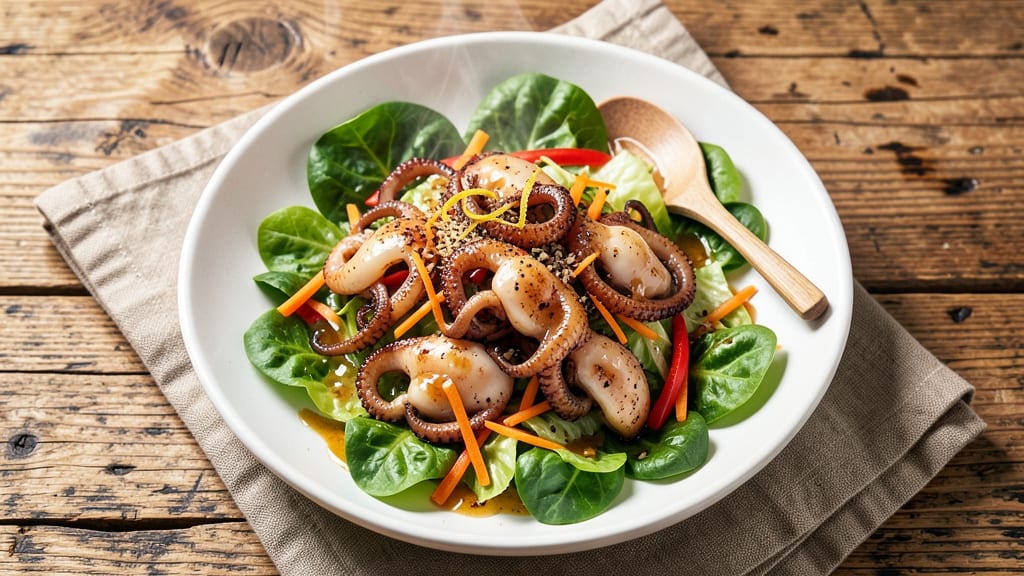
This Asian squid salad recipe delivers crispy seared squid paired with bright, tangy sesame-lime dressing and fresh vegetables for a restaurant-quality dish. The secret lies in properly cleaning and quickly searing the squid to achieve that perfect crispy texture while keeping the interior tender.
I've perfected this recipe after years of testing different cooking methods and dressings, ensuring every bite is flavorful and satisfying.
The salad base combines crisp shredded cabbage, refreshing lettuce, and crunchy vegetables that provide the perfect contrast to the crispy squid.
The dressing, made with soy sauce, sesame oil, lime juice, and a touch of honey, adds a perfect balance of tangy, sweet, and umami flavors that complement the squid beautifully.
This dish is not only delicious but also packed with protein and freshness, making it an ideal meal for any occasion.
What sets this recipe apart is the combination of textures: the crispy squid, the crunchy vegetables, and the creamy dressing all come together to create a harmonious bite. The garnishes of toasted sesame seeds, chopped cilantro, and scallions add an extra layer of flavor and visual appeal.
This salad is perfect for a light lunch, a dinner party, or even as an appetizer that will impress your guests.
With just a few simple ingredients and straightforward steps, you can create a dish that tastes like it came straight from an Asian street food stall. The key is in the preparation and timing, ensuring that the squid is cooked to perfection and the dressing is balanced just right.
This recipe is a game-changer for anyone looking to add a flavorful and healthy option to their meal rotation.
Ingredients for asian squid salad
Crispy seared squid meets vibrant veggies and zesty dressing—this salad delivers restaurant-quality flavor with simple ingredients.
| Ingredient | Amount | Notes |
|---|---|---|
| Fresh Squid (Calamari) 🦑 | 1 lb | Cleaned, bodies cut into rings |
| Green Cabbage 🥬 | 4 cups | Shredded, outer leaves removed |
| Romaine Lettuce 🥬 | 3 cups | Chopped, crisp varieties preferred |
| Carrots | 1 medium | Julienned or matchstick cut |
| Red Bell Pepper 🌶️ | 1 whole | Thinly sliced, seeds removed |
| Sesame Oil 🫒 | 2 tbsp | Toasted for flavor depth |
| Soy Sauce 🍶 | 3 tbsp | Low-sodium preferred |
| Lime Juice 🍋 | ½ cup | Freshly squeezed |
| Honey 🍯 | 2 tbsp | For subtle sweetness |
| Garlic Cloves 🧄 | 4 cloves | Minced for dressing |
| Toasted Sesame Seeds 🌾 | 2 tbsp | For garnish |
| Fresh Cilantro 🌿 | ¼ cup | Chopped, stems removed |
| Green Onions 🧅 | 4 whole | Thinly sliced, white parts trimmed |
| Vegetable Oil 🫒 | ½ cup | High smoke point for searing |
| Salt 🧂 | 1 ½ tsp | Kosher or sea salt |
The squid is the star here, so pick fresh, firm squid—look for bright, translucent bodies at Asian markets or seafood counters. If it smells fishy or feels slimy, skip it. Cleaning is key: remove the quill, pat dry, and slice into rings. For the cabbage, green cabbage is ideal—it holds its crunch better than red. If you can't find fresh cilantro, dried oregano at half the amount works in a pinch. The sesame oil? Toasted sesame oil adds that nutty depth—regular sesame oil works but lacks the same punch. Grab a small bottle from Trader Joe's or H Mart for the best flavor.
No sesame seeds? Toasted peanuts or crushed cashews give a similar crunch. Short on lime juice? Substitute lemon juice at 1:1 ratio, but the dressing won't be quite as bright. The honey adds balance—agave nectar works too if you're avoiding refined sugar. For the squid, don't overcrowd the pan when searing, or it'll steam instead of crisp. If you can't find fresh squid, frozen calamari works—just thaw and pat very dry before cooking. The bell pepper can be swapped for shredded jicama if you want extra crunch without color.
Squid stays crispy for about 20 minutes after cooking—eat it fast! Store the dressing separately in the fridge for up to 5 days, but toss the squid within 2 days for best texture. Keep the sesame seeds and cilantro in airtight containers—they lose flavor fast. Double the dressing if you're making this ahead; it keeps 1 week in the fridge. Garnish just before serving so everything stays fresh and vibrant.
Why You'll Love This Recipe
- No-Fuss Prep: I’ll admit, squid can feel intimidating—but this salad cuts through that. Toss the cleaned squid in a hot pan for 2 minutes per side, and boom, you’re done. No fancy techniques, no waiting around. The cabbage and carrots stay whole or in big chunks, so chopping is minimal. Honestly, it’s the kind of recipe that makes me want to cook when I’m already exhausted.
- Umami Bomb: That crispy-tender squid with a hint of soy and sesame? It’s the star. The red bell pepper adds a sweet crunch, while the cabbage keeps it fresh and light. I’ll be real: my picky-eating partner actually finishes his bowl—rare for a salad, but the flavor balance is chef’s kiss.
- Lunchbox Hero: This salad holds up like a champ. Pack it in jars or containers the night before, and it’s still crisp and vibrant by lunchtime. My kids grab it for school, and I take it to work—no sad wilted greens here. The squid stays tender, and the dressing clings to everything. It’s my go-to when I need something that won’t turn into a soggy mess.
- Budget Seafood Win: Fresh squid is cheaper than you think, especially in bulk. A single bag feeds my family for two meals, and the veggies stretch even further. I’ll swap in cheaper cabbage or skip the bell pepper if needed—it’s flexible like that. Plus, leftovers? They taste just as good cold the next day. No waste, all flavor.
Step-by-step instructions for Asian squid salad
Here's how to create a perfectly balanced dish with crispy squid and vibrant fresh vegetables.
Prepare the Squid for Crispy Perfection
Pat the 1 lb fresh squid (calamari) completely dry with paper towels—this is crucial for achieving that signature crispy texture. Using a sharp knife, cut the bodies into ½-inch rings, keeping the tentacles whole for presentation. In a bowl, toss the squid with 1.5 tsp salt and let it sit for 10 minutes. This salting draws out moisture, ensuring maximum crispiness when seared.
Heat 0.5 cup vegetable oil in a large skillet over medium-high heat until it shimmers. Add the squid in a single layer and cook undisturbed for 1-2 minutes per side until golden brown and crispy. You'll see the edges curl slightly—that's your signal it's ready. Transfer the crispy squid to a paper towel-lined plate to drain excess oil, then set aside while you prepare the vegetables.
Assemble the Fresh Vegetable Base
In a large mixing bowl, combine the 4 cups shredded green cabbage, 3 cups chopped romaine lettuce, 1 medium julienned carrot, and 1 whole thinly sliced red bell pepper. Gently toss everything together with your hands, being careful not to bruise the delicate lettuce. The cabbage and romaine provide the perfect crunchy foundation, while the carrot and bell pepper add vibrant color and subtle sweetness.
Sprinkle the vegetable mixture with 2 tbsp toasted sesame seeds and 0.25 cup chopped fresh cilantro, then divide evenly among 4 serving plates. The sesame seeds add nutty depth, while the cilantro brings a bright, fresh finish that cuts through the richness of the squid.
Create the Tangy Sesame-Lime Dressing
In a small bowl, whisk together 3 tbsp soy sauce, 0.5 cup freshly squeezed lime juice, 2 tbsp honey, 2 tbsp toasted sesame oil, and 4 minced garlic cloves. Start with low heat and gradually increase to medium, letting the mixture simmer for 2-3 minutes until slightly thickened. The acidity from the lime juice will brighten the flavors, while the honey adds just the right amount of subtle sweetness to balance the dish.
Taste the dressing and adjust the seasoning if needed—you want it tangy, slightly sweet, and perfectly balanced. The garlic should be noticeable but not overpowering. Let the dressing cool completely before using, as warm dressing can wilt the lettuce.
Combine and Garnish for Presentation
Drizzle the cooled sesame-lime dressing evenly over the vegetable bases on each plate. Then, arrange the crispy squid on top, fanning out the tentacles for an elegant presentation. The contrast between the warm, crispy squid and cool, fresh vegetables creates an irresistible texture combination.
Finish each serving with 1 whole thinly sliced green onion, adding a final pop of color and freshness. Serve immediately while the squid is still crispy and the dressing is fresh. This salad is best enjoyed right away, so gather everyone around for a truly satisfying meal.
Pro Tips For Making Asian Squid Salad
- Blanch Squid First: If your squid ends up rubbery or chewy, you’re probably skipping this step. Drop the cleaned squid into boiling water for exactly 30 seconds—no more—then shock it in ice water. This locks in tenderness before you even think about stir-frying or slicing it for the salad. (Yes, even if you’re impatient like me, resist the urge to rush it.)
- Shred Cabbage Thinly: That thick, chunky cabbage you see in some salads? It’s doing the salad a disservice. Use a mandoline or a sharp knife to slice the green cabbage paper-thin—it’ll soften just enough to hold up to the squid while still keeping crunch. Pro move: Toss it with a splash of rice vinegar right after slicing to keep it from yellowing.
- Don’t Overcrowd the Pan: I learned this the hard way—dumping all the squid in at once turns your stir-fry into a sad, greasy mess. Work in batches if you have to, and let the squid sear undisturbed for 20 seconds per side. Crowding steals heat, and suddenly your squid is steamed instead of crisp-tender. Trust me, your salad will thank you.
- Toss Dressing Last: The moment you add the dressing to the salad, the lettuce wilts and the carrots start to bleed color. Keep everything dry until serving, then drizzle the dressing just before eating. If you’re prepping ahead, store the squid and veggies separately and toss the dressing on the spot—your salad will look fresher, and the flavors will pop more.
Wine and beer pairings for this recipe
Crisp White Wine
For this Asian-inspired squid salad, I recommend a dry Riesling or Sauvignon Blanc—both wines complement the tangy sesame-lime dressing beautifully. The crisp acidity in these whites cuts through the richness of the squid while enhancing the citrus notes from the lime juice.
A New Zealand Sauvignon Blanc with its zesty grapefruit and herbal undertones is my absolute favorite choice for this dish. 🍷
Light Asian Lager
If you prefer beer, opt for a light Asian lager like Asahi Super Dry or Sapporo Premium. These beers have a clean, crisp profile that won't overpower the delicate flavors of the salad.
The subtle malt sweetness pairs wonderfully with the squid's umami notes, while the crisp finish cleanses your palate between bites. For a craft option, try a Japanese-style pilsner like Kirin Ichiban.
Rosé for Balance
A dry rosé with its bright acidity and red fruit notes works surprisingly well with this dish. I love a Provençal rosé like Whispering Angel—its strawberry and citrus flavors mirror the salad's tangy dressing.
The pale color won't stain your plate, making it a practical choice for this vibrant salad. For a budget-friendly option, Barefoot Dry Rosé delivers excellent value.
Sake Pairing
For a truly authentic Asian pairing, serve with dry sake—either chilled or at room temperature. A junmai ginjo with its clean, crisp profile enhances the salad's fresh ingredients without competing. The subtle sweetness of sake complements the honey in the dressing while balancing the squid's oceanic notes.
Look for Hakkaisan Junmai Ginjo for premium quality or Suntory Tokkuri for a more affordable option.
Non-Alcoholic Options
For those skipping alcohol, a sparkling yuzu soda or ginger beer works wonderfully. The effervescence cleanses your palate between bites, while the citrus notes in yuzu soda mirror the lime in the dressing.
For a more substantial option, try San Pellegrino Aranciata—its orange flavor complements the sweetness in the dressing beautifully. 💫
Nutrition facts
Frequently asked questions
How do I properly clean and prepare squid for this salad?
Start by removing the quill (the clear, hollow vein) from the squid bodies using a spoon or your fingers. Rinse thoroughly under cold water, then pat completely dry with paper towels. For crispy results, slice the bodies into ½-inch rings and keep the tentacles whole. Toss with 1.5 tsp salt and let sit for 10 minutes to draw out moisture before cooking.
Can I use frozen squid instead of fresh?
Yes, but thaw it completely first! Place frozen squid in a sealed bag and submerge in cold water for 30-45 minutes. After thawing, pat very dry with paper towels—this is critical for achieving crispiness. Follow the same preparation steps as fresh squid, but cook immediately after drying to prevent sogginess.
What's the best way to store leftovers?
Store the dressing separately in an airtight container in the fridge for up to 5 days. Keep the crispy squid in a sealed container for only 2 days to maintain texture—it loses crispness quickly. The vegetable base stays fresh for 3 days if stored in a sealed container with a paper towel to absorb moisture.
How can I make this salad spicier?
Add ½ tsp red pepper flakes or 1 tbsp sriracha to the dressing for immediate heat. For a smoky kick, include 1 tsp gochujang (Korean chili paste) in the dressing. Garnish with sliced jalapeños or sprinkle 1 tsp chili crisp on top before serving for extra spice.
Is there a vegetarian alternative to squid?
For a similar texture, use crispy baked tofu or king oyster mushrooms sliced into strips. Marinate them in soy sauce and sesame oil before baking at 400°F for 15 minutes until golden. The mushrooms will give you that satisfying crunch while keeping the dish vegetarian-friendly.