Side Dishes
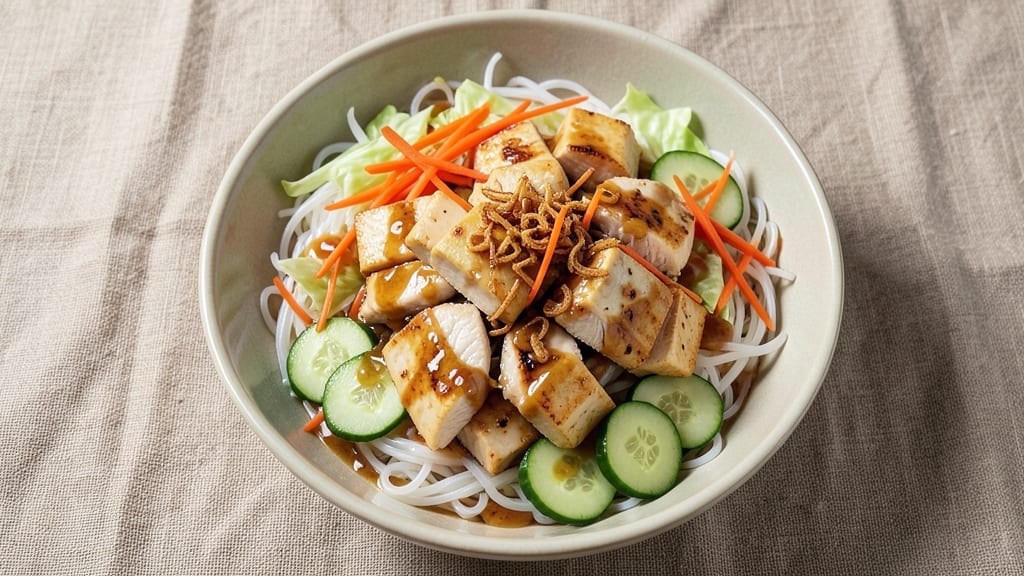
This Asian salad bowl recipe transforms simple ingredients into a vibrant, restaurant-quality meal that’s ready in under 30 minutes. The secret lies in balancing textures—crispy rice noodles, tender proteins, fresh vegetables, and a tangy peanut-lime dressing that ties everything together.
I developed this recipe after years of experimenting with fusion flavors, and it’s now a staple in my meal prep rotation.
What sets this bowl apart is its versatility—whether you’re craving a light lunch or a hearty dinner, the components can be swapped to suit your taste. Use rice noodles for a chewy base, shredded chicken or tofu for protein, and a mix of shredded cabbage, carrots, and cucumbers for crunch.
The peanut-lime dressing adds a sweet, nutty, and citrusy kick that elevates every bite.
The assembly is simple but strategic: start with the noodles or greens as your base, layer in proteins and vegetables, and finish with the dressing. This ensures every forkful delivers a perfect mix of flavors and textures.
The result is a dish that’s as satisfying as it is visually appealing, with colors that pop and flavors that dance.
Perfect for weeknight dinners, meal prep, or even a quick lunch, this bowl proves healthy eating can be exciting. Let’s get started—your taste buds will thank you.
Ingredients for asian salad bowl
Here’s your vibrant Asian salad bowl—crisp, colorful, and packed with restaurant-quality flavors.
| Ingredient | Amount | Notes |
|---|---|---|
| Rice Noodles 🍜 | 8 oz | Vermicelli or pad Thai style |
| Shredded Cabbage 🥬 | 3 cups | Green or purple variety |
| Carrots 🥕 | 1 medium | Julienned or thinly sliced |
| Cucumber 🥒 | 1 whole | Seedless, thinly sliced |
| Cooked Chicken Breast 🍗 | 1 ½ lb | Shredded or diced |
| Extra-Firm Tofu 🧇 | 1 block | Press and cube |
| Peanut Butter 🥜 | ½ cup | Natural, unsweetened |
| Lime Juice 🍋 | ¼ cup | Freshly squeezed |
| Soy Sauce 🍶 | ¼ cup | Low-sodium preferred |
| Sesame Oil 🫒 | 1 tbsp | Toasted sesame seeds |
| Garlic Cloves 🧄 | 4 cloves | Minced for dressing |
| Honey 🍯 | 1 tbsp | Or maple syrup |
| Sesame Seeds 🌾 | 1 tbsp | Toasted for garnish |
| Fresh Cilantro 🌿 | ¼ cup | Chopped, optional |
| Red Chili Flakes 🌶️ | ½ tsp | Adjust to taste |
The rice noodles are the star here. Vermicelli or pad Thai style both work, but look for ones labeled 'rice' or 'vermicelli'—the thinner the better for that perfect chewy texture. Trader Joe’s and Asian markets have the best selection. If you can’t find them, substitute with brown rice noodles (just soak them longer). Freshness matters with veggies too—cabbage should be crisp and carrots vibrant orange. I usually grab mine from the produce section at Whole Foods—they keep longer that way. For the protein, chicken or tofu both shine, but if you’re using tofu, press it for 20 minutes first to get rid of excess water.
No peanut butter? Almond butter or tahini works in a pinch, though the flavor will be slightly different. Fresh lime juice is non-negotiable—bottled just doesn’t cut it. Mexican limes from the grocery store are perfect if you can find them. Short on time? Pre-shredded cabbage saves chopping, but fresh is better. The garlic in the dressing can be roasted for a sweeter flavor—just toss minced cloves with a pinch of salt and roast at 400°F for 5 minutes. The red chili flakes add heat, but you can skip them if you prefer mild. For extra crunch, toast the sesame seeds in a dry pan for 30 seconds—they’ll smell amazing.
Noodles and veggies keep best in the fridge for 3-4 days if stored separately. The dressing stays fresh for 5 days in a sealed jar, but I usually make it fresh every time. Tofu can be prepped ahead and stored in the fridge for 3 days, but chicken is best used within 2 days of cooking. For meal prep, assemble the bowls without dressing and store separately—toss everything together right before eating to keep the noodles crisp. The flavors actually improve overnight, so leftovers taste even better the next day.
Why You'll Love This Recipe
- No-Cook Crunch: I swear by the raw cabbage and cucumber—they stay crisp even after sitting for hours. Honestly, the only thing I actively cook is the chicken, and that’s just because I like it tender. Everything else? Tossed in while I’m chatting with whoever’s joining me.
- Umami Bomb: That tangy sesame dressing? It’s the star. The shredded carrots add natural sweetness, the chicken stays juicy, and the rice noodles soak up the flavor like a sponge. Between us, I’ve never had a salad bowl this satisfying without heavy dressing or soggy lettuce.
- Lunchbox Hero: Here’s what sold me—this keeps perfectly for days. Pack the noodles and dressing separately, then assemble when you’re ready. My kids take these to school, and I’ve even brought them to potlucks. No reheating, no fuss, just fresh bites every time.
- Budget Win: Carrots, cabbage, and chicken breast stretch so far. I make this for four people for under $12, and we’re all full. Plus, if I have extra chicken from another meal, it disappears into this bowl without a second thought. (Yes, even on a Tuesday night.)
Step-by-step instructions for crunchy rice noodles and peanut-lime bliss
Here's how to assemble this vibrant, protein-packed bowl with perfect texture and balanced flavors.
Prepare the Rice Noodles and Protein
Start by soaking the 8 oz rice noodles in warm water for 10-12 minutes until pliable but still slightly firm. Drain immediately and rinse under cold water to stop cooking. This prevents them from turning mushy later. While the noodles soak, press the 1 block extra-firm tofu between two heavy books for 15 minutes to remove excess water, then cube into ½-inch pieces.
For the 1.5 lb cooked chicken breast, shred or dice it into bite-sized pieces. If using pre-cooked chicken, warm it gently in a pan with 1 tablespoon sesame oil over medium heat for 2-3 minutes until just heated through. The chicken should stay moist but not dry—this ensures your bowl stays juicy.
Assemble the Fresh Vegetable Base
In a large bowl, combine the 3 cups shredded cabbage, 1 medium julienned carrot, and 1 whole thinly sliced cucumber. Toss gently with 2 tablespoons lime juice and 1 teaspoon soy sauce to lightly wilt the cabbage while keeping the vegetables crisp. This prep step should take about 2 minutes—just enough to brighten the flavors without over-softening.
Add the drained rice noodles and cubed tofu to the vegetable mixture. Gently toss everything together with your hands or a spatula, being careful not to break the noodles. The goal here is to distribute the ingredients evenly without mashing them. If the mixture looks dry, add 1 tablespoon lime juice or a splash of water to help everything cling together.
Make the Peanut-Lime Dressing
In a small bowl, whisk together the 0.5 cup peanut butter, 0.25 cup soy sauce, 0.25 cup lime juice, 1 tablespoon honey, 1 tablespoon sesame oil, and 4 minced garlic cloves. Start with a slow stir to combine, then gradually increase to a brisk whisk until smooth. The dressing should be thick but pourable—if it's too stiff, add 1-2 teaspoons warm water to loosen it.
Taste and adjust seasoning: Add 0.5 teaspoon red chili flakes for heat, or a pinch more soy sauce if needed. This dressing is the heart of the bowl—its creamy, tangy, and slightly spicy profile balances all the fresh, crunchy elements.
Combine and Garnish
Pour the peanut-lime dressing over the noodle and vegetable mixture. Toss gently but thoroughly to coat everything evenly. The dressing should cling to the noodles and vegetables without making them soggy. If the bowl feels too wet, add the 0.25 cup chopped fresh cilantro and 1 tablespoon toasted sesame seeds now—they'll help absorb any excess moisture.
Divide the salad into 4 bowls and garnish each with an extra sprinkle of sesame seeds and cilantro. Serve immediately while the noodles are still warm and the vegetables retain their crunch. This dish shines when eaten fresh—waiting even 10 minutes can make the noodles softer than ideal.
Pro Tips For Making Asian Salad Bowl
- BOIL NOODLES UNTIL AL DENTE: Rice noodles turn mushy fast—pull them when they’re still slightly firm (about 2-3 minutes less than package instructions). They’ll finish cooking in the dressing and stay chewy, not soggy. I learned this the hard way after serving a bowl of gluey noodles that made everyone groan.
- SHRED CABBAGE THIN: Use a sharp knife or mandoline for even, paper-thin shreds—thick strips stay crunchy but dull the texture. Slice crosswise first to create long, uniform strands that wilt beautifully in the dressing. (Yes, it takes 10 seconds longer, but it makes a real difference.)
- SALT CHICKEN BEFORE SEARING: Pat the chicken dry, then season generously with salt before cooking—it crisps the skin and keeps it juicy. I used to skip this, and the breast always ended up bland or dry. Now it stays tender and absorbs the dressing like a sponge.
- DRESSING LAST MINUTE: Toss the noodles and veggies with dressing right before serving—cucumber turns limp, and cabbage wilts into a sad pile if left sitting. Keep the sauce separate until the last 2 minutes, then mix just before eating for maximum crunch. (Your future self will thank you.)
Regional styles of this recipe
Japanese Bento Bowl
Swap the peanut-lime dressing for a Japanese-inspired sesame-ginger version using 2 tbsp toasted sesame oil, 1 tbsp grated ginger, 2 tbsp rice vinegar, and 1 tbsp mirin. Replace rice noodles with sushi rice cooked with 1 tbsp furikake seasoning—this adds a nutty, umami depth.
Top with thinly sliced avocado, edamame beans, and pickled ginger for a fresh, tangy contrast. 🗺️
Thai Larb-Inspired Bowl
Transform this into a Thai larb salad bowl by swapping the peanut dressing for a lime-chili-lime dressing made with 3 tbsp fish sauce, 2 tbsp lime juice, 1 tbsp minced lemongrass, and 1 tsp palm sugar.
Use ground pork or chicken larb-style (minced and marinated with 1 tbsp fish sauce and 1 tsp galangal), and add shredded lettuce as the base. Garnish with crushed peanuts and Thai basil for an authentic kick. 🌶️
Korean Bibimbap Fusion
For a Korean-inspired bibimbap bowl, replace rice noodles with steamed short-grain rice and add gochujang dressing (mix 2 tbsp gochujang, 1 tbsp sesame oil, 1 tbsp honey, and 1 tsp rice vinegar).
Include steamed spinach, sautéed mushrooms, and fried egg on top. Serve with a side of kimchi for extra tang. This version is heartier and perfect for a cold day. 💛
Vietnamese Summer Roll Bowl
Bring a Vietnamese summer roll twist by using rice paper "noodles" (thinly sliced rice paper strips) instead of traditional noodles.
Add shrimp or chicken marinated in fish sauce and turmeric, vermicelli noodles (for extra texture), and a hoisin-lime dressing (mix 2 tbsp hoisin sauce, 1 tbsp lime juice, and 1 tsp chili oil). Garnish with mint leaves and crushed peanuts for a fresh, crunchy finish. 🥢
Modern Fusion Bowl
For a modern fusion twist, blend flavors by adding a miso-caramel dressing (simmer 2 tbsp white miso paste, 1 tbsp honey, and 1 tbsp soy sauce until sticky).
Include seared scallops or crispy tofu for protein, and mix in roasted sweet potatoes and pickled red onions for depth. Top with microgreens and a drizzle of chili oil for a restaurant-worthy dish. This version is ideal for adventurous eaters! ✨
Nutrition facts
Frequently asked questions
Can I make this Asian salad bowl gluten-free?
Skip the rice noodles and use gluten-free tamari instead of soy sauce in the dressing. For the base, try shredded lettuce or quinoa instead of rice noodles. Most Asian markets carry gluten-free tamari, and quinoa adds a nice protein boost while keeping the dish hearty.
How do I prevent the rice noodles from getting soggy?
Rinse the noodles thoroughly under cold water after draining, and toss them with 1 teaspoon sesame oil before adding other ingredients. Serve immediately or store the dressing separately until ready to eat. The key is to keep everything as dry as possible until the final toss. This trick keeps the noodles crisp for up to 15 minutes after assembly.
What's the best way to store leftovers?
Store components separately in airtight containers: noodles/veggies in one, dressing in another, and protein in a third. Refrigerate for up to 3 days. When ready to eat, toss everything together and add fresh garnishes like sesame seeds or cilantro. The flavors actually improve overnight! For longer storage, freeze the dressing separately for up to 1 month.
Can I make this vegetarian or vegan?
Easily! Replace the chicken with extra-firm tofu or tempeh, and use vegan peanut butter (check for no honey) in the dressing. For extra protein, add edamame or crispy chickpeas. The recipe already works with tofu as the primary protein, so no other changes are needed.
What if I don't like peanut butter?
No problem! Try almond butter, tahini, or even Greek yogurt for a creamier texture. For a nut-free version, blend 1 cup coconut milk with 1 tablespoon soy sauce and 1 tablespoon lime juice instead. The key is to maintain that creamy, tangy balance—just adjust sweetness to taste.