
Sauces & Condiments
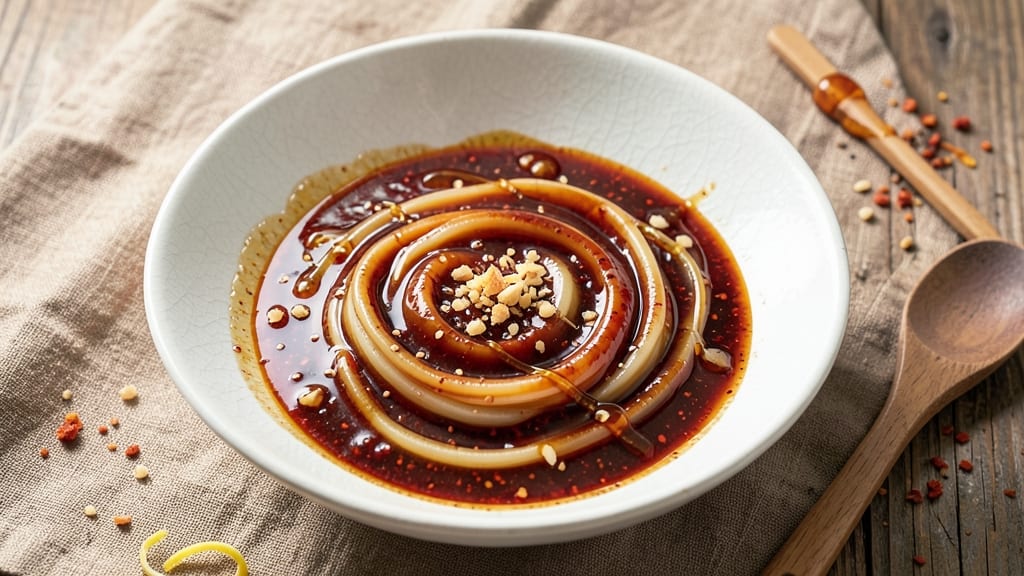
This Asian noodle salad dressing recipe transforms simple ingredients into a complex, umami-rich sauce that elevates any dish. The perfect balance of sweet, spicy, and tangy flavors comes together in just minutes, with a smooth emulsion that clings beautifully to noodles and vegetables.
I developed this recipe after years of testing—it’s the one that finally delivers that restaurant-quality depth at home.
The secret lies in the combination of soy sauce for umami, sesame oil for nutty richness, and rice vinegar for bright acidity. A touch of honey or sugar balances the flavors, while chili oil or flakes add just the right amount of heat.
Unlike many store-bought dressings, this one stays vibrant and flavorful for days, making it ideal for meal prep.
What makes this dressing truly special is its versatility—it works with cold or hot noodles, fresh vegetables, and even grilled proteins. The emulsion technique ensures a silky texture that won’t separate, so every bite delivers that perfect harmony of flavors.
Once you try it, you’ll never go back to bottled dressings again.
Store it in the fridge for up to a week, or even freeze portions for later use. The ingredients are simple, but the result is anything but ordinary—this is the dressing that turns a basic salad into a standout meal. Let’s get started!
Ingredients for asian noodle salad dressing
Nine simple ingredients create a restaurant-quality dressing that transforms any noodle salad.
| Ingredient | Amount | Notes |
|---|---|---|
| Soy Sauce 🍶 | ½ cup | High-quality, low-sodium preferred |
| Rice Vinegar 🍶 | ⅓ cup | Seasoned preferred for depth |
| Sesame Oil 🫒 | 2 tbsp | Toasted sesame oil for aroma |
| Honey 🍯 | 2 tbsp | Or light agave nectar |
| Chili Oil 🌶️ | 1 tbsp | Or chili flakes for heat |
| Garlic Cloves 🧄 | 2 cloves | Minced for infusion |
| Fresh Ginger 🌿 | 1 tbsp | Finely grated, fresh preferred |
| Sesame Seeds 🥜 | 1 tbsp | Toasted for garnish |
| Water 💧 | ¼ cup | For proper emulsion |
| Salt 🧂 | ½ tsp | Adjust to taste |
The soy sauce and rice vinegar are the foundation—Kikkoman soy sauce and seasoned rice vinegar from Trader Joe's are my go-tos. For sesame oil, La Choy or Kadoya deliver that authentic toasted flavor. Fresh ginger and garlic should be vibrant—bruised or wilted means it's past its prime. The honey balances the acidity, but agave nectar works too if you prefer a neutral sweetener. Chili oil adds depth; if you can't find it, red pepper flakes at half the amount will give you heat without the oil's richness.
No sesame oil? Toasted peanut oil works in a pinch, though the flavor will differ slightly. Short on garlic? Garlic powder at half the amount gets you close, but fresh is ideal. The emulsion relies on the water—don't skip it, even if the recipe seems dry at first. For extra umami, add 1 tsp fish sauce (if not vegetarian) or 1 tsp mushroom powder. The dressing thickens as it chills, so adjust the water if it's too thin after mixing. If storing, shake well before each use—the emulsion separates naturally over time.
This dressing keeps beautifully in the fridge for up to 1 week, sealed tightly in a jar. For longer storage, freeze in ice cube trays—thaw and shake to re-emulsify. The sesame seeds are best added fresh when serving, but you can toast and store them separately for up to 2 weeks. Double the batch if you're prepping for the week—it's worth the extra effort. The flavor actually improves after 24 hours as the ingredients meld together.
Why You'll Love This Recipe
- Five-Ingredient Magic: I swear by this combo—just stir, taste, adjust. No fancy techniques, no measuring cups cluttering my counter. That sesame oil alone transforms it from "dressing" to "flavor bomb" in seconds.
- Umami-Kick Balance: Honestly, the soy and honey play off each other so well—salty-sweet with a whisper of heat from the chili oil. It’s the kind of dressing that makes you pause mid-bite, like, "Wait, why does this taste so good?"
- Lunchbox Hero: Between us, this keeps perfectly for days in the fridge. Drizzle it on cold noodles for work lunches or toss it with veggies for a picnic—no reheating, no fuss. My kids even ask for it in their bento boxes now.
- Budget Brightener: I use this to dress up store-bought noodles or wilted greens when I’m pinching pennies. A splash of rice vinegar and a drizzle of chili oil turn cheap ingredients into something that feels special—without breaking the bank.
Step-by-step instructions for Asian noodle salad dressing
This dressing delivers perfect balance—sweet, tangy, and umami-rich—every time. Follow these precise steps for a silky emulsion that clings beautifully to noodles and vegetables.
Infuse the Aromatics
In a small saucepan, combine the 2 cloves minced garlic and 1 tablespoon finely grated fresh ginger with the 2 tablespoons sesame oil. Heat over low heat for 2-3 minutes until fragrant but not browned—you should smell the warm, toasty notes of garlic and the bright zing of ginger. This step builds the aromatic foundation.
Remove from heat immediately to prevent burning. Let the mixture cool completely before proceeding—this ensures the flavors meld without overpowering the other ingredients. If you rush this step, the garlic can turn bitter and dominate the delicate balance of the dressing.
Whisk Together the Base Ingredients
In a medium bowl, whisk together the 0.5 cup soy sauce, 0.33 cup rice vinegar, and 2 tablespoons honey until fully combined. The soy sauce should dissolve completely, creating a smooth, slightly thick liquid. This is your flavor backbone—salty, tangy, and sweet all at once.
Add the cooled garlic-ginger sesame oil mixture and whisk vigorously for 30 seconds to evenly distribute. The honey will help emulsify the dressing later, so don't skip this step. If you see any oil separation at this stage, don't worry—we'll fix it in the next step.
Create the Emulsion
Slowly pour in the 0.25 cup water while continuing to whisk. This is critical—adding water too quickly can break the emulsion. The dressing should begin to thicken slightly as the water helps bind the ingredients. Add the 1 tablespoon chili oil now and whisk until fully incorporated.
Taste and adjust seasoning with the 0.5 teaspoon salt. The dressing should be balanced—salty from the soy, tangy from the vinegar, sweet from the honey, and just a hint of heat from the chili oil. If it needs more depth, add a pinch more soy sauce. If it's too sharp, a touch of honey will mellow it.
Finish and Rest
Transfer the dressing to a clean jar or container and let it rest at room temperature for 10-15 minutes. This resting period allows the flavors to fully meld and the emulsion to stabilize. The dressing should be smooth and glossy, with no visible separation.
Before using, give it one final stir. The 1 tablespoon toasted sesame seeds can be sprinkled on top just before serving for texture and extra aroma. This dressing keeps well in the refrigerator for up to 5 days, making it perfect for meal prep.
Pro Tips For Making Asian Noodle Salad Dressing
- Whisk in Stages: Dump all ingredients into the bowl at once and you’ll end up with a gloopy mess. Start with soy sauce and honey, whisk until smooth, then add rice vinegar and sesame oil—this keeps the sesame oil from separating and gives you better control over the balance. (Yes, even if you’re impatient like me.)
- Use Warm Honey: Cold honey turns the dressing clumpy and uneven. Microwave it for 10 seconds or dip the jar in warm water for 30 seconds—just enough to make it pourable. Trust me, your dressing will emulsify like a pro.
- Taste Before Chili Oil: Chili oil is the easy fix when the dressing tastes bland, but it’s also the thing that’ll ruin the balance if you overdo it. Adjust soy, vinegar, and honey first—then add chili oil last, one teaspoon at a time. You can’t take it out.
- Swap Vinegar for Rice Wine: If you’re using regular vinegar, you’re missing depth. Rice wine vinegar adds a subtle sweetness and complexity that cuts through the soy sauce without overpowering it. Keep a bottle on hand—it’s worth the extra buck.
Dietary considerations for this recipe
Gluten-Free Adaptations
This dressing is naturally gluten-free if you use tamari instead of soy sauce. Tamari is a gluten-free alternative made from fermented soybeans, and it provides the same deep umami flavor without the gluten.
I recommend San-J Tamari or Edamame Tamari for the best results. Simply swap the 0.5 cup soy sauce for 0.5 cup tamari—no other adjustments are needed. 🥢
Vegetarian & Vegan Options
The original recipe is already vegetarian, but if you want to ensure it’s vegan, skip the honey and replace it with 2 tablespoons agave nectar or maple syrup. Both sweeteners work beautifully and won’t compromise the dressing’s balance.
For extra depth, add 1 teaspoon mushroom powder (like Nutiva Mushroom Powder) to boost umami without animal products. The dressing will still be rich and flavorful.
Low-Sodium Adjustments
If you’re watching your sodium intake, use low-sodium soy sauce or coconut aminos instead of regular soy sauce. Coconut aminos have a slightly different profile but still deliver umami with less salt.
Reduce the 0.5 teaspoon salt to 0.25 teaspoon and taste as you go—you might not need any extra salt at all. The dressing will still be delicious while being kinder to your blood pressure. 💪
Sugar-Free Versions
For a sugar-free version, replace the 2 tablespoons honey with 1 tablespoon monk fruit sweetener or erythritol. These sweeteners dissolve well and won’t alter the dressing’s texture. If you prefer a natural option, 1 tablespoon date syrup works too, though it has a slightly caramelized flavor.
Taste after adding the sweetener—you might not need as much due to the natural sweetness of the rice vinegar.
Allergen-Friendly Swaps
For those with sesame allergies, replace the 2 tablespoons sesame oil with 2 tablespoons toasted peanut oil or avocado oil. If you’re also avoiding peanuts, sunflower oil works in a pinch, though it lacks the nutty depth.
For the 1 tablespoon sesame seeds, use toasted pumpkin seeds or crushed peanuts as a garnish. Always check labels to ensure cross-contamination-free products if allergies are severe.
Nut-Free Considerations
If you’re avoiding nuts entirely, skip the sesame oil and seeds and use 1 tablespoon avocado oil instead. Avocado oil has a neutral flavor that won’t overpower the dressing. For garnish, try toasted coconut flakes or crispy fried shallots for a nut-free crunch.
The dressing’s core flavors will still shine through—it’s all about balancing the textures and tastes. 🌱
Nutrition facts
Frequently asked questions
Can I make this dressing thicker or thinner?
The emulsion relies on a balance of water and oil. For a thicker dressing, reduce the 0.25 cup water to 0.125 cup and whisk again. Need it thinner? Add 1 tablespoon water at a time until it reaches your desired consistency. The key is to whisk continuously to maintain the emulsion.
How long does this dressing keep, and can I freeze it?
This dressing stays fresh in the fridge for 5-7 days when stored in an airtight container. For longer storage, freeze in ice cube trays—thaw and shake vigorously to re-emulsify. The texture may separate slightly after freezing, but whisking restores it. The flavor actually improves after 24 hours as ingredients meld.
What if I don't have sesame oil or seeds?
For sesame oil, substitute toasted peanut oil or avocado oil (though the flavor will differ). Skip the sesame seeds and use toasted coconut flakes or crushed peanuts instead. The dressing's core flavors remain intact—it's all about balancing textures. For extra aroma, add 1/2 teaspoon ground coriander to the base ingredients.
Can I use this dressing on other dishes besides noodle salad?
This versatile dressing works beautifully on grilled chicken, stir-fried vegetables, or even as a dipping sauce for spring rolls. It also elevates cold soba noodles or rice bowls. The balance of sweet, tangy, and umami makes it adaptable to many Asian-inspired dishes. Just adjust the heat level (add more chili oil if needed).
Why did my dressing separate?
Separation usually happens when water is added too quickly or the emulsion wasn't whisked enough. To fix it, whisk vigorously for 1-2 minutes or use a hand mixer to re-emulsify. For prevention, always add water slowly while whisking continuously. If it still separates, add 1 teaspoon cornstarch mixed with 1 tablespoon water and whisk until smooth.