
Salads
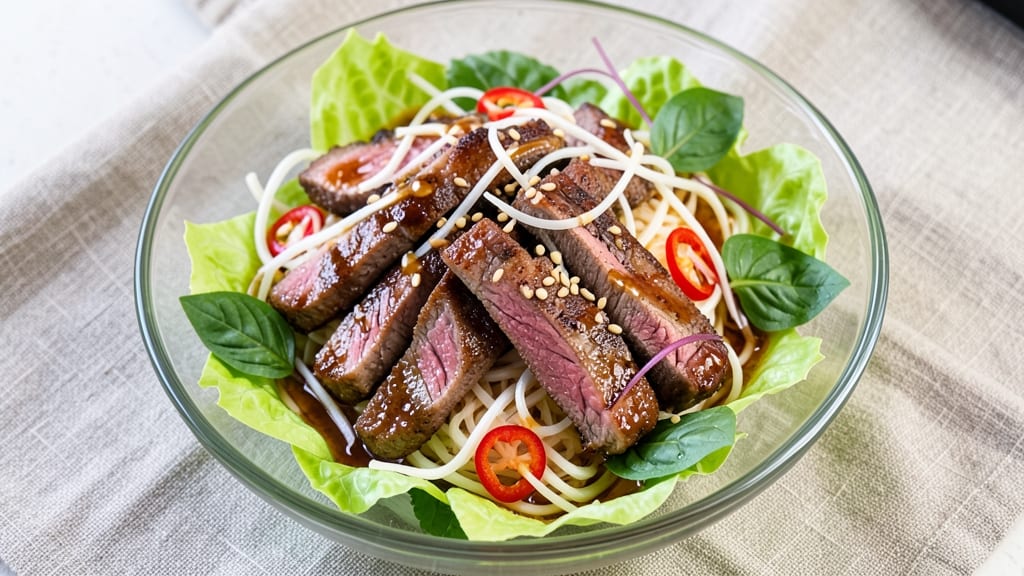
This Asian beef salad recipe transforms simple ingredients into a restaurant-worthy dish with crispy rice noodles and a tangy fish sauce dressing that balances sweet, savory, and umami flavors perfectly. The secret lies in thinly sliced beef that cooks quickly over high heat, maintaining a tender yet slightly crispy texture.
I've perfected this recipe over countless weeknight dinners, and it always delivers that perfect harmony of textures and tastes.
What sets this salad apart is the combination of chewy rice noodles, fresh herbs, and a dressing that's both vibrant and deeply flavorful. The beef is marinated in a simple soy-ginger mixture before cooking, ensuring it stays juicy while developing a subtle char.
The dressing, made with fish sauce, lime, and a touch of honey, adds that signature tangy-sweet kick that makes every bite irresistible.
By the time you're done assembling this salad, you'll have a dish that's visually stunning with its mix of bright greens, golden noodles, and perfectly cooked beef.
The crispy edges on the noodles contrast beautifully with the tender beef and fresh herbs, while the dressing ties everything together in a way that's both complex and balanced. This is the kind of salad that feels special yet comes together in under 30 minutes.
The best part? This recipe is incredibly versatile. Swap in different vegetables based on what's in season, or adjust the dressing to suit your taste—more heat, more sweetness, or even a hint of peanut butter for a fusion twist.
It's a complete dish that's perfect for lunch, dinner, or even as a light yet satisfying main course. Let's get started!
Ingredients for asian beef salad
Crispy noodles, tangy dressing, and perfectly seared beef—this salad packs restaurant flavors in every bite.
| Ingredient | Amount | Notes |
|---|---|---|
| Flank Steak 🥩 | 1 lb | Thinly sliced against grain |
| Rice Noodles 🍜 | 8 oz | Vermicelli or pad thai style |
| Fish Sauce 🍶 | 2 tbsp | Red Boat preferred |
| Lime Juice 🍋 | ¼ cup | Freshly squeezed |
| Honey 🍯 | 2 tbsp | Wildflower preferred |
| Soy Sauce 🍶 | 2 tbsp | Low sodium preferred |
| Fresh Ginger 🧄 | 1 tbsp | Grated, fresh preferred |
| Vegetable Oil 🫒 | 2 tbsp | High smoke point |
| Garlic Cloves 🧄 | 4 cloves | Minced, fresh preferred |
| Red Bell Pepper 🌶️ | 1 whole | Thinly sliced |
| Cucumber 🥒 | 1 whole | English or Persian type |
| Fresh Cilantro 🌿 | ½ cup | Chopped, stems removed |
| Green Onions 🧅 | 3 whole | Thinly sliced |
| Sesame Seeds 🌾 | 1 tbsp | Toasted for garnish |
| Sesame Oil 🫒 | 1 tbsp | For finishing |
The beef is everything here. Flank steak is my go-to because it slices thin and stays juicy—ribeye or sirloin work too, but they can get tough if overcooked. Slice it against the grain (that's the long direction of the muscle fibers) for maximum tenderness. Costco or Whole Foods usually have great cuts, but even the regular supermarket steak works if you slice it paper-thin. Pro tip: let it sit at room temp for 15 minutes before cooking for even searing. The rice noodles? Vermicelli or pad thai style both work—just don't boil them too long or they'll turn mushy. Rinse them in cold water after cooking to stop the cooking process.
Fish sauce is non-negotiable for that authentic umami punch, but Red Boat is the gold standard—it's clean, not fishy, and has no additives. No fish sauce? Soy sauce plus a dash of anchovy paste gets you close, but it won't be quite the same. The honey should be wildflower or clover—avoid that cheap grocery store stuff that tastes like corn syrup. Fresh ginger and garlic? Grated and minced make all the difference—pre-minced garlic has no flavor. For the veggies, English cucumbers stay crisp longer than regular ones, but any cucumber works. Red bell pepper? Any color is fine, but yellow adds a nice pop of brightness. Swap in shredded carrots or snap peas if you're feeling adventurous—this salad loves veggies.
Here's the secret to crispy noodles: cook them al dente, then toss with a tiny bit of oil and spread them on a tray to dry for 10 minutes. They'll crisp up beautifully when you add them to the salad. The dressing keeps for 3 days in the fridge, but the beef and veggies are best fresh. Store components separately—noodles and dressing last longest, while the beef and greens should go in within 2 days. Double the dressing if you want leftovers—it's perfect on grilled chicken or shrimp too.
Why You'll Love This Recipe
- No-Fuss Protein Boost: I swear by this for days I’m too tired to cook—just slice the flank steak thin, toss it in the marinade (fish sauce + lime + honey), and let it sit while I chop veggies. That’s it. No braising, no waiting hours—just 10 minutes of active work for beef that practically melts in your mouth.
- Umami Magic: Between us, fish sauce and honey might sound weird together, but they’re chef’s kiss. The saltiness cuts through the sweetness, and the lime keeps everything bright—like a perfect balance of tangy, salty, and just a little sticky. Honestly, I’ve tried store-bought dressings, but this homemade mix is always better.
- Lunchbox Hero: This salad travels like a dream. Pack the noodles dry (they soften fast in the dressing), portion the beef separately, and toss everything together when you’re ready. My kids take it to school, I bring it to work, and it never gets soggy—plus, it’s way cheaper than buying takeout. (Yes, even on a Tuesday night.)
- Budget Stretch: Flank steak is affordable, and a single pound feeds four people easily. The rice noodles last ages in the pantry, and I make the dressing in bulk—just adjust the fish sauce to taste. I’ll be real: I’ve made this for under $10 per serving, and it still feels fancy. That’s the kind of meal that makes grocery day worth it.
Step-by-step instructions for Asian beef salad with crispy rice noodles
Here's how to create a restaurant-worthy Asian beef salad with perfectly seared steak and crisp-tender noodles.
Marinate and Slice the Flank Steak
In a bowl, combine the 2 tbsp soy sauce, 2 tbsp honey, and 1 tbsp grated fresh ginger. Whisk until the honey dissolves completely, creating a glossy, sticky marinade. Add the 1 lb flank steak and toss to coat evenly, ensuring all sides are well-covered. Let it marinate for at least 30 minutes (or up to 2 hours for deeper flavor).
While marinating, thinly slice the steak against the grain into ¼-inch thick strips. The grain runs lengthwise, so cutting perpendicular ensures tender bites. Pat the slices dry with paper towels before cooking—this helps achieve that perfect crispy sear we're after.
Cook the Crispy Rice Noodles
Bring a pot of water to a rolling boil and add the 8 oz rice noodles. Cook for exactly 2 minutes—they'll finish cooking in the hot oil later. Drain immediately and rinse under cold water to stop the cooking process. Toss the noodles with 1 tbsp vegetable oil to prevent sticking and keep them slightly oily for that signature crisp-tender texture.
Heat 1 tbsp vegetable oil in a large skillet over medium-high heat until shimmering. Add the oiled noodles in a single layer and cook undisturbed for 2-3 minutes until they turn golden brown and crispy in spots. Toss gently to ensure even browning, then transfer to a plate and set aside. These noodles should be crispy enough to stand up to the salad but still tender enough to eat.
Sear the Steak and Prepare the Dressing
In the same skillet (no need to clean it—those flavorful bits matter), heat 1 tbsp vegetable oil over high heat until smoking. Working in batches if needed, add the marinated steak strips and sear for 1-2 minutes per side until they develop a deep golden brown crust. The steak should be cooked to medium-rare (about 130°F internal temp)—it'll finish cooking when tossed with the hot noodles.
While the steak cooks, whisk together the 2 tbsp fish sauce, 0.25 cup lime juice, and remaining 1 tbsp vegetable oil in a small bowl. This tangy dressing is the heart of the dish, balancing the rich flavors with bright acidity. Taste and adjust—you might want to add a touch more lime if your fish sauce is particularly salty.
Assemble the Salad with Fresh Vegetables
Thinly slice the 1 whole red bell pepper and 1 whole cucumber into matchsticks. Chop the 0.5 cup fresh cilantro and slice the 3 whole green onions into ½-inch pieces. These fresh vegetables add crunch and color contrast that makes the dish pop visually.
In a large bowl, gently combine the crispy rice noodles, seared steak strips, sliced vegetables, and chopped herbs. Drizzle with the fish sauce-lime dressing and toss everything together lightly—you want to coat the ingredients without mashing the noodles or steak. The salad should look vibrant with colors mixing beautifully.
Finish and Serve Immediately
Toast the 1 tbsp sesame seeds in a dry skillet over medium heat for 1-2 minutes until fragrant and golden. Sprinkle them over the salad along with a final drizzle of 1 tbsp sesame oil. This adds nutty depth and that authentic Asian restaurant finish.
Serve the salad immediately while the noodles are still crispy and the dressing is fresh. Each bite should deliver perfect texture contrast—crispy noodles, tender steak, crunchy vegetables, and fresh herbs all tied together by that tangy, umami-rich dressing. For extra authenticity, serve with warm steamed dumplings on the side!
Pro Tips For Making Asian Beef Salad
- Slice Against the Grain: Flank steak’s muscle fibers run long—cutting perpendicular to them turns chewy beef into tender strips. I used to ignore this and ended up with rubbery bites. Grab a sharp knife and angle those slices at 45 degrees for the cleanest cuts.
- Rest Before Slicing: That 5-minute rest after cooking isn’t optional. Tent the steak with foil and let it sit while you prep the noodles—it keeps the meat juicy and makes slicing effortless. Trust me, skipping this step turns your salad into a soggy mess.
- Balance the Dressing: Fish sauce and honey are a match made in heaven, but lime juice is the tiebreaker. Start with 1 tablespoon of lime, taste, then adjust—too much fish sauce makes it salty, too little honey makes it flat. I learned this after ruining three batches.
- Soak Noodles Just Enough: Rice noodles absorb water fast—soak them in warm (not boiling) water for 8-10 minutes until pliable, then drain and rinse with cold water. Over-soaking turns them mushy; under-soaking makes them chewy. Test one piece first.
Common mistakes when making your asian beef salad
Overcooking Beef
This is the #1 mistake I see—beef that turns tough and chewy instead of tender. Flank steak should be cooked to medium-rare (130°F internal temp), not well-done. Use a meat thermometer to avoid guesswork.
I've ruined many batches by letting it sit too long in the pan or overcrowding it—always cook in batches if needed. 🔥
Skipping the Marinade
That soy-ginger-honey marinade isn't just flavor—it tenderizes the beef by breaking down muscle fibers. Don't skip it! Even 15 minutes makes a difference. I once made this salad without marinating, and the beef was disappointingly chewy. Pro tip: Use a resealable bag for even coating.
Overcooking Noodles
Rice noodles cook faster than you think—2 minutes max in boiling water! Overcooking turns them mushy. Rinse them immediately with cold water to stop cooking.
For crispy texture, cook them al dente first, then finish in the skillet with oil. I've had to start over when noodles turned to paste.
Using Wrong Fish Sauce
Not all fish sauces are equal! Cheap grocery brands taste harsh and fishy. Red Boat is my go-to—it's clean, salty, and umami-rich. If you must substitute, use 1 tbsp soy sauce + ½ tsp anchovy paste per 2 tbsp fish sauce.
I once used a generic brand and the dressing tasted terrible.
Dressing Too Early
Assembling the salad too soon causes soggy noodles. Make the dressing fresh and toss it in right before serving. I've had to start over when dressing was added too early—crispy noodles turn limp within 10 minutes. Keep components separate until the last moment for perfect texture.
Ignoring the Grain
Cutting beef with the grain instead of against it means tough, stringy bites. The grain runs lengthwise—slice perpendicular for tender strips. I've had to re-slice entire batches when I got this wrong. A quick Google image search of "flank steak grain" helps visualize it.
Nutrition facts
Frequently asked questions
Can I use flank steak substitutes?
Yes! Ribeye or sirloin work well, but slice them thinner (⅛-inch) since they're more tender. For budget options, try chuck roast (marinate longer) or ground beef (80/20 blend)—just cook it until 160°F internal temp. Avoid tough cuts like flank's cheaper cousin, skirt steak, unless you're okay with extra marinating time.
How do I make this gluten-free?
Swap the soy sauce for tamari or coconut aminos (1:1 ratio), and use gluten-free fish sauce like Red Boat Gluten-Free. Check your rice noodles—most brands are naturally gluten-free, but verify the label. The honey and other ingredients are already safe! This version tastes just as vibrant with the right substitutions.
Can I prep this ahead of time?
Marinate the beef up to 24 hours ahead. Cook the noodles and beef fresh, but store them separately in the fridge for 2 days max. Keep the dressing in a separate container—it lasts 3 days. Re-crisp noodles in a dry skillet for 1-2 minutes before assembling. The beef can be reheated gently in a pan with a splash of water for 30 seconds.
What if I don't have fish sauce?
Make a quick substitute with 1 tbsp soy sauce + ½ tsp anchovy paste + ½ tsp sugar. For extra depth, add 1 tsp miso paste. If you're avoiding umami entirely, use ½ cup lime juice + 2 tbsp honey + 1 tbsp rice vinegar—it'll be sweeter but still delicious. The key is balancing acidity with sweetness to mimic fish sauce's complexity.
How spicy should this be?
This recipe is naturally mild, but you can add heat! Toss in ½ tsp chili flakes with the dressing, or serve sriracha drizzle on the side. For Thai-inspired spice, swap 1 tbsp fish sauce for 1 tbsp nam prik pao (chili jam). Start with ¼ tsp and adjust—Asian chili pastes pack serious heat!