
Salads
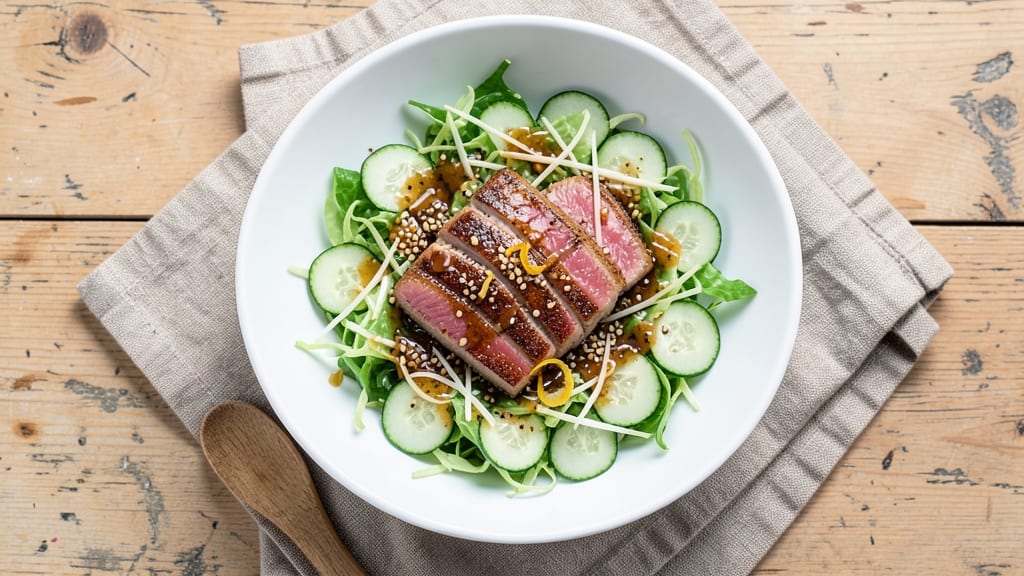
This Asian ahi tuna salad recipe delivers restaurant-quality flavor in just 15 minutes—perfect for a fresh, protein-packed lunch that feels like a chef's creation. The secret lies in perfectly seared ahi tuna, crisp quick-pickled veggies, and a smoky sesame dressing that ties everything together.
I developed this recipe after craving something light yet satisfying, and it’s become my go-to for weeknight dinners or elegant gatherings.
The foundation starts with sushi-grade ahi tuna, seared to medium-rare for that signature tender bite and subtle char. Quick-pickled cabbage and cucumber add a bright, tangy contrast, while toasted sesame seeds and scallions bring nutty depth.
The dressing—a blend of soy, sesame oil, and a touch of honey—balances richness with umami and a hint of sweetness. Every element is designed to come together effortlessly, ensuring you spend more time enjoying the meal than prepping.
What you’ll end up with is a visually stunning salad that’s as delicious as it looks: vibrant greens, glossy tuna slices, and crunchy pickled veggies all coated in that irresistible sesame dressing.
The texture contrast—creamy tuna, crisp veggies, and toasted seeds—makes each bite exciting. This dish proves you don’t need complicated techniques to create something impressive; just a few thoughtful steps and fresh ingredients.
Serve immediately for the best texture, or assemble ahead and refrigerate for up to 2 hours before plating. Pair with steamed jasmine rice or crusty bread to soak up every last drop of that flavorful dressing. Let’s get started—your taste buds will thank you.
Ingredients for asian ahi tuna salad
Fresh ahi tuna, crisp pickled veggies, and smoky sesame dressing—this salad delivers restaurant flair in minutes.
| Ingredient | Amount | Notes |
|---|---|---|
| Sushi-Grade Ahi Tuna 🐟 | 1 lb | Fresh, center-cut, sliced into 1/4-inch pieces |
| Green Cabbage 🥬 | 3 cups | Shredded, thinly sliced (about 1/4 head) |
| Persian Cucumber 🥒 | 1 whole | Thinly sliced lengthwise (peeled if preferred) |
| Rice Vinegar 🍶 | ⅓ cup | Seasoned or white vinegar substitute |
| Sesame Oil 🫒 | 1 tbsp | Toasted sesame oil for dressing |
| Toasted Sesame Seeds 🌾 | 2 tbsp | For garnish and crunch |
| Scallions 🧅 | 4 whole | Thinly sliced, white and green parts |
| Soy Sauce 🍶 | 2 tbsp | Low-sodium preferred |
| Honey 🍯 | 1 tbsp | Substitute maple syrup for vegan option |
| Sesame Seeds 🌾 | 1 tbsp | Extra for garnish (toasted) |
| Vegetable Oil 🫒 | 2 tbsp | High smoke point for searing |
| Salt 🧂 | 1 tsp | Kosher or sea salt |
| Black Pepper 🌶️ | ½ tsp | Freshly cracked |
| Sugar 🍚 | 1 tsp | White or raw sugar |
| Sesame Dressing Base 🥜 | ¼ cup | Sesame paste (or tahini) for thickness |
The ahi tuna is non-negotiable here—sushi-grade is a must for safety and texture. Local seafood markets or high-end grocery stores like Whole Foods carry the best cuts. Look for vibrant red color and firm texture; avoid any with a fishy odor. If you're unsure, ask the fishmonger for the freshest cut. For the pickled veggies, green cabbage should be crisp with no yellowing leaves, and Persian cucumbers should be firm and seedless. The rice vinegar makes all the difference—seasoned vinegar adds a subtle sweetness that pairs perfectly with the tuna. If you can't find it, white vinegar with a pinch of sugar works in a pinch.
No sesame oil? Toasted peanut oil adds a similar nutty depth, though the flavor will differ slightly. Short on sesame paste? Tahini thinned with water works, but the dressing will be thicker. The dressing can be made ahead—store it in the fridge for up to 1 week, shaking before use. For the pickling liquid, apple cider vinegar can replace rice vinegar if needed, though the flavor profile shifts slightly. If you're avoiding sugar, agave nectar is a 1:1 substitute. The scallions should be fresh—yellow or white scallions work just as well as green, but green adds a milder bite. For extra crunch, lightly toast the sesame seeds in a dry pan over medium heat for 2-3 minutes, stirring constantly.
This salad is best served immediately after assembly to preserve the crispness of the pickled veggies and the tender bite of the tuna. If prepping ahead, store the pickled veggies separately in the fridge for up to 3 days, and the dressing for 1 week. The tuna should be seared just before serving to maintain its perfect medium-rare doneness. For leftovers, store the entire salad in an airtight container for 1 day, though the texture will soften slightly. The dressing can be reused on other dishes like noodles or grilled veggies—it keeps well in a sealed jar.
Why You'll Love This Recipe
- No-Fuss Assembly: I swear by this recipe because it’s the kind of dish where you can prep while chatting with guests. Thinly slice the cabbage and cucumber—no julienne skills needed—toss with rice vinegar and sesame oil, then just fold in the tuna. Five minutes of active work, and the rest is letting flavors meld.
- Umami-Packed Bite: That first taste? The tuna’s rich, almost buttery texture cuts through the crisp cabbage and cool cucumber, while the sesame oil adds a toasty depth. Honestly, it’s the kind of salad that makes you reach for seconds without even thinking—no dressing needed.
- Lunchbox Hero: Between us, this is my go-to for work lunches or kids’ school meals. Pack it in a container, and it stays fresh for days. The cabbage keeps its crunch, the tuna stays tender, and no one complains about soggy lettuce. (Yes, even on a Tuesday night.)
- Budget Bright Spot: Ahi tuna might sound fancy, but a single steak stretches across two servings when sliced thin. Pair it with cheap cabbage and cucumbers, and suddenly you’ve got a restaurant-worthy meal without the price tag. Leftovers? Even better cold the next day.
Step-by-step instructions for asian ahi tuna salad
Here's how to assemble this vibrant, restaurant-worthy salad in under 25 minutes.
Quick-Pickle the Vegetables
In a medium bowl, combine the 3 cups green cabbage, 1 whole Persian cucumber (thinly sliced), and 4 whole scallions (thinly sliced). This prep work happens while you cook the tuna, so don't skip ahead.
In a separate small bowl, whisk together the 0.33 cup rice vinegar, 1 tbsp honey, 1 tsp sugar, 2 tbsp soy sauce, and 0.5 tsp black pepper. Pour this mixture over the vegetables and toss gently to coat. Let it sit for 10-15 minutes at room temperature - this creates those bright, tangy quick-pickled veggies that cut through the richness of the tuna.
Here's the thing - the acidity from the vinegar will soften the cabbage slightly, but it won't overcook it. The sugar balances the sharpness, and the soy sauce adds depth. Don't rush this step - patience here makes all the difference in flavor development.
Sear the Ahi Tuna to Perfect Medium-Rare
Heat a large skillet over high heat until it's screaming hot. Add the 2 tbsp vegetable oil and let it shimmer for 30 seconds. Working in batches if needed (since you're serving 4), add the 1 lb sushi-grade ahi tuna slices and sear for 1-2 minutes per side until they develop a beautiful crust but remain pink in the center.
You'll know it's ready when the edges are golden brown and the center still looks slightly translucent. The tuna should release easily from the pan - if it sticks, your heat isn't high enough. Transfer the cooked tuna to a plate and let it rest for 2-3 minutes before slicing into bite-sized pieces. This resting period prevents overcooking as the residual heat finishes the cooking process.
Prepare the Smoky Sesame Dressing
In a small bowl, combine the 0.25 cup sesame dressing base, 1 tbsp sesame oil, and 1 tbsp soy sauce. Whisk vigorously until smooth and emulsified. The dressing should coat the back of a spoon - if it's too thick, add 1 tsp rice vinegar to loosen it.
This is where the smoky depth comes in. If you're using tahini as your sesame base, you might want to add a pinch of smoked paprika for extra complexity. The dressing should have a rich, nutty aroma with a slight tang - that's your cue it's ready to work its magic on the salad.
Assemble the Salad
Gently toss the quick-pickled vegetables with about 2 tablespoons of the sesame dressing to lightly coat them. Arrange the vegetables on a large platter, creating a bed for the tuna. Place the sliced ahi tuna pieces on top, slightly overlapping them for visual appeal.
Drizzle the remaining dressing over the tuna in an even pattern, allowing some of it to pool in the bottom of the platter. This creates those beautiful, glossy streaks that make the dish look restaurant-quality. Sprinkle with the 2 tbsp toasted sesame seeds and 1 tbsp sesame seeds for that essential crunch and nutty aroma.
Garnish and Serve Immediately
Using a small offset spatula, gently spread the dressing over the tuna slices to create a glossy sheen. Finish with additional thinly sliced scallions arranged in a circular pattern around the edge of the platter. This not only looks stunning but also adds a fresh, oniony bite that complements the rich tuna.
Serve immediately while everything is still vibrant and the tuna is at its perfect medium-rare temperature. The contrast of temperatures - warm tuna with cool, crisp vegetables - makes each bite unforgettable. This dish is best enjoyed fresh, so don't let it sit too long before serving.
Pro Tips For Making Asian Ahi Tuna Salad
- SEAR TUNA FAST: Hit the tuna steak with a screaming-hot pan for exactly 30 seconds per side—no more, or it’ll dry out. I used to linger, thinking it needed more time, but that’s how you end up with rubbery bites. A quick sear locks in juices while keeping the center tender.
- SALAD CABBAGE CRUNCH: Thinly slice the green cabbage with a sharp knife (or mandoline) and immediately toss it with a pinch of salt and 1 teaspoon rice vinegar. Letting it sit for 10 minutes softens the edges just enough to balance the tuna’s richness without turning it limp.
- CUCUMBER PREP MATTERS: Persian cucumbers? Skip the peeling—those thick skins add texture. Instead, halve, seed, and dice into ¼-inch pieces, then toss with ½ teaspoon salt and 1 teaspoon sugar to draw out excess water. Drain after 15 minutes, or your salad will turn soggy.
- VINEGAR LAST, OIL FIRST: Whisk the dressing components (vinegar, sesame oil, etc.) separately, then fold the tuna and veggies in gently. Adding vinegar too early makes the cabbage bitter, and drowning the tuna in oil upfront turns it greasy. Work the dressing in like you’re folding a cake batter—light hands.
Best sauces and condiments for this asian ahi tuna salad
Smoky Sesame Dressing
This dressing is the heart of your salad, balancing rich tuna with nutty, umami depth. I use ½ cup sesame paste (or tahini) mixed with 1 tbsp toasted sesame oil, 1 tbsp soy sauce, and 1 tsp honey for that perfect sweet-savory balance.
For a smoky twist, add ¼ tsp smoked paprika—trust me, it elevates everything. Whisk until smooth, then thin with 1 tsp rice vinegar if needed. This dressing keeps for 1 week in the fridge, so make extra for noodles or grilled veggies! 🌟
Spicy Mayo Kick
Craving heat? Swap the sesame dressing for a spicy mayo variation: mix ¼ cup mayonnaise with 1 tsp sriracha, 1 tsp rice vinegar, and ½ tsp honey. Drizzle over the tuna and pickled veggies for a creamy, tangy contrast.
I love this with extra thinly sliced jalapeños for a fresh kick. It’s a game-changer for those who love bold flavors! 🌶️
Yuzu-Citrus Zing
Brighten the salad with a yuzu-citrus dressing: whisk 2 tbsp yuzu juice (or sub lime + lemon), 1 tbsp honey, and 1 tsp sesame oil. The acidity cuts through the tuna’s richness while keeping the dish light.
Garnish with microgreens or edamame for extra freshness. This works especially well in summer when you want something refreshing. 🍋
Pickled Ginger Glaze
For a tangy-sweet contrast, thin 2 tbsp pickled ginger (from a jar) with 1 tbsp soy sauce and 1 tsp honey. Drizzle lightly over the tuna before serving—it adds a subtle heat and umami that pairs perfectly.
This is my go-to for a quick, restaurant-style finish. Just don’t overdo it; a little goes a long way! 🍶
Avocado Cream Dressing
Creamy and rich, blend ½ avocado, 1 tbsp Greek yogurt, 1 tsp lime juice, and ½ tsp salt until smooth. This adds a luxurious texture that balances the tuna’s firmness.
Top with crushed peanuts for crunch. It’s a great option if you’re avoiding sesame or want a lighter dressing. 🥑
Extra Crunch Toppings
No dressing? Boost flavor with toasted nuts or crunchy toppings. Try crushed peanuts, fried shallots, or toasted coconut flakes—they add texture and depth without extra prep.
I often sprinkle crispy fried onions for a sweet, caramelized crunch. These toppings work with any dressing or even on their own! 🌾
Nutrition facts
Frequently asked questions
Can I use raw ahi tuna instead of seared?
Yes, but with caution! For raw ahi tuna, use sushi-grade quality and serve immediately after assembling. Chill the salad for 10 minutes before eating to enhance flavors. If you prefer cooked tuna, searing gives a beautiful crust while keeping the center tender—this recipe's method is ideal for that perfect medium-rare texture.
What's the best way to store leftovers?
Store components separately: keep the seared tuna in an airtight container for 1 day (it won't reheat well), and refrigerate the pickled veggies and dressing for 3 days. Reassemble when ready to eat—just add fresh tuna if you have leftovers. The pickled veggies stay crisp best when stored in their liquid.
How can I make this gluten-free?
Use tamari (gluten-free soy sauce) instead of regular soy sauce, and verify your sesame paste is certified gluten-free. For extra safety, check all ingredients—some sesame oils or vinegars may contain wheat additives. The rest of the recipe is naturally gluten-free with these substitutions.
Can I substitute other fish?
While ahi tuna gives the best texture and flavor, you can use yellowfin tuna or salmon (cooked to 125°F internal temp). For raw versions, only use sushi-grade fish. The pickled veggies and dressing will still complement the protein beautifully, though the fat content will differ slightly.
Why does my dressing separate?
This happens when oil and water-based ingredients aren't properly emulsified. Whisk vigorously or use a blender for 10 seconds. For extra stability, add ½ tsp xanthan gum or 1 tsp Dijon mustard to the dressing base. Always store dressings in sealed containers to prevent separation.