
Salads
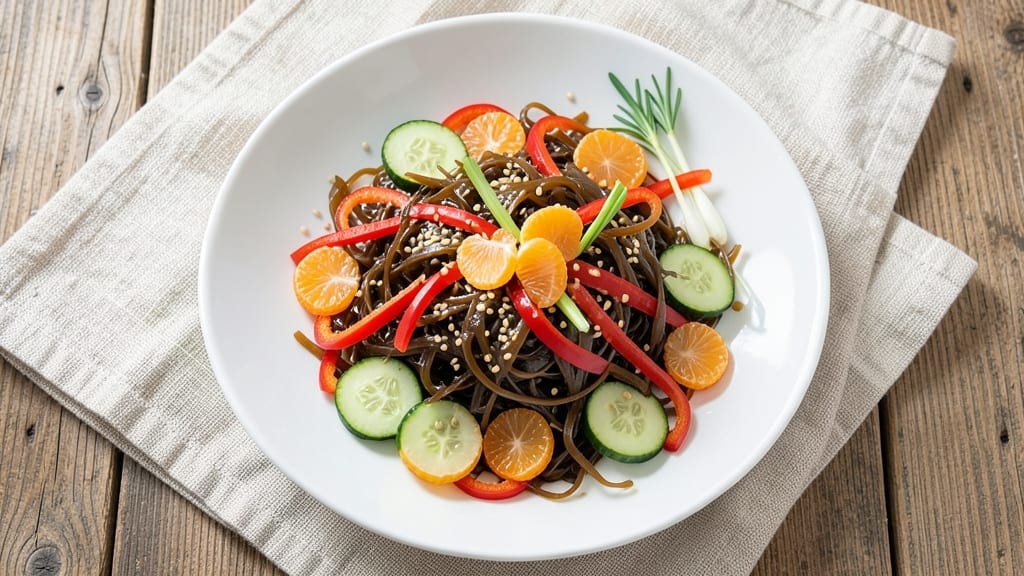
This arame seaweed salad recipe delivers a crunchy, umami-packed bite that transforms simple ingredients into a restaurant-worthy dish in just 10 minutes. The secret lies in balancing the oceanic flavor of arame with bright citrus, toasted sesame, and a light soy-ginger dressing—creating a salad that’s both satisfying and nutrient-dense.
I developed this recipe after discovering how versatile arame could be beyond sushi rolls, and it’s since become a staple in my meal prep routine.
The key to this salad’s success is texture contrast: tender arame strands hold their shape while crisp vegetables and toasted seeds add bite. A quick 5-minute marinade in a tangy soy-ginger dressing enhances the seaweed’s natural sweetness, while optional add-ins like mandarin orange or scallions elevate it to special-occasion level.
This isn’t just a side dish—it’s a complete, protein-rich meal that’s perfect for lunchboxes, potlucks, or a light dinner.
What makes this recipe stand out is its versatility—it works as a standalone salad, a topping for grain bowls, or even a crunchy addition to soups. The dressing is simple but transformative, using just 4 ingredients to create depth without overpowering the delicate seaweed.
By the time you’re done, you’ll have a dish that’s visually stunning, packed with umami, and impossibly easy to assemble.
For best results, use freshly toasted sesame seeds and chilled ingredients to maintain that crisp, refreshing texture. Serve immediately for maximum crunch, or store in an airtight container for up to 2 days—though it’s likely to disappear before then. Let’s make this salad!
Ingredients for arame seaweed salad
Fourteen ingredients transform into a restaurant-worthy arame salad with vibrant textures and umami depth.
| Ingredient | Amount | Notes |
|---|---|---|
| Dried Arame Seaweed 🍃 | 4 oz | Rehydrated in warm water |
| Red Bell Pepper 🌶️ | 1 whole | Thinly sliced, seeds removed |
| English Cucumber 🥒 | 1 whole | Seedless, thinly sliced |
| Scallions 🧅 | 3 whole | Thinly sliced, white parts only |
| Toasted Sesame Seeds 🥜 | 2 tbsp | Freshly toasted for aroma |
| Mandarin Oranges 🍊 | 1 whole | Segments removed, optional |
| Extra-Firm Tofu 🥬 | ½ lb | Cubed, pressed for crispiness |
| Sesame Oil 🫒 | 1 tbsp | For toasted aroma finish |
| Tamari Glaze 🍜 | 3 tbsp | Gluten-free soy sauce alternative |
| Fresh Ginger 🧄 | 1 tbsp | Finely grated, fresh preferred |
| Rice Vinegar 🍶 | 2 tbsp | Seasoned variety recommended |
| Maple Syrup 🍁 | 1 tbsp | For subtle sweetness balance |
| Diamond Crystal Kosher Salt 🧂 | ½ tsp | For seasoning balance |
| Sesame Seeds 🥜 | 1 tbsp | Extra for garnish |
The arame is the foundation, so prioritize high-quality dried strands from Asian markets or specialty stores—avoid pre-packaged seaweed mixes with additives. Koyo brand is my go-to for consistent texture. Rehydrate in warm water for exactly 5 minutes to maintain crispness. For the tofu, extra-firm variety holds shape best when pressed—wrap cubes in a clean towel and place a heavy pan on top for 15 minutes. The tamari glaze should be gluten-free for dietary compatibility, and San-J brand delivers the richest flavor profile. Fresh ginger is non-negotiable here; pre-grated loses potency quickly.
No sesame seeds? Toasted sunflower seeds work as a neutral substitute, though texture differs slightly. Substituting tamari with regular soy sauce? Reduce by half—seasoned soy is saltier. Mandarin oranges can be swapped for grapefruit segments (more tart) or kiwi slices (sweeter). The dressing components must balance: rice vinegar adds acidity, maple syrup sweetens without overpowering, and freshly grated ginger provides the essential zing. For extra protein, add edamame or chickpeas—both hold up well to the acidity. Always toast your sesame seeds in a dry pan over medium heat for 1-2 minutes until golden and fragrant.
Store all dry ingredients in airtight containers away from light to preserve flavor. The tofu should be pressed and refrigerated for no more than 3 days before cooking. Once assembled, this salad maintains crispness for up to 2 days when refrigerated in a sealed container—though the arame softens over time. For meal prep, portion into individual containers with dressing on the side to prevent sogginess. The dressing keeps separately for 5 days in the fridge, allowing you to customize freshness each time you assemble.
Why You'll Love This Recipe
- No-Soak Hassle: I swear by this trick—just a quick rinse of dried arame in cold water for 5 minutes, and it’s ready. No waiting hours, no fancy tools, just crispy texture with zero fuss.
- Umami-Packed Crunch: That toasted sesame seeds? They’re the secret weapon. The arame’s briny depth pairs perfectly with the sweet red bell pepper, while the scallions add a sharp bite—every bite feels like a flavor upgrade.
- Lunchbox Legend: Between us, this is my go-to for work lunches. The cucumber keeps it refreshing, and it holds up for days in the fridge. Pack it in a jar, and it’s still vibrant by afternoon—no soggy greens here.
- Budget Meal Magic: Dried arame costs pennies per serving, and the rest are pantry staples. I make a big batch on Sundays, and it stretches across dinners, snacks, and even as a rice bowl topper—no wasted ingredients, just pure efficiency.
Step-by-step instructions for arame seaweed salad
This vibrant salad delivers bold umami flavors and satisfying textures in under ten minutes.
Rehydrate and Prepare the Arame Seaweed
Place the 4 oz dried arame seaweed in a heatproof bowl and cover with warm water (not boiling). Let it soak for 5-7 minutes until it softens and expands to about 2 cups in volume. Drain thoroughly using a fine-mesh strainer, pressing gently to remove excess water. The seaweed should hold its shape but become pliable—this is your flavor foundation.
While the seaweed rehydrates, prepare the tofu by pressing it between paper towels for 15 minutes to remove moisture. Cut the 0.5 lb extra-firm tofu into ½-inch cubes and set aside. The pressing step is crucial—it ensures crispy tofu rather than soggy cubes in your salad.
Toast and Slice the Vegetables
Heat a dry skillet over medium heat and toast the 2 tbsp toasted sesame seeds for 1-2 minutes until fragrant. Remove immediately and set aside. In the same skillet, add 1 tbsp sesame oil and heat until shimmering. Quickly sear the tofu cubes for 2-3 minutes per side until golden brown. Transfer to a plate and sprinkle with 1 tbsp sesame seeds reserved for garnish.
Meanwhile, thinly slice the 1 whole red bell pepper (seeds removed) and 1 whole English cucumber (seedless) using a mandoline or sharp knife. Thinly slice the 3 whole scallions, using only the white and pale green parts. Finely grate the 1 tbsp fresh ginger using a microplane. The uniform slices create visual appeal while maintaining texture contrast.
Assemble the Dressing Components
In a small bowl, whisk together the 3 tbsp tamari glaze, 2 tbsp rice vinegar, 1 tbsp maple syrup, and 0.5 tsp diamond crystal kosher salt. The tamari provides deep umami, while the vinegar and maple syrup create a balanced sweet-tart profile. Taste and adjust—you want a dressing that's tangy but not overly acidic, with just a hint of sweetness.
Add the grated ginger and toasted sesame seeds to the dressing mixture. Stir well to combine, then set aside. The ginger adds a bright, zesty kick that cuts through the richness of the tofu and seaweed. This dressing should coat the back of a spoon but remain pourable—if it's too thick, add 1 tsp water to loosen.
Combine All Ingredients
In a large mixing bowl, combine the rehydrated arame seaweed, sliced red bell pepper, cucumber, and scallions. Drizzle the dressing over the vegetables and toss gently to coat evenly. The seaweed will absorb some of the dressing, so don't overmix—preserve the individual textures. Add the seared tofu cubes and toss again, ensuring each piece is lightly coated.
For an optional citrus twist, segment the 1 whole mandarin orange and fold in just before serving. The bright acidity of the oranges complements the umami-rich seaweed and tofu beautifully. Let the salad sit for 5 minutes to allow flavors to meld—this brief resting period enhances the overall taste profile.
Serve Immediately for Best Texture
Divide the salad among 4 serving plates, garnishing each with an additional sprinkle of toasted sesame seeds. Serve immediately while the tofu remains crispy and the vegetables retain their crunch. The contrast of textures—crispy tofu, tender seaweed, and fresh vegetables—makes each bite satisfying. Pair with steamed rice or grilled fish for a complete meal.
This salad keeps well in an airtight container for up to 2 days in the refrigerator, though the tofu may soften slightly over time. For best results, assemble and serve fresh to enjoy the optimal texture and flavor balance.
Pro Tips For Making Arame Seaweed Salad
- SOAK ARAMÉ UNTIL FLEXIBLE: I learned this the hard way—dried aramé needs a proper soak (10-15 minutes in warm water) until it bends like a noodle, not just softens. Cold water makes it chewy; warm water opens up those fibers perfectly for slicing.
- SLICE CUCUMBER THINLY: No one wants a salad where the cucumber steals the show. Cut the English cucumber into ⅛-inch half-moons—thin enough to eat quickly but not so delicate they turn to mush in dressing. (Yes, even if you're impatient like me.)
- DRESS IT JUST BEFORE SERVING: The moment you toss this salad with dressing, the cucumber wilts and the aramé gets soggy. Keep everything separate until the last second—5 minutes max—and stir gently. Your future self will thank you.
- TOAST SESAME SEEDS LOW AND SLOW: Crank the heat to medium-low for this one. Toasting sesame seeds over high heat burns them before they brown; medium-low gives them 2-3 minutes to smell like a Japanese street corner. Let them cool completely before crushing—hot seeds stick to everything.
Creative variations of this arame seaweed salad
Citrus-Inspired Twist
Swap the mandarin oranges for blood orange segments to add a deeper ruby hue and slightly tart flavor that brightens the umami-rich seaweed. Blood oranges provide a more complex sweetness while keeping the salad vibrant.
I also like adding thinly sliced persimmon in fall for a honeyed contrast—just ensure it’s fully ripe to avoid bitterness. 🍊
Spicy Sesame Crunch
For heat lovers, stir 1 tsp gochujang (Korean chili paste) into the dressing and top with crushed red pepper flakes before serving. The gochujang adds a fermented depth that pairs perfectly with the seaweed’s oceanic notes.
If you prefer milder heat, try 1 tsp sriracha instead—it’s sweeter and less complex. Always toast your sesame seeds first to maximize their nutty aroma.
Protein-Packed Add-Ins
Boost this salad’s protein with ½ cup cooked quinoa or ½ cup edamame for a heartier base. Both ingredients hold up well to the dressing’s acidity and add satisfying texture. I often use marinated tempeh (cubed and pan-fried) for a nutty, crumbly contrast that complements the crisp tofu.
For a seafood twist, add ½ cup cooked shrimp tossed in a pinch of garlic powder.
Herbaceous Variations
Fresh herbs elevate this salad’s brightness—try 1 tbsp chopped cilantro or 1 tbsp Thai basil for a fragrant lift. For a Mediterranean touch, add 1 tbsp chopped dill and ¼ cup kalamata olives (pitted and halved).
These herbs cut through the richness of the tofu and seaweed while adding a fresh, aromatic layer. Always add herbs just before serving to preserve their vibrant color.
Global Fusion Styles
Transform this salad into a Korean-inspired version by adding 1 tbsp toasted sesame oil to the dressing and topping with 1 tbsp chopped scallions and 1 tsp toasted sesame seeds.
For a Japanese twist, incorporate ½ cup pickled ginger (beni shoga) and 1 tbsp furikake seasoning for a savory-umami punch. Each variation keeps the arame as the star while adapting flavors to different cuisines. 🌍
Sweet and Tangy Dressing
For a sweeter dressing, replace the maple syrup with 1 tbsp agave nectar and add ½ tsp lime zest to the mixture. This version works beautifully with mango chunks or pineapple tidbits for a tropical fusion.
If you prefer tangier, increase the rice vinegar to 3 tbsp and add 1 tsp rice wine vinegar for a sharper acidity that balances the seaweed’s natural sweetness.
Nutrition facts
Frequently asked questions
Can I use arame seaweed from the grocery store's dried seaweed section?
Yes, but check the packaging carefully—many store-bought mixes contain fillers or additives that can dull arame's natural flavor. Look for 100% pure dried arame seaweed in Asian markets or specialty stores. The Koyo brand is my top recommendation for consistent texture and quality.
How do I prevent the tofu from getting soggy in the salad?
Press the tofu thoroughly for 15 minutes before cubing, then sear it in sesame oil until golden brown. The crispy exterior prevents sogginess. Also, store the salad in an airtight container with dressing on the side—only toss everything together right before serving.
What's the best way to store leftovers?
Keep the salad in an airtight container for up to 2 days, but store the dressing separately. The tofu will soften slightly over time, so assemble fresh for optimal texture. For longer storage, freeze the dressing alone for 3 months and rehydrate the arame separately when ready to eat.
Can I make this salad gluten-free?
Simply use tamari glaze (gluten-free soy sauce) instead of regular soy sauce. All other ingredients in this recipe are naturally gluten-free. The tamari provides the same deep umami flavor without the gluten.
How can I make this salad more filling?
Add ½ cup cooked quinoa or ½ cup edamame for extra protein and texture. For a heartier base, try ½ cup cooked brown rice or ½ cup chickpeas. These additions keep the salad balanced while adding satisfying substance.